
How to Make a Rental Apartment Safer for an Elderly Parent Without Renovations
My grandmother lived in a rented one bedroom apartment for the last six years she lived alone, and the landlord wasn’t the type to allow much. No holes in the tile. No permanent ramps. Nothing bolted to a wall that wasn’t already there when she moved in. I remember my mother calling me, sounding stressed, asking what were we even supposed to do about that. Like the whole situation was out of our hands.
It wasn’t, as it turned out. Maybe it never really is.
If you’re in a similar spot right now, renting yourself or watching a parent rent somewhere that wasn’t built with an older body in mind, I don’t think you’re as stuck as it feels. You probably don’t need the landlord’s blessing for most of what matters here. You mostly need patience, and a willingness to try a few things that might not work at first.
Why rental apartments feel so hard to fix
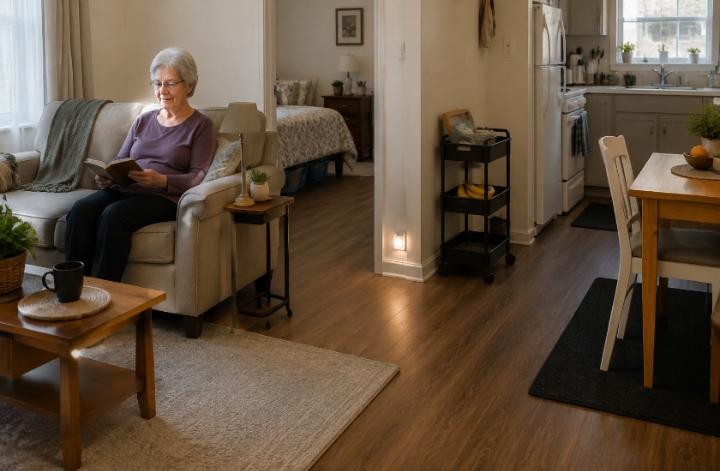
Most apartments aren’t built for anyone specific. They’re built for whoever might move in next, which usually means narrow hallways, hard tile floors, and cabinets that assume you can reach a shelf without thinking twice about it. None of that is really anyone’s fault. It’s just not designed around a person who’s slower now, or who maybe doesn’t see quite as well as they used to.
And landlords, I get why, don’t love the idea of holes in their walls or fixtures they’ll need to remove later. So there’s a bit of tension built into the whole thing from the start. You want your parent to be safe. They want the apartment to look the same when the lease ends.
I think the good news, and I say this cautiously because every apartment is a little different, is that a lot of what actually helps with falls and injuries doesn’t need permission from anyone.
Start by walking through the place slowly, not shopping first
Before you buy anything at all, it might help to just walk through the apartment the way your parent actually moves through it. Not the way you’d walk it, since you’re probably faster and steadier than they are. Go slow. Try to notice things like:
- Where the light switches sit compared to the bed
- Whether any rug or mat has an edge that curls up
- How far the walk is from bed to bathroom in the dark
- If anything in the kitchen sits above shoulder height that gets used often
- Whether there’s a step down anywhere, even a small one you might not think twice about
We did something like this walkthrough at my grandmother’s place one Sunday afternoon, and I think we found around four things in maybe twenty minutes that we’d walked past a hundred times without ever really seeing them. A bath mat that had gone loose at one corner. A lamp cord crossing the exact path she’d walk at night. A shelf too high for her blood pressure monitor. A hallway with no light at all between her bedroom and the bathroom.
None of it needed a drill or a landlord’s approval. It mostly just needed someone to actually pay attention for twenty minutes, which sounds simple but somehow rarely happens until something forces it.
Non-slip options that probably won’t touch the walls
Tension mounted grab bars. These hold on with pressure instead of screws, wedged between floor and ceiling or braced against a wall. I’d be honest here, they’re not as sturdy as one properly bolted in, so I wouldn’t rely on them if your parent needs to put their full weight on something. But for a bit of extra balance near a toilet or tub, they might genuinely help. If your parent’s needs go a bit further than light support, it could be worth comparing some proper mobility and alert options before deciding what’s actually enough for the situation your family is in.
Suction cup bars. Similar idea, a bit weaker hold usually, and cheaper. Mostly useful on tile near a shower. I’d test the suction daily for at least the first week or so. If it feels like it’s slipping even a little, I wouldn’t trust it with real weight.
Non-slip mats and strips. This one might be the most underrated fix out of everything here. A textured mat in the shower, maybe a runner rug in the bathroom, and slipping risk seems to drop more than most people expect. There’s a fairly thorough comparison of non-slip flooring and mat options that might be worth a look, especially if the floor underneath is old tile or original hardwood, which a lot of rentals still have.
Lighting fixes that don’t need an electrician
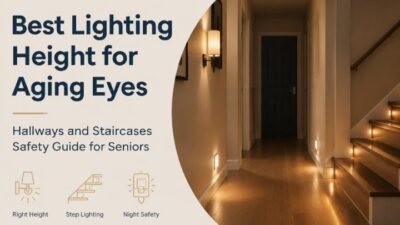
You probably don’t need any electrical work to fix bad lighting, which surprised me a little when we first looked into it.
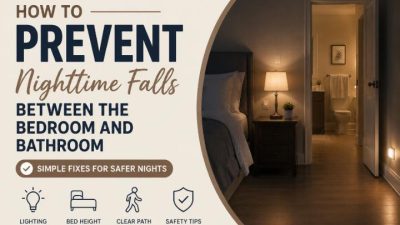
Battery powered motion lights stick onto a wall with adhesive strips, and they switch on the second someone walks near them. It might help to put one in the hallway between bedroom and bathroom. Another just inside the bathroom door. Maybe one low near the bed, close to the floor, so it doesn’t blind anyone at two in the morning but still shows roughly where the ground is.
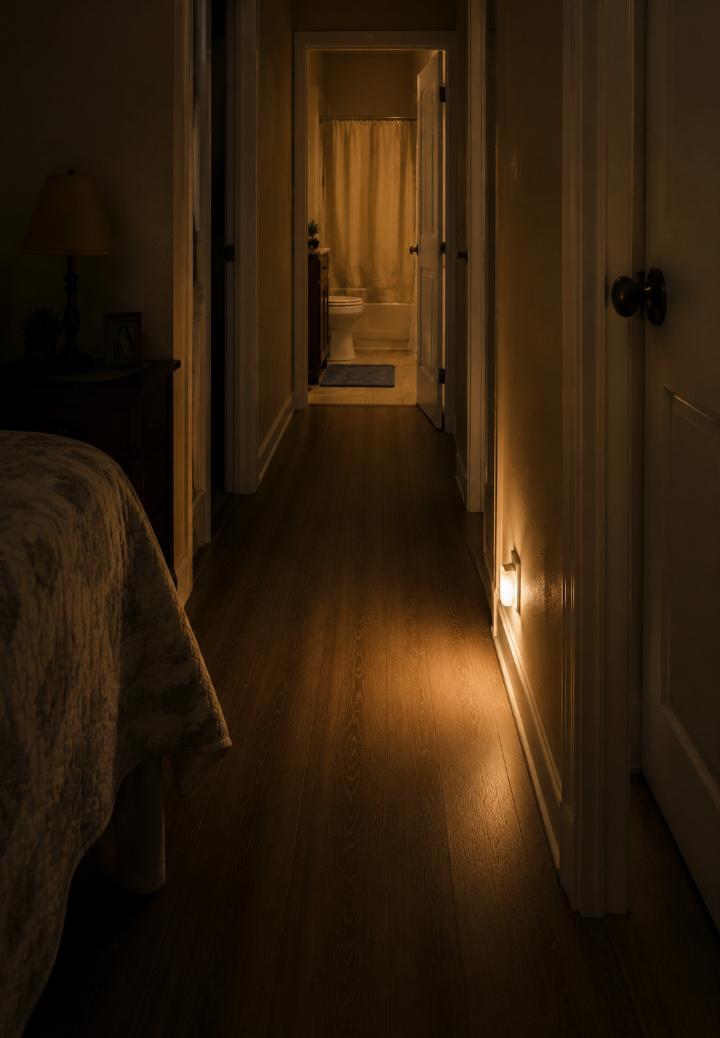
My grandmother had one stuck just below her nightstand for years, and she told me more than once that it was probably the one thing that made her stop dreading the walk to the bathroom at night. I don’t know if it was really the single biggest factor, but she believed it was, and that alone seemed to matter.
Plug-in night lights work too, though they only really help if there’s an outlet somewhere useful, and rentals don’t always have one in the right spot.
Furniture arrangement, which costs nothing and probably helps more than people assume
This part is free, and I think it gets overlooked because it feels too simple to matter. But just moving furniture around can remove a good chunk of fall risk in a small apartment.
- Widen the walking paths, even by a few inches if that’s all you have
- Move anything with a sharp low corner away from where someone walks
- Keep something sturdy, not a wobbly side table, within reach along the common paths
- Try to avoid spots where someone would need to twist or step sideways to get past something
We moved my grandmother’s recliner maybe two feet to the left once, and it changed her whole path from bedroom to kitchen. It seemed like such a small thing at the time. It really wasn’t.
What about the kitchen, since you can’t rearrange built in cabinets
You probably can’t change where the cabinets themselves are, but you can change what sits inside them, which honestly does most of the work anyway.
It might help to move anything used every day down to somewhere between waist and chest height. Heavy stuff stays low, never up high where a fall risk goes up if someone reaches for it. If there’s room for a lazy susan or turntable inside an existing cabinet, that tends to cut down a lot of the reaching and twisting that causes strain or loss of balance.
A simple rolling cart can work as an extra counter, at whatever height feels right, without changing a single fixture in the kitchen. It’s not glamorous, but it tends to help more than people expect.
The bathroom, without touching a wall
This is usually the room people worry about most, and I think it’s also the one where people feel stuck, like grab bars have to be drilled in or nothing counts.
That’s probably not quite true.
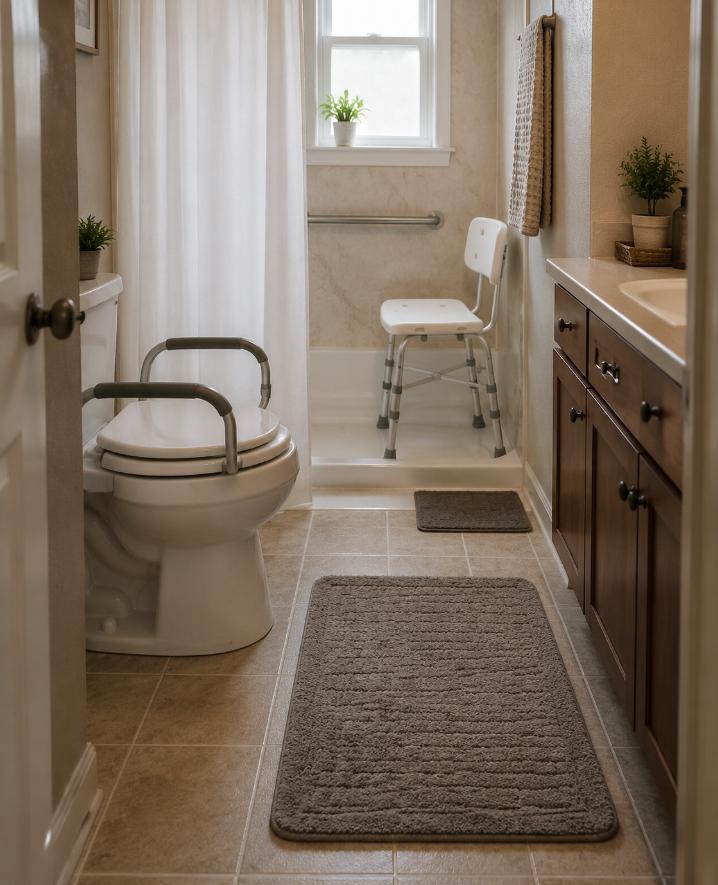
A raised toilet seat with side handles, the kind that just rests on top of the existing toilet, adds real support with no installation needed at all. A shower chair means your parent doesn’t have to stand the whole time, which matters more than it sounds like it would. The non-slip mats mentioned earlier matter a lot here too, maybe more than anywhere else in the apartment.
A note on emergency response, since even a well arranged apartment isn’t fall proof
Even with everything arranged carefully, falls can still happen, and I think it’s worth saying that plainly instead of pretending any setup removes all the risk. A medical alert device that doesn’t rely on reaching a wall mounted button probably matters even more in a rental, since you can’t really install a hardwired system anyway in most cases.
Wearable pendants or watches solve a lot of this without needing any installation. It might help to compare a watch versus a pendant based on what your parent will actually wear every day, rather than whatever looks best on paper. Some of the newer systems also come with fall detection built in, which could be worth looking at if your parent lives completely alone, since that’s when a fall tends to go unnoticed the longest. There’s a broader review of medical alert systems that might help narrow things down if you’re not sure where to start, and a side by side comparison tool that could make the decision a little less overwhelming.
Questions people usually ask around this point
Can I ask the landlord for anything at all?
Probably, yes. It might be worth asking specifically about grab bars, since some landlords do allow professional installation if you agree to patch and repaint before moving out. It costs nothing to ask, and some landlords turn out to be more flexible than you’d expect, especially with tenants who’ve been there a while.
What if my parent pushes back on all these changes?
This comes up a lot, more than people admit. It might help to frame things around comfort rather than decline. Saying “this light makes it easier to see” tends to land differently than “you need this in case you fall.”
Is a walk in tub ever realistic in a rental?
Almost never, honestly, since it needs plumbing work most landlords won’t approve. If bathing safety is the main worry, a shower chair with a hand held shower head attachment, the kind that usually just screws onto the existing pipe with no tools needed, probably gets you most of the way there without any renovation at all.
How much should all this cost, roughly?
Less than most people expect, in my experience. A home modification cost calculator might help you budget more realistically, though most of what’s mentioned here tends to cost under fifty dollars total, sometimes less.
A rough comparison of what’s worth trying first
| Fix | Needs Landlord Approval | Rough Cost | Helps Most With |
|---|---|---|---|
| Motion sensor lights | No | $10–$25 | Nighttime walks to the bathroom |
| Tension grab bar | Usually not | $20–$60 | Light balance support |
| Non-slip mats | No | $10–$40 | Bathroom and shower floors |
| Raised toilet seat | No | $25–$70 | Getting up and sitting down safely |
| Furniture rearranging | No | Free | Walking paths through the apartment |
| Rolling kitchen cart | No | $30–$80 | Reachable counter space |
None of these need a lease amendment or a difficult conversation with the property manager. That’s really the point of all of it, I think.
If your parent has a specific condition, some of this might need adjusting
Not every rental situation looks the same, and I’d be careful about assuming one setup fits everyone. Someone recovering from a hip or knee surgery might need very different furniture heights than someone managing arthritis in their hands, which changes things like door handle types and jar openers more than people expect. Someone with vision loss might need contrast between floor and furniture more than extra lighting alone. Someone with Parkinson’s might need wider paths more than grab bars, since the risk often comes from shuffling steps rather than a single stumble.
It might help to think about which of these describes your situation, rather than trying to fix everything at once. Trying to solve every possible risk in one weekend tends to be overwhelming, and I think that overwhelm is part of why people put this off longer than they should.
What we learned the hard way, moving my grandmother between two rentals
Before the apartment she stayed in for six years, my grandmother had lived somewhere else for about two years, a place we didn’t really evaluate carefully because she seemed fine at the time. Looking back, I think we assumed fine meant safe, which wasn’t really true. It wasn’t until she mentioned, almost in passing, that she’d started avoiding the bathroom at night and just using a bucket by the bed instead, that we realized how bad the lighting situation actually was.
That’s the part that stuck with me. She never said she was scared. She just quietly changed her own behavior to avoid the risk, which in hindsight was probably more dangerous than the thing she was avoiding.
I think that’s worth mentioning because a lot of the signs that a rental isn’t working aren’t dramatic. They’re quiet adjustments people make on their own, without saying anything, because they don’t want to seem like a burden or admit that something’s gotten harder. If you notice your parent avoiding a room, taking a longer way around something, or holding onto furniture that isn’t meant to be held onto, that’s probably worth a conversation before it becomes a bigger problem.
A gentle word on independence, since this isn’t only about safety
I think it’s worth saying that none of this is really about wrapping someone in bubble wrap. My grandmother would have hated that, and I suspect a lot of parents feel the same way. The goal, at least the way I see it, isn’t to remove every bit of independence in the name of safety. It’s closer to giving someone the best possible chance of staying independent for as long as they reasonably can.
There’s a difference between those two things, even if they look similar from the outside. A grab bar isn’t really about treating someone like they’re fragile. It’s about giving them one less thing to worry about so they can keep doing things on their own, which I think is usually what they want more than anything else.
If you’re trying to figure out whether your parent’s current living situation is sustainable at all, long term, an aging in place readiness quiz might help you look at it more clearly, instead of guessing room by room or having the same argument again and again without really getting anywhere.
Where this leaves you
My grandmother stayed in that rented apartment until she chose to move closer to family, not because anyone forced a big change on her, but because the space slowly got shaped around what she needed instead of the other way around. Nothing was ever drilled into a wall that wasn’t already there. And it still kept her safe for six years, which is longer than I think either of us expected when we first started worrying about it.
Small changes, tried one at a time and kept up with, seem to work better than one big overhaul done once and then forgotten about. That’s really what most of this comes down to, at least from what I’ve seen. Not everything here will apply to your situation, and some of it might not work the first time you try it. That’s probably fine. It’s not really about getting it perfect. It’s more about paying attention, adjusting as you go, and not waiting for something to go wrong before you start.