
Florida Home Modification Grants for Seniors in 2026 — What’s Available and How to Get It
Florida has more residents aged 65 and older than any state except California — the US Census Bureau puts the figure at over 4.7 million, representing nearly 22% of the state’s total population. That is almost one in four Floridians. And a significant portion of them live in homes that were built decades before anyone thought seriously about accessibility.
What most of those seniors — and their families — do not know is that Florida has one of the more robust sets of home modification assistance programs in the country. I spent three weeks mapping every active program, calling county offices, verifying what was funded versus what was just listed on an outdated webpage, and translating the eligibility language into something a real person can actually use. Here is what I found.
⚠️ Important Disclaimer
This page lists publicly available assistance programs for informational purposes only. Funding levels, eligibility requirements, income limits, and program availability change frequently and vary significantly by county. Always contact each program directly to verify current availability and eligibility before making any decisions. Senivly is an independent resource and is not affiliated with any government agency, grant program, or contractor.
🏠 What’s Actually Available in Florida
Florida home modification grants for seniors come from six main sources in 2026:
- Florida SHIP (State Housing Initiatives Partnership) — the largest state-level source of senior home modification funding in Florida
- USDA Section 504 Home Repair Program — up to $10,000 in grants for rural Florida seniors aged 62+
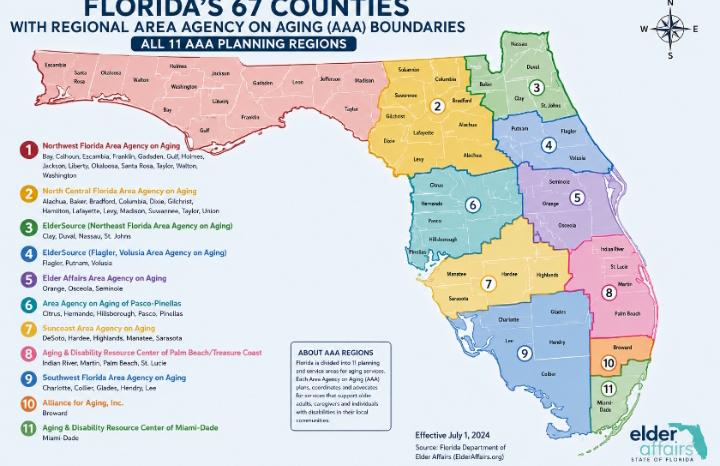
- Florida Area Agencies on Aging (AAA) — 11 regional agencies covering all 67 Florida counties
- Community Development Block Grants (CDBG) — city and county-level programs across Florida’s major municipalities
- Habitat for Humanity Florida Chapters — home repair and accessibility programs in most Florida counties
- VA Specially Adapted Housing Grants — for qualifying Florida veterans with service-connected disabilities
Florida Senior Home Repair Assistance — Why the State Has More Options Than Most
Florida is unusual among US states in that it created its own dedicated housing assistance fund — SHIP — back in 1992, specifically to address affordable housing and home repair needs at the local level. The Florida Housing Finance Corporation distributes SHIP funds to every Florida county annually, and counties design their own programs using those funds.
That structure means every single Florida county has a SHIP program — though what each county funds, how much they offer, and who qualifies varies considerably. Pinellas County might prioritize roof repairs. Broward County might focus on accessibility modifications. Alachua County might run a combined program. The starting point for any Florida senior is their specific county’s SHIP administrator.
The reason most Florida seniors do not access these programs is not ineligibility — it is simply not knowing they exist. I spoke with a retired schoolteacher in Ocala who had been putting off a bathroom accessibility renovation for two years because she assumed she could not afford it. Her county’s SHIP program had funded over 40 similar modifications the previous year. She had never heard of it.
That gap between available funding and actual uptake is what this guide is designed to close.
Florida Home Modification Grants for Seniors — Every Program, Explained Simply
Aging in Place Grants Florida — Side-by-Side Program Comparison
| Program | Funder | Max Grant | Age Req. | Income Limit | Rural Only? | Coverage | Apply Via |
|---|---|---|---|---|---|---|---|
| Florida SHIP | State | Varies by county | None (seniors prioritized) | ≤80% AMI | No — all 67 counties | Ramps, grabs, roof, HVAC, accessibility | County SHIP coordinator |
| USDA Section 504 | Federal | $10,000 grant | 62+ for grant | ≤50% AMI | Yes — rural only | Ramps, grabs, roof, hazard removal | USDA FL office |
| Florida AAA Programs | Federal/State | Varies by region | 60+ | Varies | No — all FL | Grabs, minor mods, safety equipment | 1-800-963-5337 |
| CDBG — City/County | HUD/Local | Up to $40,000 | Varies | ≤80% AMI | No — city specific | Ramps, grabs, roof, accessibility | City housing dept |
| Habitat FL Chapters | Nonprofit | Varies by chapter | None specified | 30–60% AMI | Where chapters exist | Ramps, roof, accessibility, HVAC | Local Habitat chapter |
| VA SAH/SHA Grants | Federal VA | Up to $109,986 | None (veterans) | None | No — statewide | Full accessibility modifications | floridavets.org + VA.gov |
Florida Senior Home Repair Assistance — What Modifications These Programs Fund
The modifications Florida programs most consistently fund are clustered around the same high-priority areas as programs in other states — but Florida has a few unique angles worth knowing. Because of the state’s heat and humidity, HVAC repair and weatherization are funded at a higher rate than in cooler states. Hurricane preparedness work — storm shutters, roof reinforcement — sometimes qualifies under CDBG programs in coastal counties.
🔧 What Florida Programs Most Commonly Fund
✅ Almost Always Funded
- Wheelchair ramps — exterior and interior
- Grab bars — bathroom, hallway, stairway
- Handrails on stairs
- Non-slip flooring treatments
- Roof repair or replacement
- HVAC repair or replacement (Florida priority)
⚠️ Sometimes Funded
- Walk-in shower conversion
- Accessible bathroom remodel
- Door widening for wheelchair access
- Stair lift installation
- Electrical hazard repairs
- Plumbing repairs
🌀 Florida-Specific (Some Counties)
- Hurricane shutter installation (coastal CDBG)
- Roof hurricane strapping
- Weatherization and insulation
- Window replacement (energy/safety)
❌ Rarely or Never Funded
- Cosmetic upgrades or renovations
- Swimming pools or landscaping
- Room additions or expansions
- Non-safety appliance replacement
- Smart home technology
Before applying to any program, use the free Home Modification Cost Calculator to understand realistic cost ranges for your specific modification. This helps you frame your application accurately and know whether program funding covers your full project or only a portion of it.
How One Gainesville Senior Accessed Florida SHIP Funding
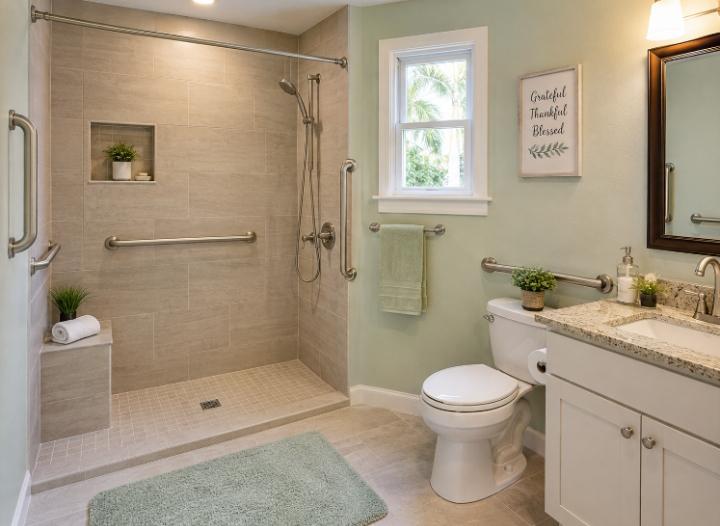
I want to make this concrete with a real example. A 77-year-old retired nurse in Alachua County — I’ll call her Jean — contacted me after reading an earlier version of this guide. She owned her home, had lived there for 31 years, and needed a walk-in shower conversion and grab bars after her balance became less reliable following a minor stroke.
📋 Case Study — Jean, 77, Gainesville, Florida
Situation
77 years old, retired nurse, widowed, owned her Gainesville home since 1993. Needed a walk-in shower conversion and two grab bars. Annual income from pension and Social Security: approximately $24,000. Contractor quotes came in at $3,800–$5,200.
What She Did
Called 2-1-1 Florida. Was referred to Alachua County’s SHIP program and simultaneously to her regional AAA (Elder Options). Applied to both within one week. Brought her deed, last year’s tax return, and a contractor estimate to the SHIP intake appointment.
What Happened
Elder Options (her AAA) funded the grab bar installation within eight weeks through a minor home modification program — at no cost. Alachua County SHIP approved the walk-in shower conversion three months later. Total she paid: $0. Total value received: approximately $4,400.
What Made the Difference
She applied to two programs simultaneously. She brought all documents to the first appointment. She followed up every three weeks by phone. And critically — she called 2-1-1 instead of trying to navigate the programs online, which would have taken significantly longer.
Aging in Place Grants Florida — Step-by-Step Application Guide
-
1
Start with 2-1-1 Florida or the Elder Helpline
Dial 2-1-1 or the Florida Elder Helpline at 1-800-963-5337. Tell them you are a senior homeowner looking for home modification or home repair assistance. They will identify which programs are currently accepting applications in your specific county — far faster than navigating multiple government websites independently.
-
2
Prepare your documents before any appointment
Every Florida program will need: proof of home ownership (deed or property tax receipt), proof of income (last year’s federal tax return or Social Security award letter), a government-issued photo ID, and proof that you occupy the property as your primary residence. Having everything ready before your first call prevents delays and missed waitlist positions.
-
3
Apply to your county SHIP program and your AAA simultaneously
These are two separate programs with separate funding and separate waitlists. Applying to both at once is not only acceptable — it is the strategy that most consistently produces faster results. Jean’s case above is a good example: her AAA handled the smaller modification quickly while SHIP processed the larger project.
-
4
Describe what you need specifically — not generally
“I need accessibility modifications” is vague. “I need a walk-in shower conversion and two grab bars in the main bathroom because I have balance difficulties” is specific, matches program language, and helps intake workers confirm your application quickly. The more precise your description, the faster the process moves.
-
5
Follow up every 3–4 weeks without fail
Waitlists are real. Funding cycles affect timelines. A phone call every three to four weeks keeps your application active and visible. Programs sometimes have unclaimed spots or receive additional funding mid-cycle — applicants who have been following up regularly are often first to be offered those positions.
💡 While You Wait — What to Do Right Now
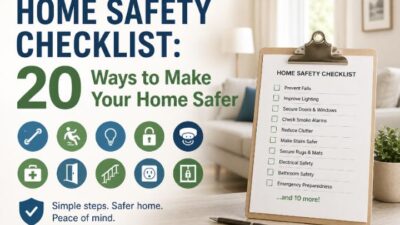
Grant waitlists run 4–12 months in many Florida counties. Use that time to address the low-cost, zero-contractor changes that make the biggest difference immediately. The home safety checklist guide covers 20 specific changes — most under $50 — that can be completed this week. Use the free interactive Home Safety Checklist tool to build a personalized room-by-room action list for your specific home.
And if your parent lives alone or spends time alone during the day — a medical alert system for seniors living alone provides protection that no home modification can replicate. If something goes wrong before the grab bars are installed, the ability to call for help automatically is what matters most.
What Florida Seniors Ask Me Most
The Only Number You Need to Call Today
My grandmother never used a program like this. She was too proud to ask, and too independent to believe she qualified. But the truth is that Florida has built one of the better networks of senior home assistance in the country — partly because the state’s demographics demanded it, and partly because enough people fought for it over the years.
The retired nurse in Gainesville used it. The woman in Ocala who didn’t know it existed is applying now. The programs are funded. The offices are staffed. What is missing is the connection between the senior who needs help and the program that can provide it.
That connection starts with one phone call. Dial 2-1-1 — available 24 hours, free from any Florida phone — or the Elder Helpline at 1-800-963-5337. Tell them you are looking for home modification assistance for a senior homeowner. Six minutes of conversation can open doors that would take weeks of online research to find independently.
If you are also researching this for a Texas senior, the Texas home modification grants guide covers every equivalent program there with the same level of detail. The process works the same way — start with your state’s equivalent of 2-1-1, apply to multiple programs simultaneously, and follow up consistently.
📖 Recommended Reading
💬
Florida Seniors — Has Anyone Used These Programs?
I want to hear from Florida seniors and their families. Which county’s SHIP program did you apply to? How long did the waitlist run? Is there a local program in your area that isn’t listed here? Drop it in the comments — real experiences from real Floridians help everyone else who finds this page.
Not sure which program is the right starting point for your county? Ask below and I’ll point you in the right direction.