

Best Lighting Height for Aging Eyes in Hallways and Staircases
My grandmother’s hallway had one light switch, at the far end, near the kitchen. It sat about waist height for someone standing, which meant nothing for someone reaching from a bed at midnight. For years none of us really thought about it, since we’d flip it on our way past without a second thought. It wasn’t until she mentioned, almost by accident, that she’d stopped going to the bathroom at night unless she absolutely had to, that we realized the hallway was probably scarier to her than we ever imagined.
I think that’s the thing about lighting. It’s easy to walk past a problem for years without noticing it, mostly because the people who notice it aren’t the ones who bring it up first.
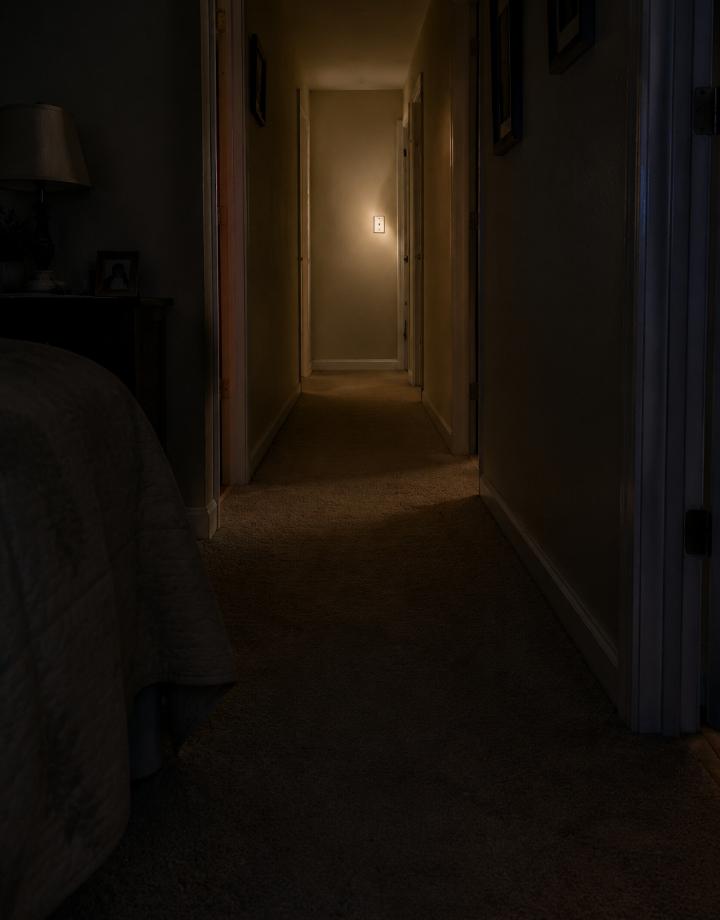
Why hallway and staircase lighting probably matters more than you’d guess
There’s a bit of biology behind this that I didn’t fully understand until I looked into it. As people get older, the pupil doesn’t open as wide as it used to, and the lens inside the eye gets a little less clear over time. What that seems to mean, in practice, is that someone in their seventies or eighties might need two to three times more light than someone in their twenties just to see with the same clarity. Some research puts it even higher for people in their eighties, closer to needing several times the light a younger person would use in the same room.
That’s not really about preference or getting used to dimmer rooms. It’s closer to a physical fact of how the aging eye works, and it means a hallway that looks perfectly lit to you might feel like a shadowy guess to your parent.
The CDC has tracked falls among older adults for a long time now, and the numbers are honestly a bit sobering. More than one out of every four adults over 65 falls at least once a year, and falling once seems to roughly double the chance of falling again. A large share of those falls happen indoors, and poor lighting is consistently listed as one of the environmental risk factors that’s actually possible to fix, unlike some of the others. If you want the full data, the CDC’s falls facts page lays it out in more detail than I can really cover here.
So what height should lighting actually be at
This is where I’d say the answer is a little less exact than people want it to be, since it depends a bit on the layout and the person. But there are some general ranges that seem to work well, based on what lighting designers who focus on senior housing tend to recommend.
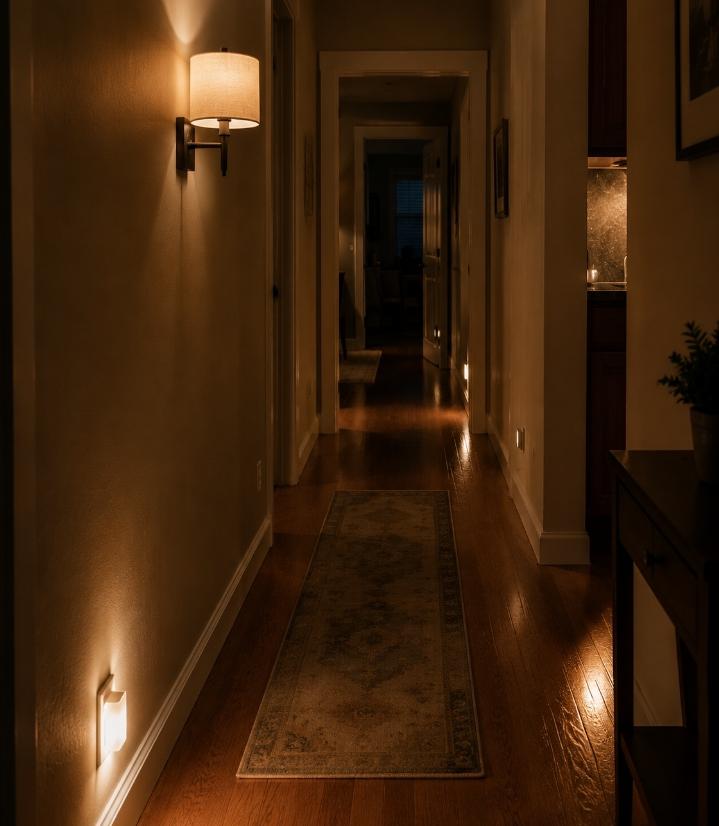
- Near the floor, roughly 6 to 12 inches up: good for hallway night lights and stair tread lighting, since it shows the actual walking surface without shining into anyone’s eyes
- Switch height, ideally lower than standard: somewhere around 36 to 40 inches works better for most people than the usual 48 inch standard, especially for anyone using a wheelchair or who has trouble reaching up
- Overhead fixtures, if used at all: should probably be paired with something lower, since ceiling only lighting tends to create shadows that aging eyes seem to struggle reading correctly
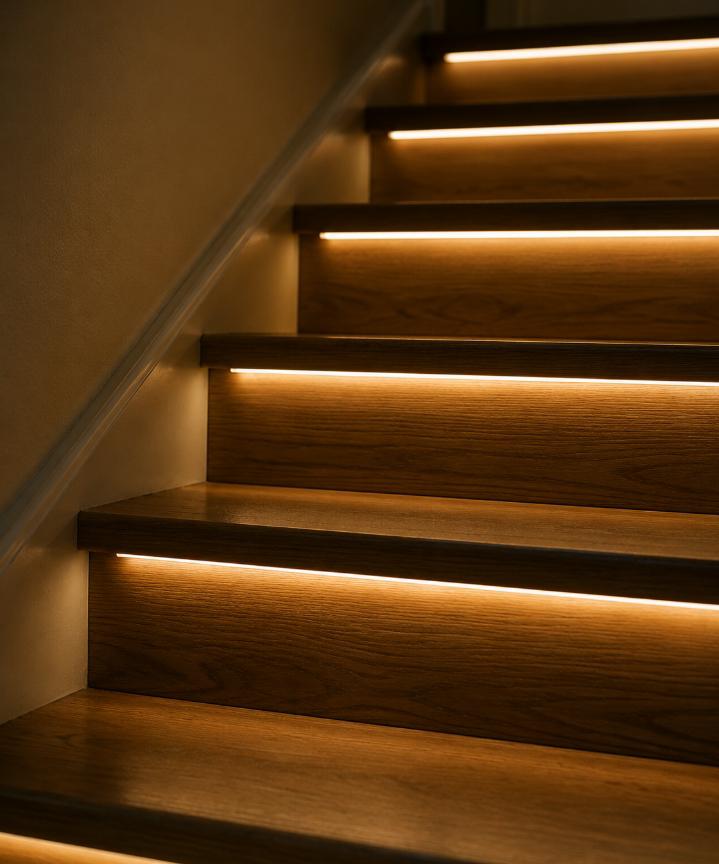
- Staircase lighting: works best when it’s built into the stair itself, lighting each step directly, rather than one bright bulb at the top or bottom that leaves the middle steps in shadow
One detail that surprised me is that overhead only lighting might actually be part of the problem, not the fix. A single ceiling light throws shadows downward, and older eyes seem to have a harder time reading those shadows correctly compared to younger ones. Layering light at a few different heights, rather than relying on one strong source, tends to work better in practice, even if it looks like more lighting than you’d think you need at first.
Glare might be a bigger problem than dimness
This part took me a while to understand, and I think a lot of families get it backwards. The instinct is usually to add the brightest bulb possible, assuming more light always means safer. But glare seems to cause about as many falls as dim lighting does, maybe more in some cases, since it can wash out contrast and make edges harder to see rather than easier.
A bare bulb pointed straight at eye level, or a shiny floor reflecting a bright overhead light, can actually make a staircase harder to read, not easier. It might help to look for fixtures with some kind of diffuser or shade, and to angle lights so they wash the walking surface rather than shining directly into anyone’s eyes as they walk past.
Color temperature, which sounds technical but matters more than expected
Bulbs come labeled with a color temperature, usually somewhere between warm yellow-ish light and cooler blue-white light. For general hallway and living space lighting, warmer tones, somewhere in the range most bulbs label as soft white, tend to feel more comfortable and less likely to cause glare.
For task areas though, like a reading chair or a spot where medication gets sorted, a slightly cooler and brighter light might actually help more, since the lens of the eye tends to yellow with age, and cooler light can help counter that a little. It’s a small distinction, but it might be worth checking the bulbs already in the house rather than assuming they’re all the same.
| Area | Suggested Height | Light Type | Why it might help |
|---|---|---|---|
| Hallway floor level | 6–12 inches | Motion sensor night light | Shows the floor without glare at eye level |
| Light switches | 36–40 inches | Standard switch, lowered | Easier reach for shorter or seated adults |
| Staircase treads | On the step edge | LED strip lighting | Lights each step individually, reduces shadow gaps |
| Reading or task areas | Just above shoulder, seated | Adjustable lamp, cooler tone | Counters yellowing of the aging lens |
| General ceiling light | Standard, paired with lower light | Warm, diffused fixture | Avoids being the only light source in the room |
Fixes that probably don’t need an electrician
If rewiring a hallway isn’t really an option, and for most families it isn’t, there are a few things that tend to help without touching any wiring at all.
- Battery powered motion sensor lights that stick onto the wall with adhesive strips, placed near the floor along the hallway path
- Plug-in night lights in any outlet along the route between bedroom and bathroom, ideally photocell versions that only turn on once it gets dark
- Adhesive LED strip lights along stair edges, which usually come with their own battery pack and don’t need any wiring
- Swapping bulbs for warmer or higher lumen versions in existing fixtures, which takes minutes and costs very little
If your parent happens to be renting, these same fixes tend to work well there too, since none of them require permission from a landlord. There’s a fuller breakdown of home safety changes that don’t need renovations that might be worth reading alongside this one, since lighting is really just one piece of the bigger picture.
A short comparison, since people usually ask about smart bulbs versus simple ones
Smart bulbs that connect to an app or a voice assistant sound appealing, and honestly, for some households they work great. But I’d hesitate before assuming they’re the right first step for every parent, especially one who isn’t comfortable with a phone app or who might struggle if the wifi goes down.
| Option | Pro | Possible Downside |
|---|---|---|
| Motion sensor battery lights | No wifi, no app, works instantly | Batteries need occasional replacing |
| Smart bulbs with app control | Adjustable brightness and schedules | Relies on wifi, might confuse if the app updates |
| Simple plug-in night lights | Cheapest, easiest to understand | Needs an outlet in the right spot |
Questions people tend to ask around this point
Is it possible to overdo the lighting?
Maybe, in a sense. Too much brightness without control over glare can be just as disorienting as too little. It might help to add dimmers where possible, so the same fixture can work for both daytime and the middle of the night.
What if my parent refuses to leave lights on at night, worried about the electric bill?
This comes up more than you’d think. Motion sensor lights help here too, since they only draw power when someone’s actually walking past, which might ease that worry without needing a longer conversation about cost.
Should stair lighting be different from hallway lighting?
A bit, yes. Stairs benefit more from lighting the actual tread edges, since the danger with stairs is usually misjudging a step’s edge, not just general dimness. The National Institute on Aging’s home safety guidance covers stair specific tips if you want a second source beyond this one.
Does this matter if my parent has good vision for their age?
Probably still worth doing, honestly, since even people without diagnosed vision problems experience the general pupil and lens changes that come with age. It’s less about a specific condition and more about how eyes generally change over time.
What this looked like for my grandmother, eventually
We ended up adding three small motion sensor lights along her hallway, one just outside her bedroom door, one halfway down, and one right by the bathroom entrance. None of them needed wiring. All three ran on batteries we swapped every few months. It probably took less than twenty minutes to install everything.
She mentioned a while later that she’d started using the bathroom at night again without thinking twice about it, which was really the whole goal from the start. I don’t think the lighting alone solved every risk in her apartment, and I wouldn’t want to overstate what one fix can do. But it seemed to matter more than almost anything else we changed, and it cost less than a takeout dinner for two.
If lighting is one part of a bigger list you’re working through, a full home safety checklist tool might help you keep track of everything else that needs a look, rather than tackling rooms one at a time as problems come up. And if falls are already a concern, whether or not lighting fully solves it, it might be worth looking into a medical alert system with fall detection, since even the best lit hallway doesn’t remove every risk completely. A broader review of medical alert options and a side by side comparison tool can help if you’re not sure where to start with that part.
For parents living alone specifically, this kind of backup tends to matter even more, since there’s no one else in the home to notice something’s gone wrong. There’s a dedicated guide on medical alert systems for seniors who live alone that covers this in more depth than I can here.
One more thing worth mentioning, about visitors and grandkids
If grandchildren or other family members stay over from time to time, it might be worth double checking that toys, bags, or shoes don’t end up sitting in the exact hallway you just spent time lighting properly. Even the best lighting in the world doesn’t help much if there’s a backpack sitting in the middle of the walking path. It’s a small thing, but it comes up more than people expect, especially around holidays when the house is fuller than usual.
It also might help to mention the new lighting setup to anyone who visits regularly, just so they don’t unplug a motion sensor light thinking it’s some kind of leftover decoration, which has genuinely happened in more than one household I’ve heard about.
Where this leaves you
Lighting probably isn’t the most exciting fix on any list, and I get why it gets overlooked in favor of things that feel more dramatic, like grab bars or a full bathroom remodel. But it might be one of the cheapest and least disruptive changes you can make, and the eyes doing the seeing have changed more than most people realize, whether or not it’s obvious from the outside.
If you’re not sure whether your parent’s home is generally set up well for staying independent, an aging in place readiness quiz might help you see the bigger picture, lighting included, without having to guess your way through every room on your own.