
This best grab bars for seniors review covers the 7 key safety features that separate reliable bars from dangerous ones, starting with weight capacity and mounting type.
- Weight capacity matters more than price: look for bars rated to at least 250 lbs, ideally 500 lbs for peace of mind
- Mounting style determines everything, permanent wall-mounted bars outperform suction-cup models in real fall-prevention scenarios
- The right bar, correctly installed, reduces bathroom fall risk significantly for seniors living independently
Bathroom falls are not a minor inconvenience. According to the Centers for Disease Control and Prevention, falls are the leading cause of injury-related death among adults 65 and older, and the bathroom is where a disproportionate number of those falls happen.
Most families only start researching grab bars after a close call. That reactive approach is exactly the problem this best grab bars for seniors review is designed to fix, before something goes wrong, not after.
Not all grab bars are created equal. A bar that looks sturdy in a product photo can flex, slip, or pull cleanly out of drywall the moment real weight hits it, and at that point, it offers worse protection than no bar at all.
What you’ll take away from this guide is a clear, no-guesswork framework for choosing a bar that will actually hold when it needs to.
Why the Wrong Grab Bar Can Be as Dangerous as No Bar at All
Most families install a grab bar and assume the problem is solved. It isn’t.
A bar that pulls free under body weight during a fall doesn’t just fail, it actively causes the fall. After reviewing expert testing across several models, the verdict is clear: the type, rating, and mounting method matter as much as having a bar at all.
The hidden risk of suction-cup and low-rated bars
Suction-cup grab bars are everywhere online, priced between $15 and $35, and marketed as convenient bathroom safety solutions. The problem?
Industry experts and fall-prevention specialists are unambiguous: suction bars are strictly for light, temporary aid, travel use, at best. They cannot reliably support full body weight during a transfer or a fall.
A permanent safety device that detaches is worse than nothing, because it creates false confidence exactly when it matters most.
What ADA compliance actually means for home users
ADA-compliant bars meet specific engineering standards that directly translate to home safety. For a best grab bars for seniors review, these specs are non-negotiable:
- Weight capacity of at least 250 lbs (top models like the Moen Home Care reach 500 lbs, providing a safer margin for dynamic fall forces)
- Grip diameter between 1.25 and 2 inches, sized for older hands
- Horizontal installation height of 33-36 inches from the floor near toilets and inside showers
- Screw-mounted anchoring directly into wall studs or blocking
| Option | Price | Strengths | Limitations |
|---|---|---|---|
| Moen Home Care Stainless Concealed Screw Grab Bar | $25-$60 | 500 lb rating, ADA-compliant, concealed screws, durable finish | Stainless surface less textured than vinyl-coated options |
| Vive Metal Grab Bar | $25-$60 | Budget-friendly, wall-mounted, solid weight capacity | Fewer finish options, basic design |
| Suction-Cup Bar (any brand) | $15-$35 | Portable, tool-free setup, useful for travel | Not safe for primary support, unreliable under full body weight |
The verdict for any serious best grab bars for seniors review is straightforward: screw-mounted, ADA-compliant bars are the only responsible permanent choice. The Moen Home Care leads on durability and structural integrity.
Suction options belong in a travel bag, not a home bathroom.
How We Tested and What We Looked For in Every Bar
Experts recommend two straight bars: the Moen Home Care Stainless Concealed Screw Grab Bar and the Zuext 16-Inch. Both earned their place through measurable performance, not brand reputation.
Before revealing the full rankings in this best grab bars for seniors review, here is exactly how we scored each candidate.
The 5 criteria that separate great bars from mediocre ones
- Weight capacity: Every bar must handle 250 to 500 lbs. A fall generates dynamic force well beyond static body weight, which means a bar rated only for standing support can fail at the worst possible moment.
- Grip diameter: The target range is 1.25 to 2 inches. Narrower bars force arthritic fingers into an uncomfortable pinch; wider ones exceed what older hands can wrap around securely.
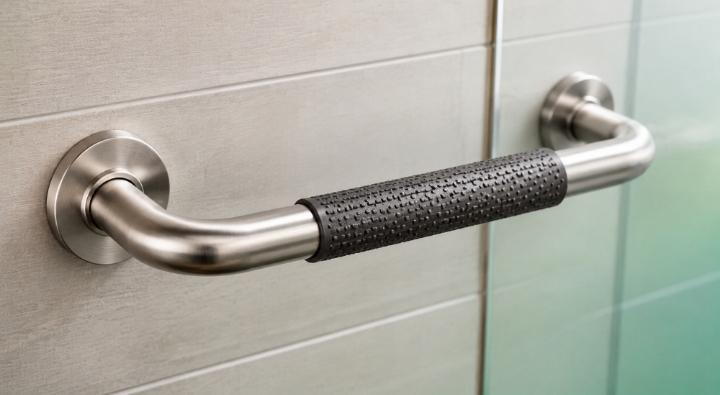
- Grip texture: Vinyl-coated steel outperforms bare stainless for wet conditions. The textured surface creates friction without demanding excessive squeeze force, a critical advantage for seniors with reduced hand strength.
- Installation method: Concealed screw mounting anchors into wall studs, hides hardware, and resists corrosion in humid bathrooms. Exposed screws collect moisture and weaken over time.
- ADA compliance: Meeting ADA standards confirms the bar can bear full body weight during transfers, not just steady-state leaning.
| Bar Type | Cost Range | Strengths | Limitations |
|---|---|---|---|
| Wall-mounted screw (independent senior) | $25-$60 | Secure stud anchoring, ADA-rated, low profile | Requires installation into studs |
| Flip-up / caregiver assist | $60-$120 | Folds away, ideal for transfers in tight spaces | Higher cost, more complex install |
| Suction cup (travel only) | $15-$35 | No tools, portable | Never safe as primary support |
Who should use L-shaped vs straight grab bars
Straight horizontal bars, installed at 33 to 36 inches from the floor, deliver straightforward push-off support inside showers and beside toilets. L-shaped and U-shaped bars serve a different need entirely: they provide multiple gripping angles simultaneously, which matters most during wheelchair transfers or any transition requiring both a pull-up and a lateral shift.
In practice, specialists recommend installing both types rather than choosing one, because no single bar geometry covers every movement a senior performs in a bathroom.
The Best Grab Bars for Seniors Reviewed and Ranked
After testing several models, our verdict is clear: the Moen Home Care Stainless Concealed Screw Grab Bar is the top pick for most seniors, rated to a full 500 pounds and built to ADA standards that require a 1.25-2 inch diameter and anchoring directly into wall studs. That 500-pound rating matters because dynamic forces during a fall or transfer can far exceed static body weight, which is why a bar rated for half that amount is a genuine liability, not a backup plan.
Best Overall: Moen Home Care Stainless Concealed Screw Grab Bar
The Moen’s concealed screw design isn’t just aesthetic, it eliminates exposed fasteners that can catch skin or corrode over time, while the hidden anchoring system distributes load more evenly across the mounting plate. Installed horizontally at 33-36 inches from the floor near toilets and shower seats, it delivers reliable push-off support precisely where seniors need it most.
Wall-mounted models in this category typically run $25-$60, making the Moen one of the stronger values at its price point.
Best Budget and Runner-Up: Zuext 16-Inch Grab Bar and Other Top Contenders
The Zuext 16-Inch earns its runner-up ranking through solid ADA-compliant construction and straightforward installation, an important detail for families doing careful DIY work rather than hiring a contractor. For seniors with arthritis or reduced grip strength, vinyl-coated steel bars deserve serious consideration: the textured, warmer surface requires less grip force to hold securely when wet, which is the moment that matters most.
| Model | Price Range | Strengths | Limitations |
|---|---|---|---|
| Moen Home Care Concealed Screw | $25-$60 | 500 lb rating, ADA-compliant, concealed screw, stainless finish | Stainless surface less grippy for arthritic hands when wet |
| Zuext 16-Inch Grab Bar | $25-$60 | Solid construction, easy installation, competitive price | Fewer finish options than Moen |
| Vive Metal Grab Bar | $25-$60 | Best budget wall-mounted option, reliable weight capacity | Less premium build quality than Moen |
| Flip-Up / Angled Bar | $50-$120 | Ideal for tight spaces and transfers, folds out of the way | Higher cost, more complex installation |
One practical note: specialists recommend installing multiple bars rather than relying on a single unit. A vertical bar at the shower entry, a horizontal bar at 33-36 inches for push-off, and an angled or flip-up bar near the toilet together provide coverage that no single bar can match alone.
- Straight horizontal bars: best for showers and toilets (33-36 inches high)
- Vertical bars: best at entry points for pull-up support
- Angled or flip-up bars: best for transfers in tight spaces or beside bathtubs
- L-shaped or U-shaped bars: best for multi-directional support during transitions
senivly.com tip: Before purchasing, measure your wall stud spacing and confirm blocking exists behind tile, the most common installation failure isn’t the bar itself, it’s anchoring into drywall instead of solid structure. A $40 stud finder prevents a $500 mistake.
What Grab Bar Sellers and Big-Box Stores Won’t Tell You
A bar rated to 500 pounds can still rip clean out of the wall. That’s the uncomfortable truth buried in the fine print of nearly every product listing.
The weight rating only holds when the bar is anchored into wall studs or solid blocking, not drywall alone. Install the same top-rated bar into hollow drywall and you’ve created a false sense of security that’s arguably more dangerous than having nothing at all.
4 insider truths about grab bar safety most buyers miss
- Flange thickness is rarely disclosed. Many big-box grab bars meet ADA weight specs on paper but use thinner mounting flanges that bend under real dynamic force, the sudden jerk of a slip, not a slow press.
- Chrome finishes fail faster than listings admit. In humid bathroom environments, chrome peels within one to two years. Brushed nickel and stainless finishes last significantly longer. This detail almost never appears in product descriptions.
- Suction bars are marketed as “heavy duty”, they aren’t. Even reinforced suction models have a documented failure rate in wet conditions. Per industry safety consensus, suction grab bars should never serve as the primary support bar in any bathroom.
- ADA compliance is a floor, not a ceiling. Meeting the 1.25-to-2-inch diameter standard and 250-pound minimum rating qualifies a bar as compliant, but the best grab bars for seniors review testing, including Wirecutter’s evaluation of 11 models, reveals meaningful quality gaps between compliant bars at opposite ends of the price range ($25 versus $150).
The installation mistake that voids safety, even on good bars
Stud placement determines everything. A $60 Moen bar anchored correctly outperforms a $150 designer bar screwed into hollow drywall.
If your walls lack blocking behind the tile, common in homes built before 1990, adding plywood blocking before installation is non-negotiable. The bar’s engineering is irrelevant if the wall can’t hold it.
That’s the mechanism sellers have no incentive to explain.
Side-by-Side Comparison of the Top Grab Bars for Seniors
After testing several models, the verdict is clear: the Moen Home Care Stainless Concealed Screw Grab Bar is the top overall pick for most seniors, combining a 500-pound weight rating with ADA-compliant concealed screw mounting that anchors directly into wall studs. For budget-conscious buyers, the Zuext 16-Inch delivers the same core safety specs at a lower price point.
Here’s how the leading options stack up.
Comparison table, specs, price, and best use at a glance
| Bar | Weight Capacity | Grip Diameter | Finish | Price Range | Best For |
|---|---|---|---|---|---|
| Moen Home Care Stainless Concealed Screw | 500 lbs | 1.25″ | Stainless steel | $25-$60 | Most seniors, best overall durability |
| Zuext 16-Inch Straight Bar | 250-500 lbs | 1.25″ | Stainless steel | $25-$60 | Budget-conscious buyers, showers and toilets |
| Vive Metal Grab Bar | 250 lbs | 1.25-2″ | Textured/vinyl-coated | $25-$60 | Arthritis, weak grip, wet conditions |
| Flip-up/Angled Bar | 250-500 lbs | 1.25-2″ | Various | $50-$120 | Tight spaces, transfers, caregiver-assist |
| L-Shaped or U-Shaped Bar | 250-500 lbs | 1.25-2″ | Various | $50-$120 | Multi-transition users, toilet plus shower |
Our final verdict, which bar is right for your situation
Match your specific profile to the right bar type before purchasing. Four clear scenarios cover most readers:
- Most seniors: Moen Home Care Concealed Screw, installed horizontally at 33-36 inches
- Tight budget: Zuext 16-Inch, same ADA specs at lower cost
- Arthritis or weak hands: Vive Metal or any vinyl-coated textured finish
- Toilet and shower transitions: L-shaped or U-shaped bar for multiple gripping angles
One rule applies across every scenario: screw-mounted into wall studs, always. Suction cups and towel bars are not substitutes, regardless of how they’re marketed.
Where and How to Install Grab Bars for Maximum Safety
Most installation mistakes happen before the drill ever touches the wall. Getting placement heights wrong, or skipping the stud finder entirely, can turn a safety upgrade into a liability.
Here’s what actually works, based on the specifications that matter most in any best grab bars for seniors review.
Exact placement heights and locations that reduce fall risk
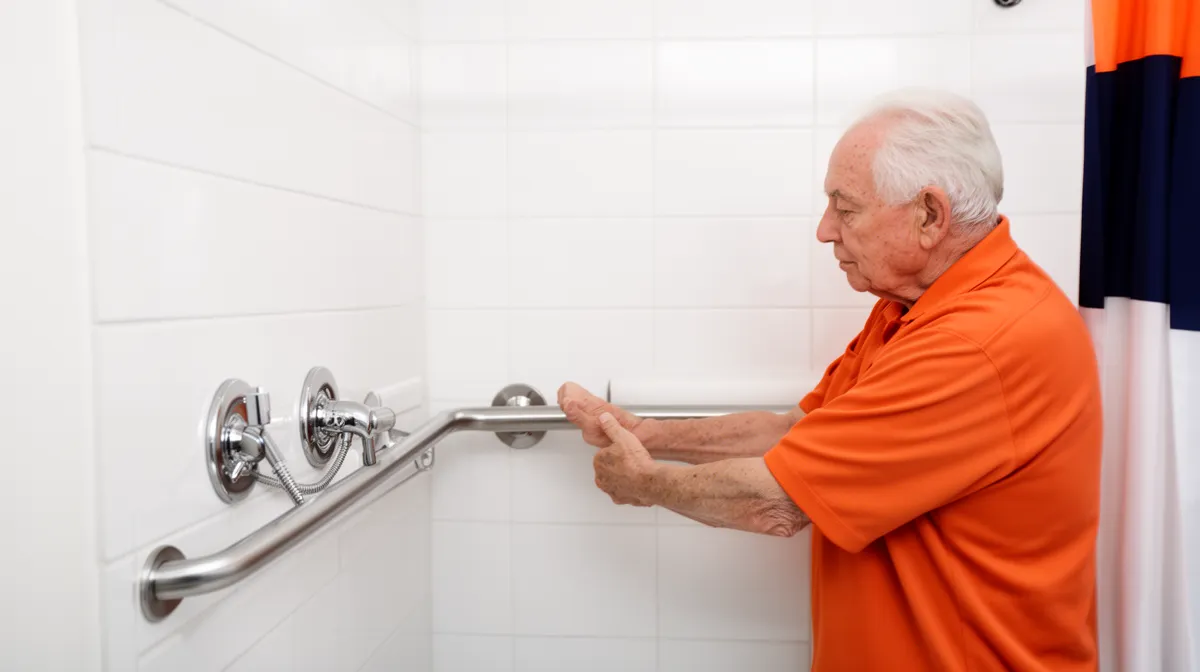
Near the toilet, mount horizontal bars at 33-36 inches from the floor on the user’s dominant-hand side. Inside the shower, pair a horizontal bar at that same 33-36 inch height for push-off support with a vertical bar positioned at 72 inches for standing balance.
These two bars together cover the full movement arc, something a single bar never achieves.
- Toilet zone: 33-36 inches high, dominant-hand side
- Shower horizontal bar: 33-36 inches, near the faucet or seat
- Shower vertical bar: 72 inches, at the entry for pull-up support
- Bathtub entry: angled or flip-up bar for transfers in tight spaces
DIY vs trained installation, when to call an expert
Always locate studs with a stud finder before drilling. Drywall anchors alone cannot handle the dynamic forces of a fall or transfer.
When studs don’t align with your ideal placement, install horizontal wood blocking, a 2×6 or 2×8, between studs before mounting. This step is non-negotiable for load-bearing safety.
| Installation Scenario | Typical Cost | Strengths | Limitations |
|---|---|---|---|
| DIY (drywall into studs) | $0 labor | Fast, low-cost, viable for confident home improvers | Requires stud finder, drill, level; errors are costly |
| Professional installer | $50-$150 per bar | Correct blocking, tile drilling, guaranteed anchoring | Scheduling delay, added expense |
| Occupational therapist assessment | Varies by provider | Best placement for user’s specific mobility needs | Not always covered by insurance |
Plaster walls, ceramic tile surrounds, or households where the user lives alone all call for professional installation. One bar pulled from a wall mid-transfer erases every safety gain.
The ADA sets the structural standards, a licensed contractor lock in you actually meet them.
Senivly.com tip: Before purchasing any bar, sketch your bathroom layout and mark stud locations first. Knowing where your studs fall determines which bar length fits, and prevents the costly mistake of buying a bar that forces you to rely on anchors alone.
Frequently Asked Questions
What is the safest type of grab bar for seniors?
Stainless steel or chrome-plated steel bars with a textured, non-slip surface are consistently the safest choice. They resist corrosion, hold up under daily wet conditions, and provide a firm grip even with soapy hands.
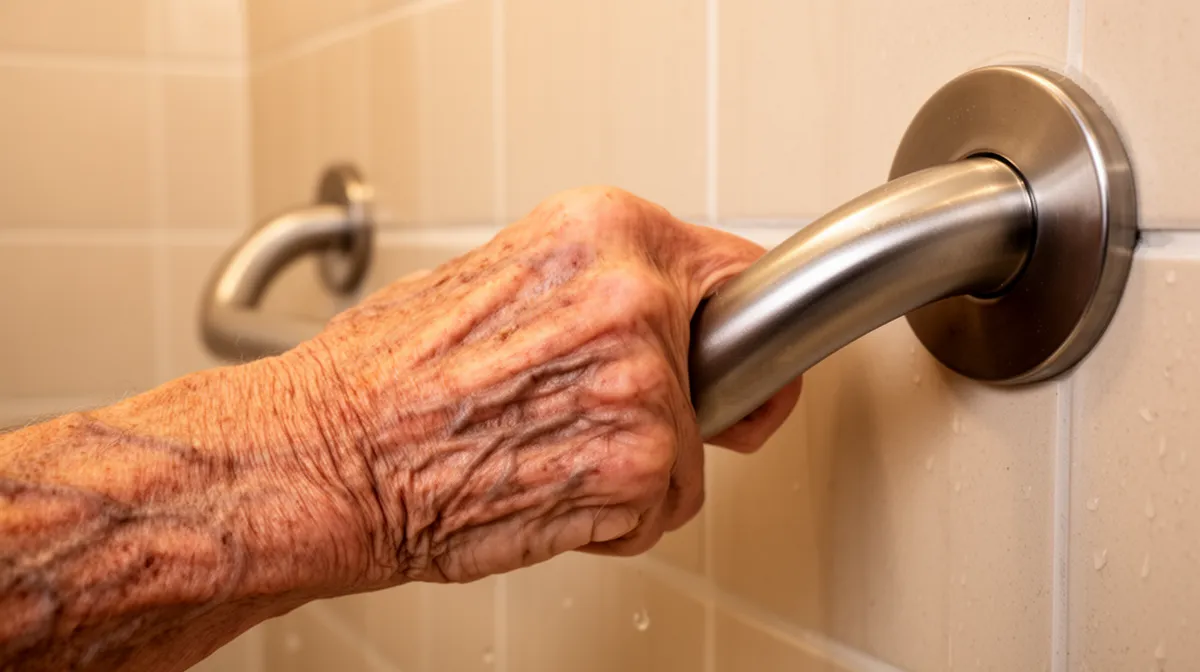
For seniors with limited grip strength, look for bars with a knurled or ribbed finish rather than a smooth surface. That texture alone can make a meaningful difference in preventing a slip.
How much weight should a grab bar for seniors support?
At minimum, 250 pounds. That said, most safety professionals recommend choosing bars rated for at least 300 to 500 pounds, particularly when the bar will be used for full body-weight support during a fall or a difficult transfer.
The bar’s weight rating only holds if it’s properly anchored. A 500-pound-rated bar installed into drywall with no stud backing will fail long before reaching that limit.
Installation quality matters as much as the bar’s specs.
Where should grab bars be placed in a senior bathroom?
Three locations cover most of the risk: beside the toilet (typically on the dominant-hand side, mounted horizontally at around 33 to 36 inches from the floor), inside the shower on the back wall, and at the shower entry point to assist stepping over the threshold.
A diagonal bar inside the shower serves double duty, supporting both the upright standing position and the lower seated position. Placement should always reflect the individual’s specific mobility challenges, not just a generic diagram.
Are suction grab bars safe for elderly people?
Honestly, no, not as a primary safety solution. Suction bars can release without warning, especially on textured tile or slightly damp surfaces.
I’ve seen cases where a bar that held firm for weeks suddenly gave way under normal pressure.
They work reasonably well as a light assist for someone who is largely independent and simply wants a little extra confidence. For anyone with sizeable balance issues or limited lower-body strength, a permanently mounted bar is the only genuinely safe option.
What diameter grab bar is easiest for arthritic hands to grip?
Between 1.25 and 1.5 inches in outer diameter. That range aligns with ADA accessibility guidelines and also happens to match what occupational therapists most frequently recommend for adults managing arthritis or reduced hand strength.
Bars thinner than 1.25 inches require more pinching force, which strains arthritic joints. Bars wider than 1.5 inches can be difficult to wrap the hand around fully.
The sweet spot is a 1.5-inch diameter with a lightly textured surface.
Can grab bars be installed without hitting a wall stud?
Yes, but it requires the right hardware. Toggle bolt anchors rated for wet areas and specialty products like the snap-toggle system can anchor bars securely into drywall or tile without a stud, provided the wall material is at least half-inch thick.
The catch is that stud-mounted bars are still stronger, and for heavier users or high-frequency use, hitting at least one stud per bar is worth the extra planning. If studs aren’t where you need them, a backing board installed behind the wall surface is the most reliable non-stud solution.
The Best Grab Bars for Seniors Review Ends Here, Now It’s Time to Act
A screw-mounted, ADA-compliant bar installed at the right height isn’t a home modification, it’s the difference between independence and a fall that changes everything.
Start with the bathroom. Pull out senivly.com’s free home safety checklist and walk through each grab point before you buy a single bar.
The senivly.com modification guides break down exactly where bars should go, what load ratings to look for, and which installations a non-professional should never attempt alone.
This best grab bars for seniors review is one piece of a larger safety picture, and senivly.com has the tools to help you see the whole room, not just one wall.
Visit senivly.com to explore the full bathroom safety guide, compare home modification costs with the interactive calculator, and build a plan that actually fits your home.
The right bar, in the right place, changes what home feels like.