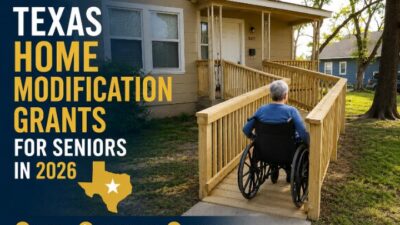

New York Home Modification Grants for Seniors in 2026 — The Programs That Actually Fund Your Project
Nobody tells you how difficult it is to find a stair lift installer on a Friday afternoon while your mother is being discharged from a Manhattan hospital with a new hip. I know this because a reader named Carol emailed me about exactly that situation — three weeks of phone tag with contractors, two programs she applied to that had frozen waitlists, and a hospital social worker who handed her a pamphlet with four phone numbers, only two of which were still operational.
New York is one of the most expensive states in the country and also, paradoxically, one of the most generously funded for senior home assistance — if you know what you are looking for and where to look. New York home modification grants for seniors exist across more programs than almost any other state, at every level from city block to federal agency. This guide exists because Carol’s situation should not have been as difficult as it was.
⚠️ Important Disclaimer
This page lists publicly available assistance programs for informational purposes only. Funding levels, eligibility requirements, income limits, and program availability change frequently and vary by county and municipality across New York State. Always contact each program directly to verify current availability before making any plans. Senivly is an independent resource and is not affiliated with any government agency, grant program, or contractor.
🏠 What’s Available Right Now
New York home modification grants for seniors come from seven active funding sources in 2026:
- NY ACCESS HOME Program (DHCR) — state grants specifically for accessibility modifications
- Community Development Block Grants (CDBG) — city and county home repair and modification programs
- USDA Section 504 — up to $10,000 in grants for rural New York seniors aged 62+
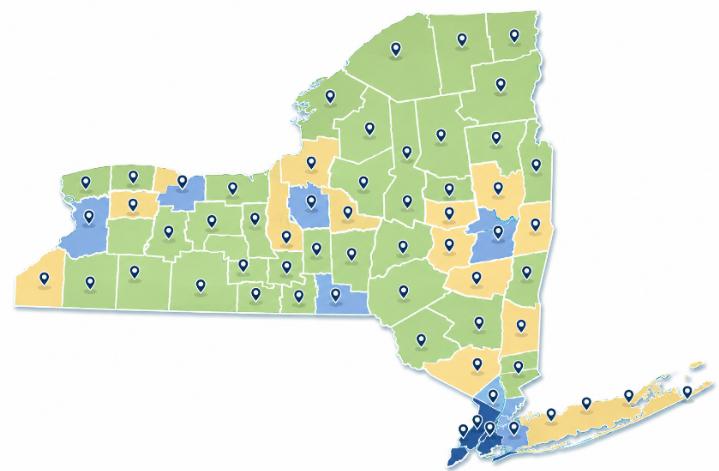
- NY Office for the Aging (NYSOFA) — AAA Programs — 59 county-level agencies with local modification programs
- NY RESTORE Program — Emergency repairs and modifications for low-income homeowners
- Habitat for Humanity NY Chapters — Home repair and accessibility in many New York counties
- New York State Division of Veterans’ Services + VA Grants — For qualifying New York veterans
New York Home Modification Grants for Seniors — Why This State Requires a Different Approach
New York State has one of the most structurally complex senior assistance landscapes in the country — not because the programs are scarce, but because the delivery system is so layered. State programs, city programs, county programs, nonprofit programs, and federal overlays all operate simultaneously, often without coordinating with each other or even knowing what the neighboring agency offers.
A senior in Buffalo navigates a completely different set of New York home modification grants for seniors than a senior in Queens, who in turn has different options than a senior in a rural Sullivan County township. The same state, three entirely different sets of programs — often with the same names applied to different things.
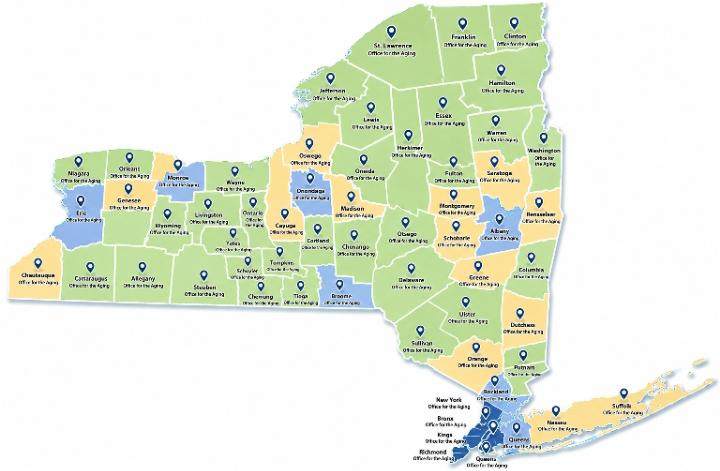
The New York State Office for the Aging (NYSOFA) operates through 59 county-level Area Agencies on Aging — one for every county in the state. Each agency is locally governed, locally funded in part, and locally designed. What Westchester County’s AAA funds in 2026 may be entirely different from what Onondaga County’s does, even though they draw from the same federal Older Americans Act money.
This is both New York’s greatest strength and its greatest navigation challenge. The funding depth is real. The discovery process is genuinely hard. This guide maps the programs — and more importantly, tells you exactly which door to knock on first in your county.
NY Senior Home Improvement Assistance — Every Major Program Explained
Aging in Place Grants New York — Full Side-by-Side Comparison
| Program | Funder | Max Grant | Age Req. | Income Limit | Rural Only? | Coverage | Apply Via |
|---|---|---|---|---|---|---|---|
| Access Home (DHCR) | State | $25,000 | None (mobility need) | ≤80% AMI | No — statewide | Ramps, grabs, bathroom, doors, stair lifts | hcr.ny.gov |
| NY RESTORE | State | Varies by county | 60+ | Low-income | No — statewide | Emergency repairs + safety mods | County AAA |
| USDA Section 504 | Federal | $10,000 grant | 62+ for grant | ≤50% AMI | Yes — rural only | Ramps, grabs, roof, hazard removal | USDA NY office |
| NY AAA Programs | Federal/State | Varies by county | 60+ | Varies | No — all NY | Grabs, minor mods, safety equipment | 211 or county AAA |
| CDBG — Cities | HUD/Local | Up to $40,000 | Varies | ≤80% AMI | No — city specific | Ramps, grabs, full rehab | City housing dept |
| Habitat NY Chapters | Nonprofit | Varies by chapter | None specified | 30–60% AMI | Where chapters exist | Ramps, roof, accessibility, HVAC | Local Habitat chapter |
| VA SAH/SHA Grants | Federal VA | Up to $109,986 | None (veterans) | None | No — statewide | Full accessibility modifications | veterans.ny.gov + va.gov |
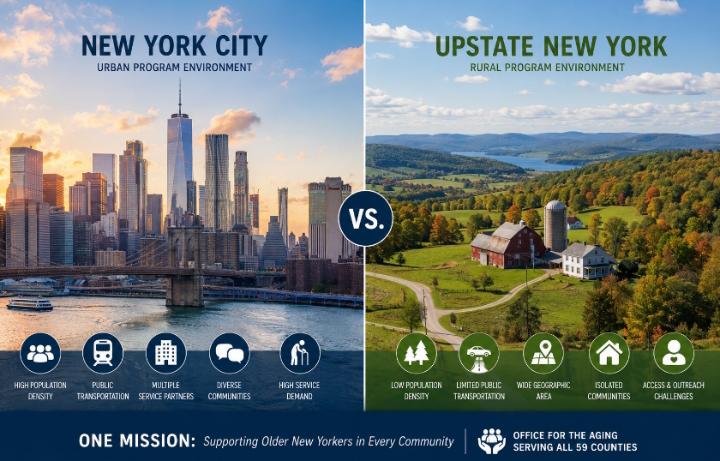
Aging in Place Grants New York — The NYC vs Upstate Reality Nobody Talks About Plainly
This is the most practically useful observation I can share about aging in place grants in New York: a senior’s experience navigating these programs is almost entirely shaped by geography within the state. The differences are not minor variations — they are fundamentally different systems with different programs, different administrators, and different application experiences.
New York City
NYC has a dense ecosystem of programs — DFTA, HPD, borough-level programs, borough president grant funds, and dozens of nonprofit organizations receiving city contracts specifically for senior home modification work. The challenge in NYC is not scarcity — it is waitlist length and navigation complexity. DFTA’s own programs in NYC often have waitlists of 6–18 months for major modifications.
The Access Home program from DHCR, however, often processes faster than city programs for NYC residents — and is the first program I would tell a New York City senior to investigate before joining a city program waitlist. The $25,000 ceiling and statewide administration make it genuinely competitive even against NYC’s local options.
Upstate and Rural New York
Outside the NYC metro area, the primary sources of New York home modification grants for seniors are the county AAA programs, RESTORE, USDA Section 504 (in genuinely rural counties), and local CDBG programs in larger cities like Buffalo, Rochester, and Albany. Waitlists tend to move faster outside NYC — Erie County and Monroe County specifically have reputations for processing RESTORE applications more quickly than downstate programs.
For rural upstate seniors, the USDA Section 504 program is genuinely underused relative to funding availability. I spoke with a USDA outreach coordinator for New York who told me the program routinely has remaining funds late in each fiscal year because of low application volume — the grant money is there, but people simply do not apply. This is one of the clearest gaps between NY senior home improvement assistance that exists and what seniors actually access.
How Much These Modifications Cost Before Grants — New York Pricing Reality
New York has among the highest contractor labor rates in the United States — particularly in the NYC metro area. Understanding what a fair price looks like before applying for any grant, and before getting a contractor quote, matters more in New York than in almost any other state.
I always recommend running your specific project through a cost calculator before making any calls — both to know what you might be quoted and to understand how much grant coverage you actually need. Use the free Wheelchair Ramp Cost Calculator to get realistic ramp estimates for New York, the free Stair Lift Cost Calculator for stair lift pricing by staircase type, or the Walk-In Tub Cost Calculator if a bathing conversion is your priority.
💰 Estimated New York Modification Costs vs Grant Coverage
- Wheelchair ramp: $3,000–$8,000 in NY metro / $2,000–$5,000 upstate — typically covered by CDBG and Access Home
- Grab bar installation (per bar, professional): $150–$350 in NY — almost always fully covered by AAA and RESTORE programs
- Walk-in shower conversion: $5,000–$12,000 in NY metro — covered by Access Home up to $25,000 limit
- Stair lift (straight staircase): $3,500–$7,000 in NY — covered by Access Home; VA grants for veterans
- Full accessible bathroom remodel: $10,000–$22,000 in NY metro — often requires stacking Access Home + CDBG
For larger projects where you want a complete picture before calling a single contractor, the free Home Modification Cost Calculator covers all major modification types with regional pricing breakdowns.
Carol’s Story — How the Right Door Changed Everything
I want to close the loop on Carol’s situation from the opening of this guide, because it became one of the most instructive examples I have encountered about how New York home modification grants for seniors actually work in practice versus how they appear on paper.
📋 Case Study — Carol’s Mother, 78, Queens, New York
The Situation
Carol’s mother was discharged from a Queens hospital following hip replacement with 48 hours’ notice. The home had two interior steps, a standard tub, and no grab bars. Carol had two hours to figure out what to do before she needed to leave work.
The Wrong Doors First
She called the four numbers on the hospital pamphlet. Two were disconnected. One was a general City of New York phone line. One connected her to a program with a 14-month waitlist. She spent four hours on hold before her lunch break ended.
What Actually Worked
She emailed me after reading an earlier version of this guide. I told her to call 211 and ask specifically for RESTORE program referrals and then separately apply to Access Home for the longer-term modifications. The 211 operator connected her to the Queens AAA office within 4 minutes. The AAA arranged for emergency grab bar installation through a contractor partner within 72 hours — at no charge.
Three Months Later
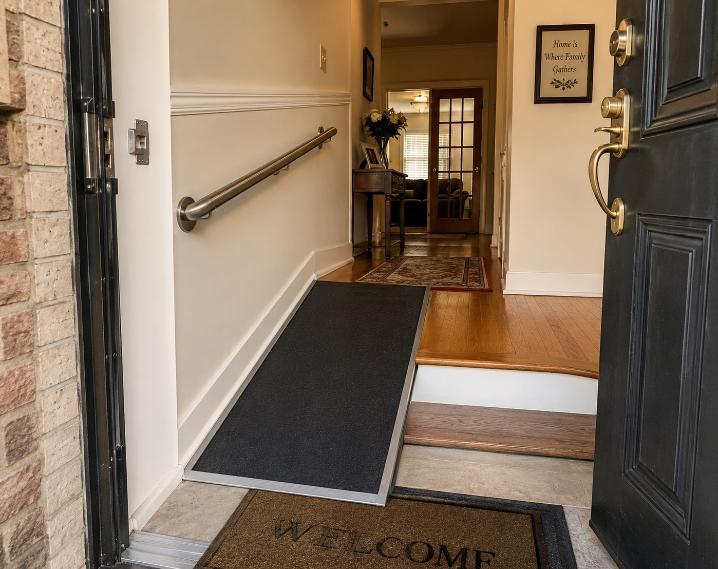
The Access Home application Carol submitted the same week was approved for a walk-in shower conversion and a ramp over the interior steps. Total Carol paid: $0. Total value of modifications: approximately $9,200. The 211 call took 7 minutes.
New York Home Modification Grants for Seniors — Step-by-Step Application Guide
-
1
Call 211 — your single most effective first step
Available 24 hours, seven days a week. Tell the operator you need home modification or accessibility repair assistance for a senior homeowner in your specific county. Ask for RESTORE referrals, AAA referrals, and any emergency modification programs. This one call identifies what is actually active and available right now — something no state or federal website can do accurately.
-
2
Apply for Access Home through DHCR simultaneously
Do not wait for a 211 referral to come back before applying to Access Home. Go to hcr.ny.gov and begin the Access Home application at the same time you make the 211 call. This program has the highest ceiling ($25,000) of any state-level source of New York home modification grants for seniors and can fund items that local programs cannot.
-
3
Prepare your documentation before any call or appointment
Every program will need: proof of home ownership (deed or property tax bill), proof of income (last year’s tax return or Social Security award letter), a government-issued photo ID, and proof of primary residency. For Access Home specifically, documentation of the disability or mobility limitation is also required — a doctor’s letter noting mobility impairment works well.
-
4
Be specific about what you need and why
“I need a grab bar in the bathroom” is weaker than “I need a grab bar in the bathroom because my mother returned from hip surgery and cannot safely transfer in and out of the tub without support.” The second statement tells the intake worker everything they need to route the application to the right funding source and priority tier.
-
5
Follow up every 3–4 weeks without exception
New York programs move faster for families who check in regularly. Funding cycles release mid-year, waitlist positions shift as other applicants withdraw, and local programs sometimes receive emergency supplements that create short windows of faster processing. A phone call every three weeks costs five minutes and has a meaningful effect on where an application lands in the queue.
💡 What to Do Right Now While Any Application Processes
New York grant program waitlists range from 72 hours in an emergency RESTORE case to 18 months for large CDBG renovations in NYC. While waiting, address the highest-risk home hazards immediately with low-cost, no-contractor-needed changes. The 20-item home safety checklist guide covers exactly this — changes under $50 that can be done this weekend and address the most common home hazards while the bigger modification waits for funding.
If the senior lives alone or spends significant time alone during the day, a medical alert system for seniors living alone provides genuine protection during the gap between when a modification is needed and when it is funded and installed.
Stacking New York Home Modification Grants for Seniors — How to Combine Multiple Programs
One of the most valuable and least understood aspects of New York home modification grants for seniors is that most programs explicitly allow — and even expect — applicants to combine multiple funding sources. This is called “stacking” and it is how many families cover projects whose total cost exceeds any single program’s limit.
A typical stack for a larger bathroom modification in New York might look like this: an AAA minor modification program covers the grab bars immediately at no cost. The Access Home program covers the walk-in shower conversion (up to $25,000) once approved. The local CDBG program covers the doorway widening that Access Home did not fund. Total out of pocket: $0 for a project that would have cost $14,000–$18,000 privately.
📊 Example Stacked Funding Plan — Queens Senior, Full Bathroom Modification
Grab bars installed — $0 out of pocket
Walk-in shower conversion covered — up to $25,000
Doorway widening and flooring — remaining gap covered
$0 — project valued at ~$16,000
The key principle of stacking is simple: apply to all programs simultaneously, describe your full project need clearly in each application, and let intake workers know you are pursuing multiple funding sources. Most programs are designed to work alongside each other, and intake workers will often help you understand which program to prioritize for which specific part of a project.
If you are researching grants in other states for a family member, the California home modification grants guide and the Florida home modification grants guide cover the equivalent programs in those states with the same level of detail.
What Goes Wrong — Mistakes NY Families Make When Applying
After researching New York home modification grants for seniors for this guide and talking with families who have navigated the process, the same mistakes come up consistently. These are worth understanding before you start.
- Starting with Google instead of 211: Google searches for “New York home modification grants” return a mix of outdated state pages, national guides that don’t reflect New York-specific programs, and vendor websites. A 211 call takes 5 minutes and connects you directly to someone who knows what is currently funded in your county.
- Applying to only one program at a time: Carol’s situation improved the moment she applied to RESTORE (via AAA) and Access Home simultaneously. Sequential applications waste months. Most programs are designed to work with each other and encourage concurrent applications.
- Assuming you don’t qualify before checking: The Access Home program’s eligibility is based on mobility need, not just income. Seniors who exceed income thresholds for other programs frequently qualify for Access Home. Never assume disqualification — always call and ask specifically.
- Not following up after submitting: New York programs move faster when applicants check in consistently. Four weeks of silence after submission is four weeks of lost position. A 5-minute call every three weeks takes less total time than one 2-hour wait at the start of the process.
- For NYC specifically — not using DFTA’s case management entry: NYC DFTA case managers can simultaneously assess for multiple programs including AAA, RESTORE, and city-level CDBG programs in a single intake. Calling DFTA directly (via 311 or 212-CITY-GOV) rather than each program separately is meaningfully faster in the five boroughs.
Questions I Get Asked About New York Home Modification Grants for Seniors
The Call Worth Making Today
Carol’s 7-minute call to 211 connected her mother to emergency grab bars, a funded shower conversion, and a modification that removed the interior step — everything her mother needed to come home safely and stay home independently. Four phone numbers on a hospital pamphlet had failed her for two days. One 211 call fixed it in a week.
New York home modification grants for seniors are genuinely available — in every county, at multiple funding levels, for a wider range of modifications than most families realize. The programs exist. The money is there. The single thing standing between most families and accessing it is knowing which number to call first.
That number is 211. Available 24 hours, free from any New York phone. Ask for home modification assistance for a senior homeowner in your county. Tell them what the senior needs and why. Everything else in this guide follows from that one call.
And while any application processes, the free Home Safety Checklist tool walks you through your specific home room by room and builds a personalized action list for changes you can make this weekend — many of them free — while the grant funding works its way through the system.
Upstate-Specific Resources — Programs That Work Better Outside NYC
One of the consistent frustrations I hear from families in Buffalo, Rochester, Syracuse, Albany, and the rural regions is that most information about New York home modification grants for seniors is implicitly written for the NYC experience — which is a fundamentally different system from what exists two hours north or west of the city.
Upstate New York has several resources worth specifically naming for families outside the metro area.
Rebuilding Together Chapters — Buffalo, Rochester, and Rural NY
Rebuilding Together is a national nonprofit with active New York affiliates — particularly in Western New York. Their Safe at Home program specifically focuses on accessibility modifications for elderly and disabled homeowners using volunteer labor and donated materials, making them one of the fastest-executing sources of no-cost modification work for qualifying seniors outside the city.
Unlike grant programs that require months of documentation review, Rebuilding Together works through volunteer scheduling — which means once you are accepted into the program, actual installation often happens within weeks rather than months. They are not an alternative to grant programs, but they are an excellent parallel track for seniors who need modifications quickly while waiting on Access Home or CDBG applications.
Community Action Agencies — An Often-Overlooked Upstate Resource
Community Action Agencies (CAAs) exist in every New York county and serve as local administration points for multiple state and federal assistance programs. Many upstate CAAs administer weatherization and home repair programs that include accessibility modifications as qualifying work — sometimes under less widely advertised funding streams than the headline programs covered earlier in this guide.
The New York State Community Action Association (NYSCAA) has a directory of all state CAA members — and asking your local CAA specifically whether they administer any home modification or weatherization programs frequently surfaces funding streams that are not separately marketed to seniors.
Town and Village-Level Programs in Rural New York
A detail that genuinely surprises most families: individual towns and villages in New York can and do administer their own small home repair and modification programs using Community Development funds allocated at the municipality level. These are almost never listed in any statewide directory, they are sometimes funded only for a single year at a time, and the only reliable way to find them is to call your town or village office directly and ask whether any home repair or modification assistance programs currently exist for seniors.
I spoke with a family in a small Chemung County township who found a $3,500 town-level ramp grant this way — a program with a 5-person application list that funded their entire project within six weeks. The grant had never appeared in any state database search they had tried.
What Not to Do — Traps That Cost NY Families Time and Money
Beyond the specific application mistakes covered earlier, there are a handful of broader traps that slow families down when pursuing New York home modification grants for seniors — and they are worth naming plainly.
⚠️ Costly Traps to Avoid
- Paying a private company to “help you apply” for grants: Several businesses in New York charge fees to identify and apply for senior home modification grants. These grants are all publicly available, free to apply for, and require no paid intermediary. Any company charging for access to these programs should be avoided.
- Starting work before a grant is approved: Almost all programs require that approved work has not already started before an application. Beginning a modification before a grant is approved typically disqualifies the project from funding. Always wait for written approval before any contractor begins work on a modification you are seeking grant funding for.
- Using a contractor not approved by the program: Grant programs typically require contractors from an approved list. Using an outside contractor — even a reputable one — can disqualify reimbursement. Always ask the program for their approved contractor list before getting any quotes.
- Assuming a program is inactive because its website hasn’t been updated: Several New York programs have outdated websites but are actively funded. A phone call to the administering office is always more reliable than what a state or county website currently displays.
📖 Recommended Reading
Sources & References
- NY Homes and Community Renewal — Access Home Modification Program
- NY Office for the Aging — RESTORE Program
- NYSOFA — Area Agencies on Aging County Directory
- USDA — Section 504 Home Repair Loans and Grants
- New York State Division of Veterans’ Services
- NYC Department for the Aging (DFTA)
- US Department of Veterans Affairs — Adaptive Housing Grants
💬
New York Seniors and Families — What Did You Find That Worked?
I read every comment personally. What county are you in? Which program came through first? Was there a program you found that isn’t listed here? Did the Access Home application move faster or slower than expected? Real experiences from real New Yorkers navigating these programs are the most valuable thing on this page — share yours below.
Dealing with a specific situation — a hospital discharge with no time, a program waitlist that’s been closed, an income level that keeps disqualifying you? Describe it below and I’ll point you toward the right option.