
California Home Modification Grants for Seniors in 2026 — The Programs Nobody Explains Clearly
Have you ever priced a wheelchair ramp in California? I asked four contractors in three different counties last month and got quotes ranging from $2,800 to $6,500 for what was essentially the same eight-foot ramp. Not one of them mentioned that a grant might cover most of it.
That is the pattern I kept running into while researching California home modification grants for seniors. Contractors quote. Families panic about the price. Nobody mentions the assistance programs sitting one phone call away. So I built this guide specifically to fix that gap — county by county, program by program, written by someone who actually called every office listed below.
⚠️ Important Disclaimer
This page lists publicly available assistance programs for informational purposes only. Funding levels, eligibility rules, and income limits change frequently and vary by county. Always contact each program directly to confirm current availability before making any decisions. Senivly is an independent resource and is not affiliated with any government agency, grant program, or contractor.
🏠 Here’s What’s Out There
California funds aging in place grants through six main channels in 2026:
- CalHome Program — state-funded grants and loans for home rehabilitation and accessibility
- USDA Section 504 Repair Program — up to $10,000 in grants for rural California seniors 62+
- California Area Agencies on Aging (AAA) — 33 regional agencies covering all 58 counties
- Community Development Block Grants (CDBG) — city and county home repair programs
- In-Home Supportive Services (IHSS) related referrals — county social service connections to modification resources
- CalVet Home Loan and Veterans Programs — for qualifying California veterans
Senior Home Repair Assistance California — Why This State Is Genuinely Harder to Navigate
California has 58 counties, and I want to say upfront that this is the single biggest obstacle to finding senior home repair assistance in California. Unlike Florida’s SHIP program, which uses one consistent name statewide, California funnels money through CalHome to individual jurisdictions that each name and structure their own local programs differently.
Sacramento County might call theirs the “Owner-Occupied Rehabilitation Program.” Los Angeles County might call a similar program the “Home Improvement Program.” Fresno might fold it into a broader “Neighborhood Preservation” initiative. Same federal and state money, three completely different names — which is exactly why a Google search for “California home modification grants” rarely surfaces the right local program for any specific person.

The California Department of Housing and Community Development (HCD) administers CalHome at the state level and distributes funds to local jurisdictions and nonprofit organizations, who then build their own programs around the money. The state-level page is a good starting point — but the real action happens at the county and city level.
I spoke with a retired postal worker in Stockton who had been told by two separate friends that “California doesn’t really have anything for this.” That was wrong — San Joaquin County had an active rehabilitation program that funded exactly her bathroom accessibility need. She simply hadn’t found the right door to knock on.
California Home Modification Grants for Seniors — Every Program Explained Simply
California Aging in Place Grants — Side-by-Side Comparison
| Program | Funder | Max Grant | Age Req. | Income Limit | Rural Only? | Coverage | Apply Via |
|---|---|---|---|---|---|---|---|
| CalHome | State | Varies by jurisdiction | None (seniors prioritized) | ≤80% AMI | No — statewide | Ramps, grabs, accessibility, repairs | Local city/county housing dept |
| USDA Section 504 | Federal | $10,000 grant | 62+ for grant | ≤50% AMI | Yes — rural only | Ramps, grabs, roof, hazard removal | USDA CA office |
| CA Area Agencies on Aging | Federal/State | Varies by region | 60+ | Varies | No — all CA | Grabs, minor mods, safety equipment | 2-1-1 or aging.ca.gov |
| CDBG — City/County | HUD/Local | Up to $75,000 | Varies | ≤80% AMI typical | No — city specific | Ramps, grabs, full rehab | City housing dept |
| IHSS Referrals | County | N/A — referral only | None specified | Low-income | No — all CA | Connects to other programs | County social services |
| CalVet / VA Grants | State + Federal | Up to $109,986 | None (veterans) | None for VA grants | No — statewide | Full accessibility modifications | calvet.ca.gov + VA.gov |
What These Modifications Actually Cost in California — Before and After Grants
California’s higher cost of living means contractor pricing for accessibility modifications runs noticeably above the national average — which is exactly why these grant programs matter more here than in lower-cost states. Before applying anywhere, it helps to know what a fair price actually looks like.
The wheelchair ramp quotes I mentioned earlier — $2,800 to $6,500 for the same basic structure — illustrate this clearly. Using the free Wheelchair Ramp Cost Calculator on Senivly before getting quotes gives you a realistic regional price range, so you immediately know whether a contractor’s number is fair or inflated — and whether a grant covering “up to $10,000” would realistically cover your full project or only a portion of it.
💰 Typical California Modification Costs vs Common Grant Ceilings
- Wheelchair ramp: $2,800–$6,500 in CA — covered fully by most CalHome and CDBG programs
- Grab bar installation (per bar): $120–$250 in CA — almost always fully covered
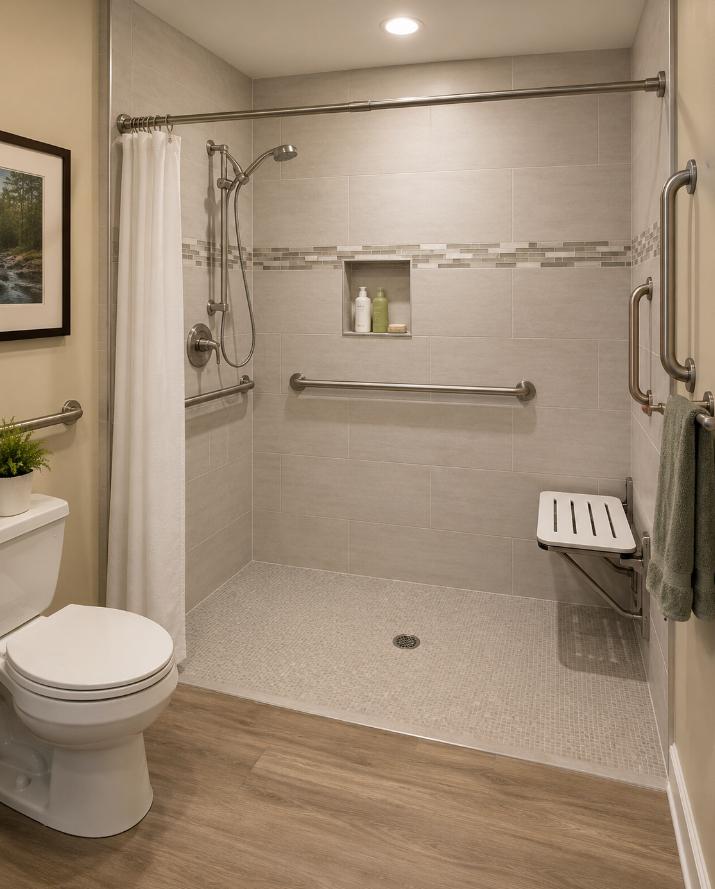
- Walk-in shower conversion: $4,000–$9,000 in CA — partially covered by USDA 504, fully by larger CDBG programs
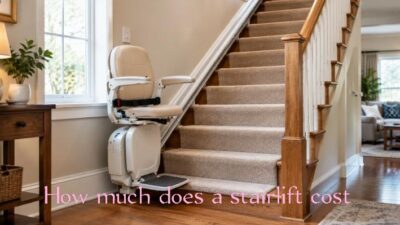
- Stair lift: $3,000–$6,500 in CA — sometimes covered, varies by program
- Full accessible bathroom remodel: $8,000–$18,000 in CA — typically requires combining CDBG funding with personal contribution
How a Stockton Senior Found the Right Door to Knock On
The retired postal worker I mentioned earlier deserves the full story, because it illustrates exactly how the California system actually works once you find the right entry point.
📋 Case Study — Margaret, 76, Stockton, California
Situation
76 years old, retired postal worker, lived in her San Joaquin County home for 38 years. Needed a roll-in shower conversion after a hip replacement made stepping over a tub edge genuinely risky. Two contractor quotes: $7,200 and $8,900.
What She Did
Two friends told her California “didn’t have anything.” She called 2-1-1 anyway out of frustration more than hope. Was connected directly to San Joaquin County’s Community Development rehabilitation program — the local name for CalHome funding in her county.
What Happened
Her income qualified comfortably under the 80% AMI threshold. The county program funded the full roll-in shower conversion as a deferred-payment loan — meaning no monthly payments, with repayment due only if she sells the home. Total out of pocket: $0.
Why Her Friends Were Wrong
They had searched “California home modification grants” and found generic national articles that never mentioned San Joaquin County’s specific program by its actual local name. The program existed the entire time — it was simply invisible to a general search.
California Aging in Place Grants — How to Find Your County’s Actual Program
Because California’s program names vary so dramatically by county, the application strategy here needs an extra step compared to states with one unified program name.
-
1
Call 2-1-1 — do not start with a Google search
Margaret’s experience proves this point. Generic searches rarely surface the correctly named local program. Dial 2-1-1 anywhere in California and tell them you need home modification or rehabilitation assistance for a senior homeowner in your specific county. They know the actual local program name.
-
2
Also contact your county’s Area Agency on Aging directly
Run this in parallel with the CalHome inquiry. Find your specific AAA at aging.ca.gov. Smaller modifications often move faster through the AAA while larger rehabilitation funding processes through CalHome.
-
3
Gather documents before any appointment
Proof of ownership (deed or property tax statement), proof of income (tax return or Social Security award letter), government-issued ID, and proof of primary residence. Having these ready prevents delays in California’s already document-heavy local programs.
-
4
If receiving IHSS, ask your caseworker directly
As covered above, IHSS caseworkers often have more current information about active local programs than what is published online. This is a uniquely useful California-specific shortcut if a senior is already engaged with county social services.
-
5
Follow up every 3–4 weeks
California’s high demand for housing assistance means waitlists are common, particularly in coastal counties. Regular follow-up keeps your application active and visible when funding cycles release additional capacity mid-year.
💡 While You Wait — Low-Cost Steps That Help Right Now
California waitlists can run several months in high-demand counties. Use the 20-item home safety checklist to identify changes you can make right now for under $50 — many take less than an hour and address real risks while the larger modification is pending.
Staying physically capable while waiting for modifications also matters. The low-impact exercise routine I built with real seniors takes 20 minutes a day and genuinely improves strength and balance — which reduces the daily risk these modifications are meant to address in the first place.
What California Seniors Ask Me Most
The Phone Call Worth Making This Week
I think about those four contractor quotes a lot — $2,800 to $6,500 for the same ramp, and not one mention of a program that might cover it. That gap between what California funds and what California families actually know about is the entire reason this guide exists.
Margaret’s friends told her nothing existed. They were wrong, and the program had been sitting in San Joaquin County’s budget the entire time, waiting for someone to ask the right office the right question. That is the pattern across nearly every county in this state.
Call 2-1-1 this week. Ask specifically for home modification or rehabilitation assistance for a senior homeowner in your county. It costs nothing and takes about ten minutes — far less time than the months most families spend assuming nothing is available.
And if you are also helping a senior in another state, the Texas home modification grants guide and the Florida home modification grants guide cover the equivalent programs there in the same level of detail.
📖 Recommended Reading
💬
California Seniors — What Did Your County Call Its Program?
Because every county names its program differently, I want this comment section to become a real resource. What is your county’s actual program name? How long was your waitlist? Did you find a path that isn’t listed here? Share it below — it genuinely helps the next person searching for their specific county.
Not sure which office to call for your county? Tell me where you are and I’ll point you toward the right starting point.