
Best Home Modifications for Aging in Place in 2026 — The Complete Room-by-Room Guide
My grandmother once told me that the hardest part of growing older was not her body changing. It was the house staying exactly the same while her body changed around it. She lived in that house for forty-three years. The bathtub that was simply “the bathtub” in her thirties became a genuine obstacle in her seventies — and nobody had thought to change anything about it in between.
That gap — between a body that ages gradually and a home that does not change at all unless someone deliberately makes it — is what this entire guide is about. I have spent years researching the best home modifications for aging in place, talking to occupational therapists, contractors, and dozens of seniors and their family caregivers about what actually works versus what sounds good in a magazine article. This is the guide I wish I had found when I started.
Before going further, here is something worth sitting with: AARP’s national survey on aging preferences consistently finds that roughly 77% of adults over 50 want to remain in their current home as they age. That is the overwhelming majority. And yet most homes in America were built without a single thought toward the people who would eventually grow old inside them.
This is exactly why the conversation around home modifications for elderly parents has shifted so dramatically over the past decade — away from nursing homes as the default solution, and toward making the existing home work for as long as humanly possible. The data backs this preference up. The challenge has always been knowing exactly which changes actually matter and which ones are just expensive theater.
Home Modifications for Elderly Parents — Where Most Families Actually Start
Almost every family I have spoken with starts in the exact same place: a phone call. Something happened — a near-fall, a hospital visit, a comment from a doctor — and suddenly the question of home modifications for elderly parents stops being theoretical and becomes urgent.
I want to be honest about something most articles on this topic skip entirely: the emotional weight of this conversation is often heavier than the physical work itself. Suggesting that a parent’s home needs to change is, for many seniors, an uncomfortable acknowledgment that something has shifted. I have watched grown children rehearse this conversation in their heads for weeks before finally having it.
👩👧 The Caregiver’s View — A Perspective I Don’t See Written Down Often
If you are the adult child reading this at 11pm after a long day, here is something worth hearing: the discomfort of bringing up home modifications for elderly parents almost always fades within the first conversation. What lingers far longer — for both of you — is the guilt of having waited too long after something actually happened. Every caregiver I have interviewed says some version of the same thing: “I wish I had brought it up sooner, before there was a reason to.”
The good news is that the best home modifications for aging in place rarely require a confrontation. Most of them can be introduced gradually, framed around convenience rather than decline, and implemented without ever using words like “safety” or “fall” at all. A new shower seat can simply be “something nice for your back.” A brighter hallway light can just be “I noticed it was a bit dim in here.”
An Emergency Discharge Story — Why Timing Matters More Than People Realize
I want to share a specific situation that changed how I think about timing on this topic. A woman named Patricia called me after her father, 79, was discharged from the hospital following hip surgery — with 48 hours’ notice and a home that had a step-up entry, a standard tub, and no grab bars anywhere.
🏥 Case Study — Hospital Discharge With No Home Prep
The Situation
A hip replacement, a hospital eager to free up the bed, and a 48-hour window before discharge. The home had none of the modifications a post-surgery body would need — no grab bars, a step-up entry, and a tub requiring a high step-over to bathe.
What Happened
Patricia spent those 48 hours frantically calling contractors who were booked weeks out. She ended up renting a portable ramp and buying a shower seat and suction grab bars from a local pharmacy — temporary fixes that worked, but at premium last-minute prices and with no time to research anything properly.
What She Told Me Afterward
“I had thought about doing this for two years. We always said ‘eventually.’ I just didn’t think eventually would arrive with a 48-hour countdown attached to it.”
This is precisely why I tell every family the same thing: the best home modifications for aging in place are the ones made before a crisis forces the decision, not after. A planned $400 grab bar installation done calmly on a Tuesday afternoon is a completely different experience from the same installation rushed during a 48-hour discharge countdown.
Aging in Place Home Improvements — A Room-by-Room Walkthrough
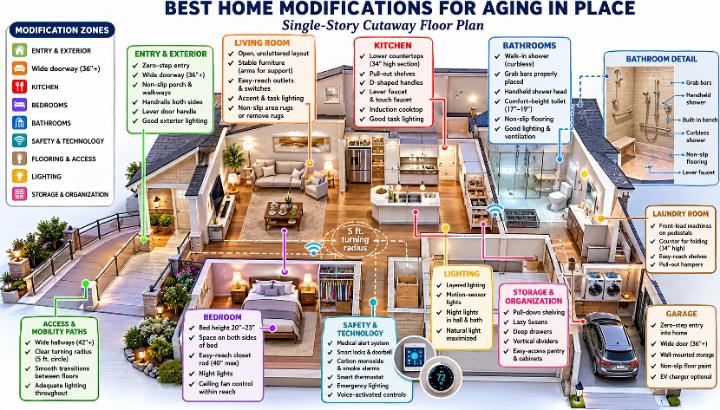
Rather than listing modifications randomly, I want to walk through a home room by room, because that is genuinely how seniors and their families experience the need for change. Each room carries its own specific risks and its own specific solutions for the best home modifications for aging in place.
The Bathroom — Where Aging in Place Home Improvements Matter Most
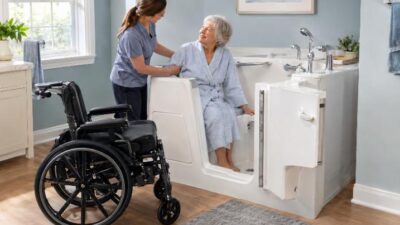
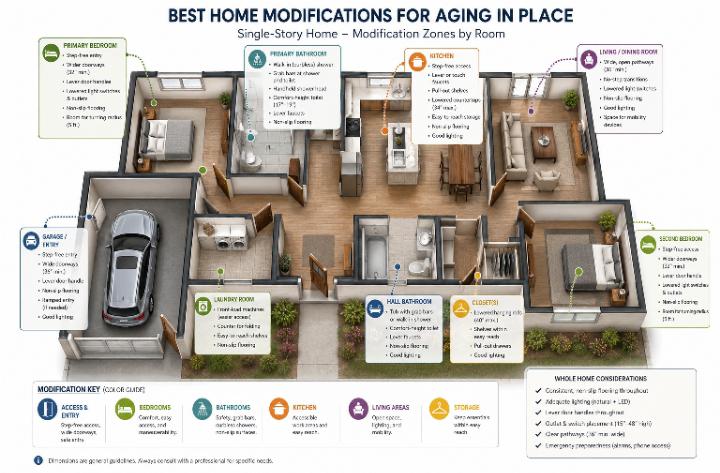
CDC data on home injuries consistently identifies the bathroom as the single highest-risk room for older adults — the combination of wet surfaces, hard tile, and physically demanding transfers in and out of a tub creates a uniquely dangerous environment. This is where any list of aging in place home improvements needs to start.
- Grab bars beside the toilet and inside the shower: ADA-style horizontal and vertical bars, properly anchored into studs, not just suction-mounted. Cost: $25–$200 per bar plus installation.
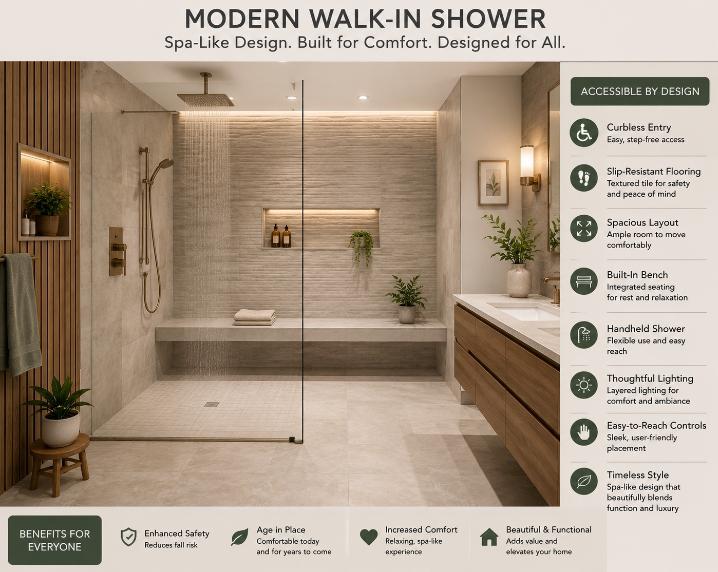
- Walk-in shower conversion: Removes the step-over hazard entirely. The single most transformative — and most expensive — bathroom modification on this list. Cost: $4,000–$9,000.
- Comfort-height toilet or raised toilet seat: Reduces the squat depth required to sit and stand, easing strain on knees and hips. Cost: $25–$300.
- Non-slip flooring or textured tile: Standard bathroom tile becomes treacherous when wet. Slip-resistant surfaces address the root hazard directly. Cost: $500–$2,000 for a full floor.
- Hand-held showerhead on a sliding bar: Allows bathing from a seated position with full control over water direction. Cost: $40–$150.
The Bedroom — Overlooked but Significant
Bedrooms rarely get the attention bathrooms do, but the route from bed to bathroom at night is consistently one of the most common locations for incidents I hear about from families. Good aging in place home improvements in the bedroom focus on visibility and bed accessibility.
- Motion-sensor night lights along the bed-to-bathroom path: Activate automatically, removing the need to find a switch in the dark. Cost: $12–$25 each.
- Adjustable bed height: Allows feet to rest flat on the floor when seated on the edge, the correct height for safe transfers. Cost: $0–$60 for risers or a new frame.
- Clear, wide pathways with secured rugs: Loose rugs and clutter are among the most common preventable hazards. Cost: $0 to remove, $5–$15 to secure.
The Kitchen — Independence Lives Here
The kitchen is where independence is either preserved or quietly eroded. Seniors who can no longer comfortably cook for themselves often lose a meaningful piece of daily autonomy — and many kitchen modifications cost far less than people assume.
- Reorganizing storage to mid-height shelves: Moves daily-use items out of the reach-and-bend danger zone. Cost: $0.
- Pull-out shelves and lazy susans: Eliminates the need to bend deeply into low cabinets. Cost: $20–$80 per cabinet.
- Lowered countertops or a seated workspace: For wheelchair or walker users specifically. Cost: $1,500–$5,000 for a full lowered section.
- Lever-style faucet handles: Far easier to operate than twist knobs for arthritic hands. Cost: $40–$150.
Stairs and Entryways — The High-Stakes Zones
Stairs and front entryways are where the most serious injuries tend to happen, because falls here generate more force and a worse landing than falls in carpeted living spaces. This is also where the biggest-ticket items on any list of aging in place home improvements usually appear.
- Double handrails on interior staircases: Support regardless of which hand is free. Cost: $150–$400.
- Wheelchair ramps at entry points: Removes step hazards entirely for wheelchair, walker, or simply unsteady users. Use the free wheelchair ramp cost calculator for a realistic budget before contacting contractors. Cost: $1,000–$3,000.
- Stair lifts: The most expensive single item on most modification lists, but transformative for two-story homes where the senior wants to stay upstairs. Cost: $2,500–$5,000+.
- Non-slip stair treads: A fraction of the cost of bigger interventions, with meaningful safety benefit. Cost: $30–$80 for a full staircase.
Affordable Home Modifications for Seniors — What $500 or Less Can Actually Achieve
I want to push back directly against the assumption that meaningful change requires a major renovation budget. Some of the most impactful affordable home modifications for seniors cost almost nothing and take an afternoon to complete.
💰 High-Impact, Low-Cost Modifications — Under $100 Each
Non-Slip Bath Mats — $20–$45
Heavy, rubber-backed mats replacing thin cotton ones inside and outside the tub.
Motion Night Lights — $12–$25 each
Plug-in and forget — activates automatically along key nighttime routes.
Suction Grab Bars — $20–$40
A temporary stand-in before a permanently anchored bar can be installed — not a permanent replacement.
Lever Door Handles — $15–$30 each
Far easier to operate than round knobs for arthritic hands.
Reacher/Grabber Tool — $15–$25
Removes the need for step stools when reaching high shelves.
Bed Rail / Transfer Handle — $30–$70
Provides leverage for getting in and out of bed safely.
The honest reality is that a senior on a fixed income can address roughly 70% of the highest-risk household hazards for under $300 total. The remaining 30% — walk-in showers, ramps, stair lifts — require real budget, which is exactly why grant programs and cost calculators matter so much for the bigger items on any complete list of the best home modifications for aging in place.
Home Renovation Ideas for Aging in Place — When Bigger Projects Make Sense
At some point, small fixes stop being enough, and a genuine renovation conversation becomes necessary. Good home renovation ideas for aging in place are not about making a house look like a hospital — they are about making structural changes that solve specific, predictable problems before they become urgent ones.
The Harvard Joint Center for Housing Studies has documented that the vast majority of US housing stock was built without any universal design principles in mind — meaning most homes need deliberate retrofitting rather than minor tweaks to genuinely support aging in place long-term.
First-Floor Primary Suite Conversion
For two-story homes, converting a first-floor room into a primary bedroom suite — sometimes alongside a stair lift for occasional upstairs access — is one of the most consequential home renovation ideas for aging in place available. It removes daily stair dependency entirely rather than just making stairs safer. Cost: $15,000–$40,000 depending on whether a full bathroom is added.
Zero-Threshold Entry Replacement
Replacing a stepped front entry with a graded, zero-threshold approach (rather than a visible ramp bolted onto an existing step) is increasingly popular because it looks like a normal design choice rather than a medical accommodation — an important psychological factor for many seniors who resist anything that signals decline. Cost: $3,000–$8,000.
Full Accessible Bathroom Remodel
Combining a walk-in or roll-in shower, comfort-height toilet, wider doorway, grab bars, and non-slip flooring into one coordinated bathroom remodel rather than piecemeal additions. This is consistently the single highest-value aging in place home improvement project for homeowners planning to stay long-term. Cost: $8,000–$18,000.
Outdoor and Yard Modifications — The Part of Aging in Place Home Improvements Everyone Forgets
Every conversation about aging in place home improvements I have ever sat in on focuses almost entirely on the interior of the house. The yard, the garden, the driveway, and the path to the mailbox get mentioned almost never — despite being where a meaningful share of senior incidents actually happen, particularly during yard work and seasonal weather.
My grandmother’s garden was the thing she was proudest of and the thing she refused to give up longest. The uneven flagstone path she had walked a thousand times became genuinely risky once her balance started to shift — not because the path changed, but because she did.
- Leveled, widened garden pathways: Replacing uneven stepping stones with a consistent, slightly textured concrete or paver path. Cost: $500–$2,500 depending on length.
- Raised garden beds: Eliminates the need to bend or kneel to ground level for gardening — a genuinely meaningful quality-of-life modification for someone who loves growing things. Cost: $80–$400 per bed.
- Motion-sensor exterior lighting: Illuminates the driveway and front path automatically at dusk, addressing one of the most overlooked nighttime hazards. Cost: $30–$120 per fixture.
- A sturdy garden bench or kneeling pad with handles: Provides a stable place to rest during yard work and a way to push back up to standing safely. Cost: $40–$150.
- Slip-resistant porch and deck coatings: Wood decks become genuinely slick when wet or covered in morning dew — a textured coating addresses this directly. Cost: $200–$600 for an average porch.
None of these outdoor changes are dramatic, but together they represent some of the most overlooked best home modifications for aging in place available — precisely because so few guides mention them at all.
What’s Changing in 2026 — Industry Trends Worth Knowing About
The conversation around best home modifications for aging in place has shifted meaningfully even over the past few years, and a handful of 2026 trends are worth understanding before making any major decisions.
The first is the move toward what designers call “invisible accessibility” — modifications that function exactly like a medical accommodation but look like an intentional design choice. Zero-threshold showers that look like a spa feature rather than a medical necessity. Wider doorways that simply look like a modern open floor plan. This shift matters enormously for seniors who resist anything that feels like it signals decline, which I have seen firsthand affect whether a modification actually gets accepted or quietly resisted.
The second trend is smart home integration specifically designed around aging in place rather than general convenience — voice-activated lighting that responds to simple commands, smart locks that eliminate fumbling with keys in the dark, and video doorbells that let a senior see who is at the door without needing to walk to it. These tools are increasingly being bundled directly into home modifications for elderly parents packages by contractors who specialize in this niche.
The third trend, and possibly the most financially significant, is the gradual expansion of state and local grant programs specifically for accessibility modifications — a pattern that has been growing steadily as more states recognize that funding home modifications is dramatically cheaper than funding nursing home care for the same population. This makes researching grants in your specific state a genuinely worthwhile step before assuming any major project is financially out of reach.
A Power Outage Scenario — Why Modifications Need to Work Without Electricity Too
I want to share a second emergency scenario, because it highlights a planning gap that almost never comes up in standard advice about home modifications for elderly parents.
⚡ Case Study — A Winter Power Outage
The Situation
A multi-day winter storm knocked out power for a family I spoke with, including all of their motion-sensor night lights, which were plugged into outlets with no battery backup. The senior in the home, who relied heavily on those lights for nighttime bathroom trips, was left navigating in complete darkness.
What This Revealed
Some of the most popular low-cost modifications on every checklist — plug-in motion lights specifically — are entirely dependent on grid power. A genuinely robust set of aging in place home improvements needs a battery-backup contingency, not just an electrical solution.
The Fix
Battery-operated, motion-activated lights (rather than plug-in only) for at least the bedroom-to-bathroom path. A charged medical alert device with cellular backup rather than reliance on a landline or WiFi-dependent system. A small flashlight secured at the bedside with fresh batteries checked quarterly.
This is a small but genuinely important addition to any aging in place modifications checklist — redundancy matters as much as the initial fix. A cellular-based medical alert system that doesn’t depend on home WiFi is a meaningful part of this redundancy plan, since power outages frequently take down internet service well before cellular networks fail.
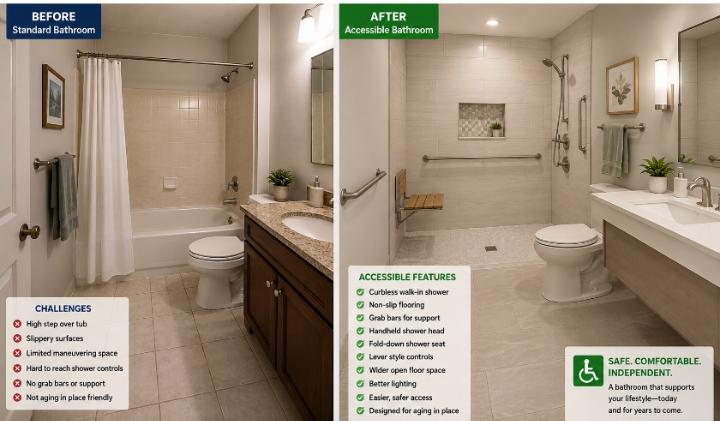
A Before-and-After Story Worth Telling in Full
I want to walk through one full transformation, because seeing the entire arc — not just a list of items — is what actually helps families picture what is possible.
Aging in Place Modifications Checklist — Everything in One Place
Here is the consolidated aging in place modifications checklist pulling together everything covered above, organized by priority rather than by room — because priority is what actually determines where to start.
| Modification | Priority | Cost Range | DIY? | Room |
|---|---|---|---|---|
| Remove/secure loose rugs | Critical | $0–$15 | Yes | All |
| Non-slip bath mats | Critical | $20–$45 | Yes | Bathroom |
| Permanent grab bars | Critical | $100–$300 | Possible | Bathroom |
| Motion night lights | Critical | $12–$25 ea | Yes | Bedroom/Hall |
| Second staircase handrail | Critical | $150–$400 | Professional | Stairs |
| Non-slip stair treads | High | $30–$80 | Yes | Stairs |
| Comfort-height toilet | High | $25–$300 | Possible | Bathroom |
| Lever door/faucet handles | High | $15–$40 ea | Yes | All |
| Wheelchair ramp | High | $1,000–$3,000 | Professional | Entry |
| Walk-in shower conversion | Medium | $4,000–$9,000 | Professional | Bathroom |
| Stair lift | As needed | $2,500–$5,000+ | Professional | Stairs |
Before tackling any item on this aging in place modifications checklist, use the free interactive Home Safety Checklist tool to walk through your specific home and build a personalized, prioritized version of this same list in about eight minutes.
Home Upgrades for Elderly on a Budget — A Tiered Spending Plan
Rather than a flat list, the most useful way to think about home upgrades for elderly on a budget is in tiers — because most families do not have unlimited funds available all at once, and sequencing matters.
$0–$150
Do This Weekend, No Contractor Needed
Remove loose rugs, reorganize cabinets to mid-height, install motion night lights, add suction grab bars temporarily, get a reacher tool, replace a few door knobs with levers.
$150–$1,500
Schedule a Handyman Visit
Permanently anchored grab bars, a second staircase handrail, non-slip stair treads, a comfort-height toilet, a hand-held showerhead conversion.
$1,500–$5,000
Plan and Budget Over Several Months
Wheelchair ramp construction, a stair lift, lowered kitchen counter section, full non-slip flooring throughout the home.
$5,000+
Explore Grants Before Spending
Full bathroom remodel, first-floor suite conversion, zero-threshold entry replacement. Before committing to these, run the numbers through the free Home Modification Cost Calculator to know exactly what fair pricing looks like in your area.
For Tier 4 projects specifically, many families don’t realize how much assistance is available. State and local grant programs frequently fund exactly these larger items. If your senior lives alone while waiting on any of these bigger projects, a medical alert system for seniors living alone provides genuine protection in the meantime — covering the gap between identifying a need and finishing the modification that addresses it.
Best Home Modifications for Aging in Place — Comparing the Highest-Impact Options
Putting impact, cost, and urgency side by side helps clarify which of the best home modifications for aging in place deserve attention first, regardless of available budget.
| Modification | Safety Impact | Cost-to-Impact Ratio | Time to Implement | Best For |
|---|---|---|---|---|
| Grab bars | ⭐⭐⭐⭐⭐ | Excellent | Same day | Everyone |
| Non-slip flooring | ⭐⭐⭐⭐⭐ | Excellent | 1 day | Everyone |
| Wheelchair ramp | ⭐⭐⭐⭐⭐ | Good | 1–2 weeks | Mobility aid users |
| Walk-in shower | ⭐⭐⭐⭐⭐ | Good | 1–3 weeks | Long-term residents |
| Stair lift | ⭐⭐⭐⭐ | Moderate | 1–2 weeks | 2-story homes |
| Night lights / lighting | ⭐⭐⭐⭐ | Excellent | Same day | Everyone |
When to Bring in a Professional vs Doing It Yourself
Many families ask me where the line falls between a confident DIY project and something that genuinely needs a licensed professional when tackling the best home modifications for aging in place. The honest answer depends on whether the modification involves structural support, plumbing, or electrical work.
A Certified Aging-in-Place Specialist (CAPS) — a designation from the National Association of Home Builders — is specifically trained to evaluate homes for exactly this kind of work and is worth the consultation fee for any project involving structural changes, full bathroom remodels, or ramp construction where load-bearing considerations apply.
🔧 DIY-Friendly vs Professional-Required
✅ Reasonable DIY
- Non-slip mats and rugs
- Motion night lights
- Lever door handles
- Reacher tools and storage reorganization
- Suction grab bars (temporary use only)
⚠️ Bring in a Professional
- Permanently anchored grab bars (stud location matters)
- Walk-in shower conversion
- Wheelchair ramps (slope and code compliance)
- Stair lifts
- Any electrical or plumbing change
Universal Design — The Framework Behind the Best Home Modifications for Aging in Place
It helps to understand the underlying design philosophy that informs the best home modifications for aging in place, because it explains why certain changes consistently outperform others. Universal design, originally developed at North Carolina State University, is built around the idea that environments should work for the widest possible range of people without requiring special accommodation.
Applied to home modifications for elderly parents, this framework explains why a zero-threshold shower entrance is consistently rated higher than a traditional step-over tub with a grab bar added afterward — the universal design solution removes the hazard structurally rather than compensating for it after the fact. The same logic applies to lever door handles over round knobs, wide doorways over narrow ones, and single-level living over multi-story homes wherever feasible.
This is also why many of the home renovation ideas for aging in place covered earlier in this guide — the zero-threshold entry, the full bathroom remodel, the first-floor suite conversion — tend to age better than band-aid solutions. They solve the underlying structural mismatch between the home and the body, rather than adding a workaround on top of an unchanged structural problem. Families planning a larger renovation specifically benefit from asking a contractor whether they design with universal design principles in mind from the outset, rather than treating accessibility as an afterthought bolted onto a standard design.
Mistakes Families Make When Choosing the Best Home Modifications for Aging in Place
After talking with dozens of families about this exact topic, the same handful of mistakes come up again and again. Avoiding them is often as valuable as knowing which modifications to choose in the first place.
Mistake one: starting with the most expensive item instead of the highest-impact one. Families often assume a full bathroom remodel is the obvious first step toward the best home modifications for aging in place, when a $25 grab bar addresses a more immediate hazard at a fraction of the cost. Impact and cost are not the same axis, and confusing them leads to delayed action on cheap, urgent fixes while saving for an expensive project that could wait.
Mistake two: choosing products based on appearance rather than function. A decorative grab bar that looks elegant but is rated for less weight than a standard ADA bar provides false confidence rather than real support. Always verify weight ratings and proper anchoring regardless of how a product is marketed or styled — this is one of the quieter risks within otherwise good aging in place home improvements.
Mistake three: assuming a senior will adapt to a modification simply because it was installed. I have seen grab bars installed in the wrong location relative to how someone actually moves through a shower, rendering them functionally useless despite being technically present. Before any permanent installation, walk through the actual movement pattern with the senior present and ask them directly where support would help most.
Mistake four: overlooking the emotional framing entirely. As covered earlier in the caregiver perspective section, how a modification is introduced often determines whether it gets used or quietly avoided. The single most well-designed home modification for elderly parents fails completely if the senior feels it was imposed on them rather than chosen with them.
Mistake five: not researching available financial assistance before assuming a project is unaffordable. Many of the larger structural items on any aging in place modifications checklist — ramps, full bathroom remodels, stair lifts — are partially or fully covered by state and local grant programs that most families never investigate. Before ruling out a major project for budget reasons, it is worth at minimum a single phone call to a local Area Agency on Aging to ask what assistance might exist.
Common Questions About the Best Home Modifications for Aging in Place
Best Home Modifications for Aging in Place — Where to Begin, Starting Today
My grandmother’s house never got the modifications it needed in time. She managed, mostly through sheer stubbornness and the help of people who loved her, but the gap between her changing body and her unchanged home stayed open for years longer than it should have.
That is the entire reason this guide exists at the length it does. The best home modifications for aging in place are not a single product or a single renovation — they are a sequence of decisions, made calmly and ahead of any crisis, that together let someone stay in the home they love for as long as they want to.
Start with Tier 1. This weekend. Remove the loose rugs. Add the night lights. None of it requires a contractor, a major conversation, or a significant budget. Everything else on this list can follow at whatever pace genuinely fits your family’s situation and finances.
There is no single moment where a home officially becomes “ready” for aging in place. It happens gradually, one grab bar and one night light and one conversation at a time, until one day the gap between a changing body and an unchanged house has quietly closed. That is the real goal behind every modification covered in this guide — not a perfect house, just one that keeps up with the person living in it.
And whatever you tackle next, use the free tools built specifically to make this process less overwhelming — start with the Home Safety Checklist to know exactly where your specific home stands today.
📖 Recommended Reading
Sources & References
💬
What Modification Made the Biggest Difference in Your Home?
I read every comment personally. Did you start with a small change and work up to something bigger, or did a single event push you into a full renovation at once? What modification surprised you by mattering more than expected? Share your story below — it genuinely helps other families figuring out where to start.
Have a specific room or situation you’re trying to solve for? Describe it below and I’ll point you toward what’s worked for others.