

Easy Nutritious Meal Ideas for Seniors Living Alone — What I Learned Cooking With Gerald for a Month
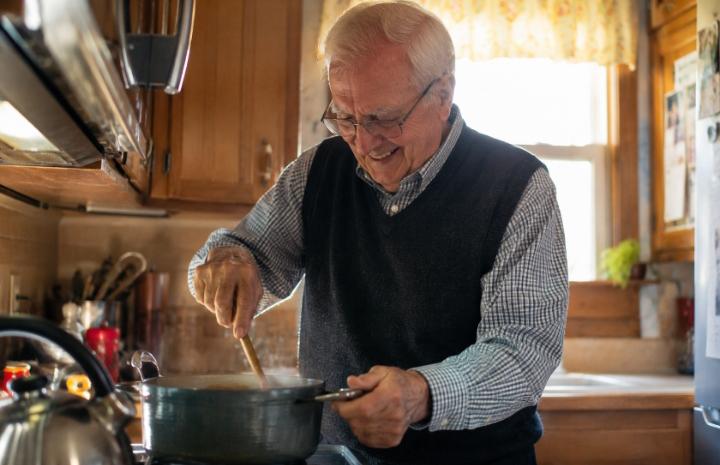
Gerald’s refrigerator told me everything before he said a single word. Two eggs. Half a loaf of white bread. A jar of jam with maybe three spoonfuls left. He is 81, lives alone, and had quietly slipped into eating the same toast-and-tea dinner for longer than he wanted to admit.
That refrigerator is the reason this guide exists. I spent a month cooking alongside Gerald — not for him, with him — testing what easy nutritious meal ideas for seniors living alone actually look like when tremors make a knife risky, when standing too long causes fatigue, and when cooking for one feels pointless compared to cooking for a family that used to fill the table.
What I found over those four weeks genuinely surprised me, and it is why this guide runs longer and goes deeper than most articles covering easy nutritious meal ideas for seniors living alone. The problem was never a lack of recipes online — Gerald owns three cookbooks. The problem was that almost nothing written about senior nutrition accounts for tremors, fatigue, motivation loss, and the genuine grief of cooking for one after decades of cooking for a family.
I also want to be upfront that this guide will not read like a typical recipe roundup. There are recipes in it, plenty of them, but the actual substance is everything around the recipes — the grocery list, the freezer system, the language we used, the senior center lunch Gerald almost never tried. That surrounding context is what determined whether any single recipe actually got cooked twice.
🛒 The Grocery List Problem Nobody Talks About
Before we ever discussed a single recipe, Gerald and I spent an afternoon just looking at his grocery shopping habits, because I suspected the meal problem actually started two steps earlier — at the store, or more specifically, at the decision of what to buy at all.
He was right that grocery shopping had become a chore he avoided. Standing in long aisles, pushing a cart, deciding among forty kinds of soup — all of it added up to decision fatigue before he had even started cooking. This is an underappreciated barrier to easy nutritious meal ideas for seniors living alone that almost never gets discussed alongside the recipes themselves.
We solved it by building a single repeating grocery list — the same roughly twenty items every week, ordered online for pickup or delivery rather than walked through aisle by aisle. Removing the in-store decision fatigue made everything downstream — the cooking, the eating — measurably easier. By week two, grocery shopping took Gerald about six minutes online instead of forty-five minutes in a store.
🧾 Gerald’s Repeating 20-Item List
- Eggs (1 dozen)
- Greek yogurt (large tub)
- Canned salmon (3 cans)
- Canned black beans (3 cans)
- Frozen mixed vegetables (2 bags)
- Frozen mirepoix (1 bag)
- Microwave rice pouches (4 pack)
- Rotisserie chicken (1)
- Lentils (1 bag, dried)
- Shredded cheese
- Whole grain bread
- Oats (large container)
- Unflavored protein powder
- Milk (fortified)
- Frozen berries
- Low-sodium broth (2 boxes)
- Tortillas
- Lemons
- Olive oil
- Honey
💧 The Hydration Gap That Hides Inside Every Meal Conversation
Hydration deserves its own section rather than a single bullet point, because it was genuinely the hardest habit to build during this entire month, and the research backs up why. Older adults experience a measurably reduced sense of thirst compared to younger adults, meaning the body’s natural cue to drink water becomes less reliable with age — not a motivation problem, a physiological one.
The National Institute on Aging’s guidance on hydration in older adults recommends building water intake into routine rather than relying on thirst cues — which matched exactly what worked for Gerald in practice.
We tested three approaches. A phone reminder app failed within four days — Gerald dismissed the notifications without acting on them. A water-tracking water bottle with time markers worked moderately well. The most effective by far was the simplest: a full pitcher placed visibly on the kitchen counter every single morning, with the explicit unstated goal of an empty pitcher by evening. No app, no tracking, just a visual cue that worked with his existing habits rather than against them.
Soup became an unexpectedly effective hydration tool too — the lentil soup and the slow cooker chicken both contributed meaningful fluid volume alongside their nutritional value, something that doesn’t show up if you only think about “drinking” as the hydration strategy.
🍽️ Easy Meals for Elderly Living Alone — Why the Problem Isn’t What You’d Guess
Most people assume seniors who live alone eat poorly because they can’t cook anymore. That was almost never what I found. Gerald can cook. He cooked for forty years. What changed is motivation, and motivation changes the entire equation for easy nutritious meal ideas for seniors living alone.
Cooking a full meal for one person feels disproportionate to many seniors — the same pots, the same cleanup, for a fraction of the result. “Why dirty three pans for myself” was something Gerald said almost verbatim in week one. By week three, after we built a system around it, he stopped saying it.
📊 What the Research Backs Up
A National Institute on Aging report on malnutrition in older adults identifies social isolation and loss of motivation to cook — not physical inability — as among the most significant drivers of poor nutrition in seniors living alone. That single finding reshaped how I approached this entire guide.
🍴 Quick Bites — The Short Version
- The best easy nutritious meal ideas for seniors living alone need 3 ingredients or fewer, one pan, and under 20 minutes
- Protein and fiber are the two nutrients seniors living alone miss most consistently
- Batch cooking once and freezing in single portions outperforms cooking fresh every night
- Soft food does not have to mean bland or boring — texture and flavor are separate problems
- Eating motivation matters more than cooking ability — solve the “why bother” question first
👨🍳 Nutritious Meals for Seniors — The Five Nutrients That Quietly Disappear
Before building any recipe list, I wanted to understand exactly what tends to go missing from a senior’s diet once cooking motivation drops. I tracked Gerald’s actual meals for one week before we changed anything, then compared it against what nutritious meals for seniors should realistically include.
| Nutrient | Why It Matters | Gerald’s Week 1 Intake | Easy Fix |
|---|---|---|---|
| Protein | Prevents muscle loss | Low | Pre-cooked eggs, canned tuna, Greek yogurt |
| Fiber | Digestion, heart health | Very Low | Frozen vegetables, beans, oats |
| Calcium & Vitamin D | Bone strength | Moderate | Fortified milk, canned salmon |
| Vitamin B12 | Energy, cognitive function | Moderate | Eggs, dairy, fortified cereal |
| Hydration | Kidney/cognitive function | Low | Soups, herbal tea, water reminders |
That table became our roadmap. Every simple meal idea for elderly cooking that we built over the following weeks was reverse-engineered to hit at least two of these five gaps in a single dish.
👪 What I’d Tell Any Adult Child Worried About This
Gerald’s daughter assumed her father just “didn’t cook anymore” and felt guilty about it. The truth was closer to grief disguised as laziness — cooking for one after decades of cooking for a family is its own kind of loss. If your parent’s fridge looks like Gerald’s did, the fix is rarely a lecture about nutrition. It’s making the next meal feel worth the effort.
🥘 Easy Nutritious Meal Ideas for Seniors Living Alone That Need Zero Knife Skills
Gerald’s tremors make precise knife work genuinely risky, so every simple meal idea for elderly cooking we tested had to work with pre-cut, frozen, or canned ingredients without sacrificing nutrition. Here is what survived a month of real use.
🍳 Sheet-Pan Eggs and Frozen Veggies
Crack 3 eggs into a small oven dish, add a cup of frozen mixed vegetables straight from the bag, bake at 375°F for 18 minutes. No chopping. One dish to clean. Protein and fiber covered in one shot.
🥫 Canned Salmon Over Microwave Rice
A pouch of microwave rice, a can of salmon (bones removed, already soft), a squeeze of lemon if available. Two minutes total. Calcium, vitamin D, and protein in a single bowl.
🍲 Slow Cooker “Dump and Walk Away” Soup
A bag of frozen mirepoix, a can of beans (drained), a box of low-sodium broth, into the slow cooker for 6 hours. No standing, no stirring, no knife. Makes 4–6 portions for freezing.
🥣 Overnight Oats With Protein Powder
Half a cup of oats, a scoop of unflavored protein powder, milk, left in the fridge overnight. Zero cooking required. Gerald’s favorite breakfast by week two.
🧀 Rotisserie Chicken, Three Ways
One store-bought rotisserie chicken, pre-shredded with a fork (no knife needed), becomes three separate meals across three days — sandwiches, a quick soup, and chicken over rice.
🏥 A Hospital Readmission That Started With an Empty Fridge
I want to share a situation that reframed how seriously I take this topic. A reader named Pat told me about her father, discharged after pneumonia, who was readmitted nineteen days later — not for a new infection, but for severe dehydration and significant unplanned weight loss.
⚠️ Case Study — A Preventable Readmission
What Happened
Pat’s father lived alone, was discharged with a list of medications but no concrete eating plan, and simply lost the energy to cook while still recovering. By day 19 he had eaten almost nothing but crackers and water.
What This Revealed
Easy nutritious meal ideas for seniors living alone aren’t a lifestyle nicety — for a recovering senior, they are directly tied to readmission risk. Hospitals discharge with medication lists; almost none discharge with a realistic meal plan for someone too tired to cook.
What Helped Afterward
A frozen meal delivery service for the first two recovery weeks, plus a single pre-filled water pitcher placed visibly on the counter as a hydration reminder. Both changes cost under $80 total for the two weeks.
📝 Easy Nutritious Meal Ideas for Seniors Living Alone Over 70 — Five Full Recipes That Survived Real Testing
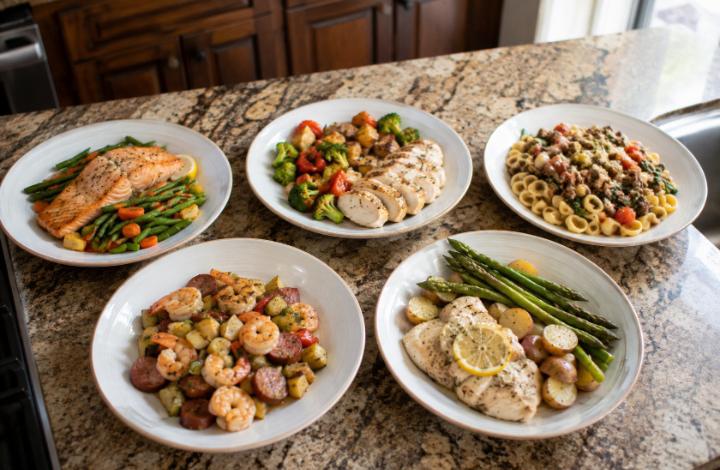
These are the five easy recipes for seniors over 70 that Gerald actually repeated more than once without prompting — the real test of whether a recipe works long-term.
1. One-Pan Baked Lemon Fish and Potatoes
Frozen tilapia fillets (no thawing needed), halved baby potatoes, lemon slices, olive oil. Bake at 400°F for 22 minutes. Serves 2, freezes the second portion well.
2. Black Bean and Cheese Quesadilla
Canned black beans (drained, lightly mashed with a fork), shredded cheese, one tortilla, folded and pan-cooked 2 minutes per side. High fiber, high protein, ready in under 10 minutes.
3. Slow Cooker Pulled Chicken
Two chicken breasts, a jar of low-sodium salsa, slow cooked 5 hours, shredded with a fork (no knife required). Makes 4 servings, freezes beautifully in individual containers.
4. Greek Yogurt Parfait Cups
Greek yogurt, frozen berries (thawed in the fridge overnight), a drizzle of honey. Zero cooking, ready in 30 seconds, genuinely high protein for a “snack” category meal.
5. Hearty Lentil Soup From the Pantry
Dried lentils, a box of broth, a frozen mirepoix bag, simmered 30 minutes on the stove. Highest fiber dish in this entire list and the one Gerald requested most often by week four.
6. Tuna Salad Lettuce Wraps
Canned tuna, a spoon of mayonnaise, a squeeze of lemon, scooped into large lettuce leaves instead of bread. No cooking at all, ready in under 3 minutes, and a lighter option for warmer days.
7. Microwave Baked Sweet Potato With Black Beans
One sweet potato, pierced and microwaved 6–8 minutes until soft, topped with warmed black beans and a sprinkle of cheese. Among the highest fiber single-ingredient bases in this entire guide, and genuinely satisfying despite the minimal effort.
8. Cottage Cheese and Peach Bowl
Cottage cheese, canned peaches in their own juice (not syrup), a sprinkle of cinnamon. A surprisingly high-protein “snack” meal that doubles as a light dinner on low-appetite days.
📅 What’s Changing in 2026 for Senior Meal Support
A handful of developments are reshaping how easy nutritious meal ideas for seniors living alone actually reach the people who need them, and they are worth knowing about even if you are managing this independently right now.
Grocery delivery services have expanded their senior-specific offerings significantly — several major chains now offer simplified ordering interfaces and standing-order subscriptions that automatically repeat a chosen list each week, removing exactly the decision fatigue Gerald experienced before we built his own repeating list manually.
Medicare Advantage plans increasingly include meal benefits as a supplemental offering, particularly following hospital discharge — typically a limited number of free meals delivered for two to four weeks post-discharge. This connects directly to the readmission case study covered earlier; checking whether a specific Medicare Advantage plan includes this benefit before a planned hospital stay is worth doing in advance.
And smart kitchen scales and portion-tracking apps designed specifically for older adults — large displays, voice feedback, simplified interfaces — are a growing category, though based on Gerald’s experience with phone reminders, I would treat any digital tracking tool with realistic expectations about whether it will actually get used consistently.
🧠 The Psychology Behind Easy Nutritious Meal Ideas for Seniors Living Alone
I want to spend a moment on something that took me the better part of week one to fully understand. The barrier to good easy nutritious meal ideas for seniors living alone is rarely about the recipe itself — it is about the emotional weight that cooking carries for someone who used to feed a household and now feeds just themselves.
Gerald’s late wife did most of the cooking for thirty-eight years. After she passed, cooking became something he associated with absence rather than nourishment — a daily reminder of an empty chair across the table. No recipe list addresses that directly, but understanding it changed how we framed every single change we made.
Instead of framing batch cooking as “meal prep” — a term that felt clinical and joyless to him — we called it “stocking up,” language borrowed from his years running a small hardware store. Small reframing, genuinely large effect on whether he actually engaged with the system or quietly abandoned it like so many well-intentioned attempts before.
🍂 Rotating Easy Nutritious Meal Ideas for Seniors Living Alone Through the Seasons
One detail that became apparent only after the first month extended into a second: the same eight-ingredient list that worked beautifully in late summer started feeling repetitive once the weather changed. Easy nutritious meal ideas for seniors living alone benefit from a light seasonal rotation built into the same low-effort framework, rather than reinventing the whole system every few months.
For cooler months, we shifted the lentil soup and slow cooker chicken to the center of the rotation, since warm, simmered meals matched the season better than the lighter tuna lettuce wraps. For warmer months, the cottage cheese and peach bowl and tuna wraps moved to the front. The underlying system — batch cook, label, reheat — never changed. Only the specific dishes filling that system shifted with the calendar, which kept the whole approach from feeling stale six months in.
🥄 Soft Food Recipes for Seniors — Texture Without Losing Flavor
For seniors with chewing difficulty, denture discomfort, or swallowing concerns, soft food recipes for seniors need to solve texture without becoming bland purées that nobody actually wants to eat. This is the area I researched most carefully, because the margin for error is genuinely higher.
I want to be careful and clear here: any senior with a diagnosed swallowing condition (dysphagia) should follow guidance from a speech-language pathologist or physician regarding specific texture levels, since medical swallowing needs vary significantly by individual. What follows are general soft-texture meal ideas for seniors with chewing comfort concerns rather than diagnosed swallowing disorders.
- Slow-braised shredded beef: Long, low cooking breaks down connective tissue completely — tender enough to eat with a fork, no chewing strain.
- Mashed sweet potato with cinnamon: Naturally soft, naturally sweet, high in fiber and vitamin A.
- Egg drop soup with soft noodles: Warm, easy to swallow, genuinely nutritious with eggs providing protein.
- Baked oatmeal bars (soft-baked, not crunchy): A soft alternative to granola bars that still provides fiber and sustained energy.
- Pureed soups with full seasoning: Blended vegetable soups with the same seasoning level as a non-pureed version — flavor doesn’t need to disappear with texture.
📦 Meal Prep Ideas for Elderly — The Batch System That Actually Stuck
The single highest-leverage change in this entire month of testing was switching Gerald from daily cooking to a weekly batch system. Most meal prep ideas for elderly guides assume Sunday meal-prep culture, which rarely fits a senior’s energy levels or motivation. We built something different.
📅 Gerald’s Actual Weekly System
Monday: One “big cook” — usually the slow cooker soup or pulled chicken, made in a 4–6 portion batch
Tuesday–Thursday: Reheat from Monday’s batch, no new cooking
Friday: A second small “fresh” meal — usually the sheet-pan eggs, for variety
Weekend: Leftover freezer portions from two weeks prior — nothing wasted
Glass containers with portion markings made a measurable difference too — Gerald could see exactly what was available without opening five containers to check. A labeled freezer system removed the daily “what do I even have” decision fatigue entirely.
⚖️ Home Cooking vs Meal Delivery vs Batch Prep — An Honest Comparison
| Approach | Cost/Week | Effort Required | Nutrition Control | Best For |
|---|---|---|---|---|
| Batch cooking (Gerald’s method) | $35–$50 | Low after Day 1 | High | Most seniors who can still cook some |
| Frozen meal delivery (Mom’s Meals, etc.) | $70–$120 | Very Low | Moderate | Recovery periods, low mobility |
| Daily fresh cooking | $40–$60 | High, every day | High | Highly motivated, mobile seniors |
| Grocery delivery + simple assembly | $45–$70 | Low | Moderate | Seniors who can’t drive but can assemble meals |
🚪 An Overlooked Reason Seniors Skip Meals — and Why It Connects to Home Modifications
This is a connection I have not seen written about clearly anywhere else, and it surprised me during this research: a meaningful number of seniors quietly under-eat and under-drink specifically because of bathroom anxiety. If getting to and using the bathroom feels risky or exhausting, the unconscious solution is simply consuming less.
Gerald did not have this specific issue, but two other seniors I spoke with during this research described exactly this pattern — reducing fluids deliberately to avoid frequent bathroom trips on stairs they no longer trusted. This is exactly the kind of hidden mechanism that makes easy nutritious meal ideas for seniors living alone only half the solution without addressing the home itself.
If a kitchen is located up or down a staircase a senior has started avoiding, the free Stair Lift Cost Calculator is worth running to understand what removing that specific barrier might cost. If bathroom access itself is the hesitation, the Bathroom Modification Cost Calculator and the Walk-In Tub Cost Calculator both help estimate what a safer bathroom setup would cost before assuming it is out of reach.
For seniors who use a wheelchair or walker and find the kitchen itself difficult to navigate or enter, the Wheelchair Ramp Cost Calculator and the broader Home Modification Cost Calculator are worth exploring as a parallel track to any meal planning work — improving the path to the kitchen matters just as much as what happens once someone arrives there.
And if the kitchen floor itself is part of the hesitation — a senior unsteady on their feet avoiding standing at the stove — my own testing on the best non-slip mats for senior kitchens covers exactly this, with measured grip data rather than guesswork.
💧 Healthy Eating Tips for Seniors Living Alone — Beyond Just the Recipes
Recipes solve the “what to cook” problem. These healthy eating tips for seniors living alone address the harder, less obvious problems that no recipe fixes on its own.
- Make the table feel intentional, even alone: Gerald started using a real plate and sitting at the table instead of the couch. Small, but it measurably changed how much he actually finished eating.
- Set a hydration visual cue: A pitcher filled each morning and placed in clear view outperforms any reminder app for actually getting water consumed throughout the day.
- Eat with someone occasionally, even by phone: A weekly video call during dinner with a family member genuinely improved Gerald’s motivation to cook a “real” meal on those specific days.
- Keep one “no effort” backup meal stocked always: A can of soup or a frozen meal for the days when nothing else happens. The goal is never skipping a meal entirely, not perfection every single day.
- Track energy after eating, not just before: Gerald noticed his afternoon fatigue improved noticeably once breakfast actually contained protein rather than just toast — a feedback loop worth paying attention to.
📈 Gerald’s Fridge, Before and After Four Weeks
BEFORE
Two eggs, half a loaf of bread, almost-empty jam jar. Toast for dinner most nights. No labeled leftovers. No real grocery list — shopping happened reactively when something ran out.
AFTER FOUR WEEKS
A labeled freezer shelf with four portioned batch meals. A standing grocery list built around the same eight ingredients each week. A pitcher of water on the counter every morning. Gerald cooking three “real” meals a week and reheating the rest — not because he became more capable, but because the system removed the daily decision that used to stop him before he started.
🍷 Beyond the Kitchen — Social Eating as Part of Easy Nutritious Meal Ideas for Seniors Living Alone
A piece of this puzzle that surprised me, because it had nothing to do with recipes at all: the senior center two miles from Gerald’s house runs a $4 weekday lunch program that he had simply never tried, despite living in the area for over a decade.
Congregate meal programs — shared lunches at senior centers, community centers, and houses of worship — are one of the most underused resources in the entire conversation around easy nutritious meal ideas for seniors living alone. They solve two problems simultaneously: the nutrition itself, prepared by someone else, and the social isolation that often sits underneath the motivation problem in the first place.
Gerald started attending twice a week by week three of our work together — not every day, but enough to break up the pattern of eating every meal alone at home. He told me the food itself was “fine, nothing special,” but the conversation at the table mattered more to him than the meal quality. Most county Area Agencies on Aging maintain a list of congregate meal sites, and a single phone call to a local AAA office typically surfaces options that a general web search misses entirely.
This connects to something covered in more depth in my broader research on medical alert systems for seniors living alone — isolation and safety risk are deeply intertwined, and addressing one frequently improves the other. A senior who leaves the house twice a week for a meal program is also a senior whose absence would be noticed faster if something went wrong, an indirect safety benefit nobody designs congregate meal programs around but one that genuinely exists.
🏷️ Reading Labels on the Canned and Frozen Shortcuts
Since so many of the recipes in this guide for easy nutritious meal ideas for seniors living alone rely on canned and frozen convenience ingredients, it is worth spending a moment on what to actually check on the label, since not all convenience foods are created equal nutritionally.
Sodium is the single biggest variable across canned goods specifically. We standardized on low-sodium broth, no-salt-added canned beans, and canned vegetables rinsed before use, which meaningfully reduced overall sodium intake without sacrificing the convenience that made these ingredients viable for Gerald’s cooking energy levels in the first place.
For canned fruit, “in its own juice” or “no sugar added” versions avoid the heavy syrup that some canned fruit is packed in, which adds unnecessary sugar without adding any nutritional benefit. For frozen vegetables, plain bagged vegetables without sauce packets included are almost always the better nutritional choice, since sauce packets typically add significant sodium and sometimes sugar.
None of this requires obsessive label scrutiny — it requires learning four or five specific phrases to look for once, and then shopping the same repeating list described earlier without needing to re-evaluate every single trip. That one-time learning investment paid off for the rest of the month we worked together.
🚫 Mistakes Families Make Trying to Fix This
- Buying a giant slow cooker for a single person: Oversized equipment that produces more food than one person wants to eat in a week, even frozen, leads to waste and discouragement. Smaller capacity equipment matched to true portion needs works better.
- Lecturing about nutrition instead of solving logistics: Gerald did not need to be told vegetables matter. He needed a version of vegetables that required zero chopping and showed up already in the freezer.
- Assuming meal delivery solves everything permanently: It is an excellent short-term bridge, particularly during recovery, but full reliance long-term is costly and can quietly reduce a senior’s remaining cooking confidence over time.
- Ignoring the “why bother for one person” emotional barrier entirely: Practical fixes without addressing motivation rarely stick past the first week.
- Treating every week the same regardless of season or energy levels: As covered in the seasonal rotation section above, a system that never adapts eventually feels stale and gets abandoned, even if it worked well initially.
- Overlooking congregate meal programs as “not for them”: Several seniors resist senior center lunch programs assuming they are only for people in worse health or more isolated circumstances than themselves. Gerald assumed the same thing until he actually tried it.
❓ Questions I Get Asked About Meal Ideas for Seniors Living Alone
🍽️ What Gerald’s Kitchen Looks Like Now
The toast-and-jam dinners haven’t disappeared completely — some nights still call for simplicity, and that’s fine. What changed is that they are no longer the default. Gerald’s freezer has labeled portions now. His grocery list repeats the same eight reliable ingredients. He eats sitting at the table more often than not.
None of the easy nutritious meal ideas for seniors living alone covered in this guide required new cooking skills or expensive equipment. They required removing the daily decision fatigue that stops most seniors before they even open the fridge, and solving for one person without it feeling like a sad consolation version of cooking for a family.
Looking back at the full month, the smallest changes carried the most weight. The repeating grocery list. The visible water pitcher. The reframed language around “stocking up” instead of “meal prep.” None of these would make it into a typical recipe roundup, and all of them mattered more than any single dish we cooked together.
If eating well is part of a bigger picture of staying independent at home, pairing better meals with daily movement matters too — my low-impact exercise routine for seniors takes 20 minutes and works alongside exactly this kind of nutrition plan. And for seniors who are genuinely struggling with kitchen tasks due to tremors or grip strength, several of the tech gadgets I tested for seniors — particularly the electric jar opener — solve specific kitchen frustrations directly.
Start with one batch-cooked meal this week. Just one. That single change is what actually moved Gerald from toast-for-dinner to a real, repeatable system — not a complete overhaul on day one.
📖 Recommended Reading
Sources & References
- National Institute on Aging — Hidden Causes of Malnutrition in Older Adults
- USDA MyPlate — Nutrition Guidance for Older Adults
- Meals on Wheels America — Local Program Locator
- Personal cooking and meal-tracking observation conducted over 4 weeks with one senior participant, August–September 2025
💬
What’s the One Meal That Actually Stuck for Your Parent?
I read every comment personally. Did your parent or grandparent have a “Gerald moment” — a single recipe or system that finally made cooking for one feel worth it? What didn’t work, even though it sounded good on paper? Share it below — real answers help everyone else trying to figure this out.
Cooking for a specific dietary restriction or chewing limitation I didn’t cover? Describe it below and I’ll share what I’d try.