

Wheelchair Accessible Walk-In Tubs for Elderly Parents: A Safer Way to Bathe with Dignity
Sizes, doors, seats, real costs, and the questions I wish more families asked first.
Riddle time. I have a door, a seat, and a drain, but I am not a car, a bus, or a spaceship. What am I? Hold that thought.
A few weeks ago I spent a weekend with spec sheets, a notebook, and too much coffee. By Sunday night I knew why bath time makes grown kids sweat more than a sportsman do.
Wheelchair accessible walk-in tubs for elderly parents are bathtubs with a low side door, a built-in seat, and enough room next to the tub to move over from a wheelchair.
For many families, an L-shaped tub with an outswing door works best. The door swings away, so your parent has a clear path to the seat.
Check the seat width, tub length, and floor space in your bathroom. Then get every number confirmed by the maker in writing.
Disclosure: I may earn a commission if you buy through my Ella’s Bubbles links. It costs you nothing extra, and I only point you to things I would check carefully for my own family.
Oh, and the riddle? The answer is a walk-in tub. It has a door, a seat, and a drain. Sorry, spaceship fans.
Quick Summary: Wheelchair Accessible Walk-In Tubs for Elderly Parents in 60 Seconds
- Who it helps: Parents who cannot step over a high tub wall, or who move from a wheelchair or walker.
- Door to look for: L-shaped outswing-door walk-in tubs leave more room for a transfer.
- Measure first: Seat width, tub length, door swing, and the floor space next to the tub.
- Dignity counts: Let your parent help choose. It is their bathroom, not a project.
- Budget wide: Plumbing, power, drains, and removal can change the final price.
- Verify everything: Specs, warranty, and install needs should be written down.
Why Your Parent’s Tub Feels Like a Mountain
A regular tub asks an older body to do three things at once. Lift a leg high, balance on a wet floor, and lower down slowly. That is hard on stiff hips.
Add soap and steam and you have a slippery little obstacle course. Nobody wants to be the star of that show, least of all someone who is proud and private.
The CDC says about one in four adults aged 65 and older falls every year. Bathrooms are only one spot, but they worry families a lot. Here is the CDC falls page.
What I noticed while reading caregiver stories is simple. Parents rarely say the tub scares them. They say, “I took a sponge bath, I’m fine.” That is the real warning sign.

A two-minute check you can do tonight
- Does your parent grab the towel bar, sink, or wall to climb in?
- Do they wait until someone is home before bathing?
- Have baths turned into quick sponge washes?
- Do they need a hand lifting one leg over the rim?
- Do they look wiped out after getting out?
Two or more yeses? Time to look at options. Print the free Senivly home safety checklist and walk the bathroom with a pencil. It takes about ten minutes.
What Wheelchair Accessible Walk-In Tubs for Elderly Parents Actually Are
A walk-in tub has a watertight door in the side. Your parent opens it, sits on a built-in seat, closes the door, and then the tub fills.
Yes, that means sitting down before the water arrives. Honestly, it is the politest tub on the market.
The words “wheelchair accessible” add one more idea. The design leaves room for a chair to line up and for a safe move onto the seat. No label guarantees a fit, though.
Three layouts you will see
- Inswing door: The door opens toward the seat, so it can crowd the space where your parent sits.
- Outswing door: The door opens away from the seat, which often leaves a clearer path.
- L-shaped transfer tub: The seat sits in a shorter section with an open approach for transfers.
Not sure whether a tub or a shower is right? I wrote a full breakdown here: walk-in tub vs walk-in shower for seniors.
L-Shaped Outswing-Door Walk-In Tubs: Why the Door Matters So Much
I used to think the door was the boring part of a tub. Then I started drawing floor plans. The door decides where everybody stands.
With an inswing door, the door sweeps into the exact spot your parent needs to pivot. That squeezes the transfer, and squeezed transfers get awkward fast.
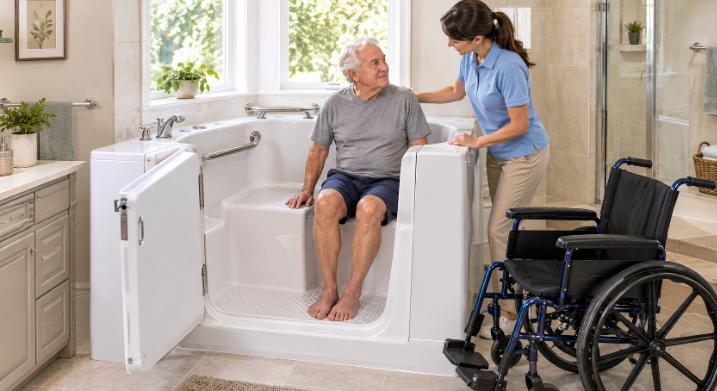
An outswing door opens outward and out of the way. It can also let a caregiver stand close without leaning over a wet tub wall.
The catch is floor space. The door needs room to swing, so draw that arc on your bathroom plan before you order anything.
What I sketched on paper
I drew five door layouts on a basic 5 by 8 foot bathroom. Inswing doors left a tight pivot space in two of them.
Outswing doors did better, but only when the swing did not hit a toilet or vanity. A tape measure beats a guess every time.
| Outswing door: pros | Outswing door: cons |
|---|---|
| More open path to the seat Easier spot for a caregiver Less door in the way during a transfer |
Needs clear floor for the swing Layout planning matters more Some bathrooms simply cannot fit it |
Story Time: A Tucson Bathroom, a Tape Measure, and a Very Tall Tub Wall
Tucson, Arizona, March 2026
Marisol, 52, was helping her dad Ernesto, 81, after hip surgery. He used a wheelchair most days. Their tub wall was high, and every bath ended with both of them stressed.
Ernesto started saying he was “fine without baths.” Marisol heard that and her stomach dropped. Her dad had never skipped a shower in his life.
One Saturday she measured the bathroom, then the wheelchair, then the doorway. The doorway was an inch too tight for what she first had in mind.
That one inch changed the whole plan. She learned about door widening before she spent a dollar on a tub. Not a fun surprise, but a cheap one.
Her takeaway: measure the path to the bathroom, not just the tub. The best of the wheelchair accessible walk-in tubs for elderly parents will not help if it cannot get through the door.
Door too tight? Run your numbers through the Senivly door widening cost calculator before you talk to a contractor. It gives you a rough number to hold in your head.
Wheelchair-Accessible Bathtubs for Seniors: Seat Size, Entry, and Turning Space
A wheelchair user needs more than a low door. They need a clear path to the tub, space to park the chair, and a seat that fits their body.
The U.S. Access Board publishes bathtub and floor-space rules in the ADA standards. Those rules cover public buildings, not homes, but they make a handy yardstick. See the ADA standards.
Six measurements to write down before you shop
- The width and length of the current tub space.
- The bathroom doorway width, including trim.
- Open floor next to the tub for the wheelchair.
- Your parent’s hip width while sitting.
- The wheelchair seat height and overall width.
- The distance from the tub to the toilet and the sink.
Not sure what to fix first? The bathroom modification cost calculator helps you see which changes cost what, so you can plan the whole room instead of only the tub.
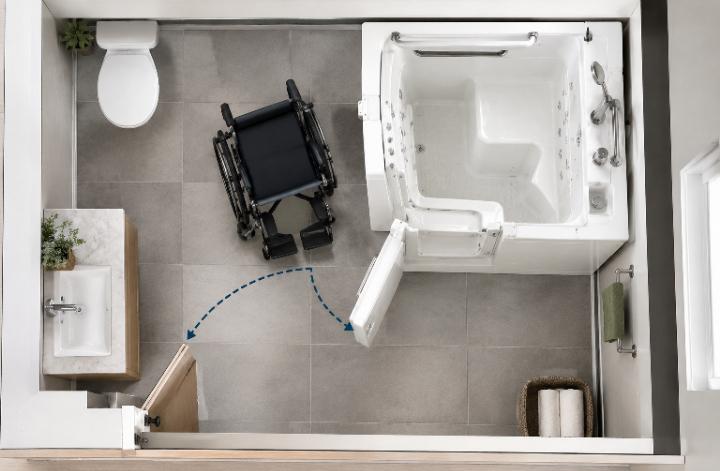
The Transfer in Four Moves
Line up
Chair parks beside the open door.
Lock and check
Brakes on, footrests moved, seat heights compared.
Slide over
Move to the seat using the method a therapist taught.
Close and fill
Shut the door, check the seal, then fill the tub.
Always follow your parent’s care team and the maker’s instructions.
Walk-In Tubs for Seniors with Limited Mobility: Features Worth Paying For
I read a pile of spec sheets side by side. Some features matter a lot. Some are just shiny. Here is how I sorted them.
| Feature | Why I care | Priority |
|---|---|---|
| Slip-resistant seat and floor | Wet surfaces are the whole problem. | Must check |
| Grab bars you can reach | Hands need something steady to hold. | Must check |
| Door seal and latch | Leaks and stiff handles ruin the mood fast. | Must check |
| Fast drain | Less time sitting in cooling water. | Must check |
| Seat height and depth | Changes comfort and how easy the move feels. | Must check |
| Hand-held shower | Handy for rinsing and for a helper. | Nice to have |
| Therapy jets | A comfort extra. Ask a doctor first. | Nice to have |
| Fancy touch controls | Can confuse anyone with vision or memory changes. | Ask why |
One honest note. No tub makes bathing risk-free. A good design helps safe habits. It does not replace a helper, a doctor’s advice, or plain common sense.
Keeping the old tub for now? A good set of bars helps a lot. Read my best grab bars for seniors review before you drill any holes.
Dignity First: How I Would Talk to a Parent About a New Tub
Most parents do not want a “senior product.” They want their own bathroom, their own routine, and a closed door. With wheelchair accessible walk-in tubs for elderly parents, the first talk beats the model number.
AARP research keeps finding that most adults over 50 want to stay in their own homes. A better bathroom can help that happen. Here is AARP’s livable communities page.
Columbus, Ohio, January 2026
Dennis, 58, wanted to replace his mom Lorraine’s tub. Lorraine, 84, said no before he finished the sentence. “I’ve bathed in that tub since 1971,” she told him.
Dennis backed off and asked a different question: “What’s the worst part of bath time?” She answered right away. Getting out, she said, made her heart race.
That became the project. Not “a new tub for Mom,” but “a way to get out without the scary part.” She picked the color herself and joked she’d earned the right.
I like this story because Dennis did not win the argument. He changed the question. Funny how often that works.
Words that open doors
- “I want you to keep bathing your way, right here at home.”
- “Can you help me compare a few options? You know your body best.”
- “What part of bathing feels hardest right now?”
Words that slam them
- “You can’t handle the tub anymore.”
- “I already ordered it.”
- “It’s for your own good.”
Let your parent pick the color, the towel hooks, and the bath time. Small choices protect one big feeling: this is still their house.
Comparing Five Accessible Walk-In Tub Sizes Side by Side
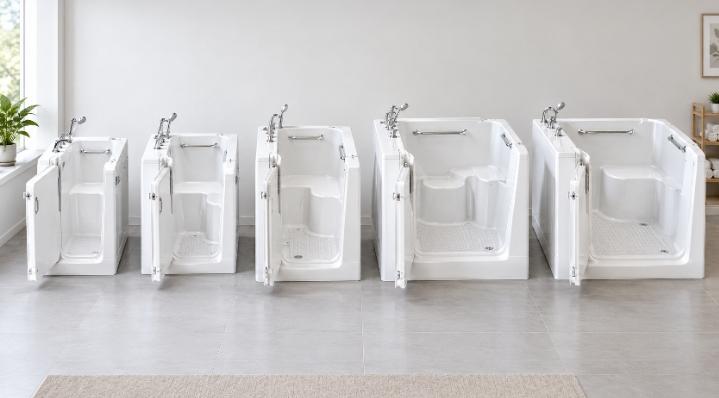
This is where families get stuck. Five sizes look alike online, but a few inches change the seat comfort, the transfer room, and whether it even fits.
The sizes below come from the Ella’s Bubbles transfer range. My notes on who each size may suit are planning ideas, not medical or fitting advice.
| Model | Tub size (W × L) | Seat width | May suit | Verify before buying |
|---|---|---|---|---|
| Transfer26 | 26" × 52" | 19" | Narrow bathrooms, smaller frames | Seat comfort, shoulder room, chair approach |
| Transfer30 | 30" × 52" | 22" | Standard alcove swap, average builds | Alcove width, wall studs, door swing |
| Transfer32 | 32" × 52" | 24" | Extra seat and elbow room | Fit in the opening, doorway clearance |
| Transfer60 | 30" × 60" | 22" | Taller users, longer bathing space | Room length, plumbing moves |
| TransferXXL | 36" × 55" | 29" | Larger frames needing a wide seat | Weight rating, floor space, chair clearance |
Dimensions come from the supplied size chart. Confirm current specs, weight limits, and accessibility features with the manufacturer before you decide.
How I read the above table
- Seat width is not tub width. Transfer30 and Transfer60 share a 22 inch seat but differ in length.
- Length changes the layout. The 60 inch model may need extra room or plumbing changes.
- XXL is about fit. The 29 inch seat helps larger users, but it needs more floor.
- Narrow is not always easier. A 26 inch tub fits tight rooms, but seat room can feel snug.
Want a rough price before you call anyone? Plug your numbers into the Senivly walk-in tub cost calculator. It beats guessing, and it will not call you back at dinner.
Where Ella’s Bubbles Fits When You Shop for Wheelchair Accessible Walk-In Tubs for Elderly Parents
Ella’s Bubbles offers a transfer-focused range in five sizes. That is the reason it is in this article. You can match a tub to a real body and a real bathroom.
The jump from a 26 inch tub to a 36 inch tub means you are not stuck with one size for everyone. For families, that choice is worth a lot.
Who Ella’s Bubbles may suit
- Families comparing sizes for different body types.
- Households that want a transfer-friendly L-shaped design.
- Buyers who need a wide seat, such as 29 inches.
What I would verify before buying
- Exact door opening, seat height, and transfer room.
- Weight capacity and who each model is rated for.
- Warranty terms for labor, door seal, and pumps.
- Install needs, lead times, and local rules.
Fair is fair: get at least two other quotes. A confident company will welcome that and answer hard questions in plain words.
Walk-In Tubs for Disabled Adults: It Is Not Only a Senior Thing
Walk-in tubs for disabled adults are not just for people with gray hair. A younger adult with a spinal injury or a long-term condition may need the same transfer room.
Spokane, Washington, June 2026
Kayla, 39, uses a power chair because of multiple sclerosis. Her old tub sat unused for two years. “It became a very expensive shelf,” she liked to joke.
Her sister helped her measure the bathroom and compare seat widths. They also asked her occupational therapist to check how she moves from the chair.
The therapist spotted something they missed: the chair’s armrests did not come off. That changed which tub layouts were realistic.
Lesson: bring your actual chair, or a detailed photo with measurements, into every conversation. A tub that fits a catalog chair may not fit yours.
Here are quick planning ideas I used to think through sizes. They are not fitting advice, so ask a therapist to check any choice.
A 26 or 30 inch width may be easier to place. Check seat comfort first.
The 60 inch length may give more leg room. Check wall length and drain spot.
A 29 inch seat may help. Ask about weight ratings and door clearance.
Installation Reality Check: Space, Plumbing, Power, and Real Costs
The tub price is one slice of the pie. Removal, plumbing, flooring, drains, and electrical work can change your final number fast.
Many suppliers quote walk-in tubs from a few thousand dollars to well over ten thousand, and install is often extra. Always ask for an itemized quote in writing.
Rochester, New York, November 2025
Tom and his wife Barb, both in their sixties, bought a tub for Barb’s mother. The tub was lovely. The water heater was a 30 gallon tank from 1998.
The first bath started warm and ended lukewarm. Mother-in-law was polite about it, which somehow made it worse.
They ended up adding a bigger water heater. Nobody mentioned that during the sales call, mostly because nobody asked.
Moral of the story: ask how much hot water the tub needs, then check your tank. It is a ten-minute question that can save a cold bath.
| Cost area | What I would ask |
|---|---|
| Tub removal | Is demolition and haul-away included? |
| Plumbing | Does the drain or the valve need to move? |
| Electrical | Does it need its own circuit or a GFCI? |
| Water heater | Is my tank big enough to fill the tub warm? |
| Floor and walls | Is reinforcement or new tile needed? |
| Permits | Who pulls permits and handles inspections? |
Fill time is a sneaky one. If the tub takes a long while to fill and drains slowly, your parent sits and waits while the water cools. Ask about both.
I put together a full walkthrough of what really happens on install day. Read the walk-in tub installation guide so nothing surprises you.
Accessible Bathing Solutions for Elderly Parents: Tub vs Other Options
A walk-in tub is not right for everyone. Some parents never soak. Some love a long soak. Some have needs a tub cannot meet. All of that is fine.
| Option | Good side | Not so good side |
|---|---|---|
| Accessible walk-in tub | Seated soak, low entry, no tall rim. | Higher cost, fill and drain time, needs space. |
| Roll-in shower | No step, fast, great for wheelchairs. | No soaking, may need a remodel. |
| Tub transfer bench | Lower cost, keeps your tub. | Still lifts legs over the rim. |
| Grab bars only | Simple and cheap. | Does not remove the high step. |
Day in the Life: Tub vs Shower on an Ordinary Evening
Specs only tell half the story. So I mapped one normal evening for each setup, using the routines caregivers describe most.
| Moment | Walk-in tub | Roll-in shower |
|---|---|---|
| Getting ready | Park chair, open door, transfer, close door. | Roll in, set brakes, start. |
| Waiting | Seated while the tub fills, so warmth matters. | Water runs right away. |
| Comfort | Seated soak for stiff joints, if the doctor agrees. | Quick, simple rinse. |
| Finishing | Drain, open the door, transfer back. | Dry off and roll out. |
The shower wins on speed. The tub wins on soaking and, for some people, on pure relaxation. If that sounds like your parent, wheelchair accessible walk-in tubs for elderly parents deserve a real look.
Here is my test question: how did they bathe for forty years? Start there. Habits are stubborn, and honestly, that is a good thing to respect.
Paying for It: Where to Ask About Money
Original Medicare usually does not pay for walk-in tubs. Plans differ, so I put the details in one place: does Medicare or Medicaid cover walk-in tubs in 2026. You can also check Medicare.gov.
- Veterans: Ask the VA about home modification grants. VA.gov
- Taxes: Some medically needed home changes may count as medical expenses. See IRS Publication 502 and ask a tax pro.
- Local help: Your Area Agency on Aging may know of repair programs. Eldercare Locator can point you to it.
- Family talk: If siblings share costs, write down who pays what. Future you will say thanks.
I cannot promise any program will approve your project. Treat these as doors to knock on, not guarantees.
Why Wheelchair Accessible Walk-In Tubs for Elderly Parents Matter More Every Year
The Census Bureau has noted that all baby boomers will be over 65 by 2030. That is a lot of families about to ask the same bathroom question. See the Census aging data.
That is why searches for accessible bathing solutions for elderly parents keep climbing. People want to stay home, and they want bathrooms that keep up.
In my reading, families tend to research for weeks and then buy on one hard bathing day. I would flip that. Plan on a calm Tuesday, not a panicked Friday night.
The Caregiver Side: Protect Your Own Back
Lots of guides forget the person holding the towel. Lifting, bending, and balancing on a slick floor can hurt a caregiver, and a hurt caregiver helps nobody.
That is one reason I treat wheelchair accessible walk-in tubs for elderly parents as a family decision. A better setup can ease the strain on both of you.
- Ask a therapist to teach safe body mechanics.
- Wear shoes with grip, even in the house.
- Set towels, soap, and a robe within reach before you start.
- Never lift more than your training and body allow.
- Share the routine with a sibling or a paid aide when you can.
The Caregiver Action Network has plain-spoken support for family caregivers. Visit their site. Please use it. You count too.
Pre-bath emergency list
- Ask how fast the tub drains and how the door opens from the outside.
- Keep a phone or a call button within reach.
- Agree on a check-in signal, like a knock and a spoken word.
- Post emergency numbers and medication details near the bathroom.
- Do not leave a parent alone in a filled tub if they cannot call for help.
Does your parent also live alone? Read about medical alert options for seniors who live alone in the recommended reading below. A call button near the bathroom is worth thinking about.
Caregiver reminder
If your parent gets dizzy, faints, or has heart concerns, ask their doctor about hot-water bathing before you buy any tub.
7 Mistakes I See Families Make When Buying Wheelchair Accessible Walk-In Tubs for Elderly Parents
These come up again and again when families research wheelchair accessible walk-in tubs for elderly parents. Skip them and you are ahead of most buyers.
- Buying before measuring. A gorgeous tub is useless if the door cannot swing.
- Forgetting the wheelchair. Seat height, footrests, and turning space all count.
- Skipping the care team. A therapist can suggest transfer methods and sizes.
- Ignoring the water heater. Ask Tom and Barb. Lukewarm baths are no fun.
- Choosing by looks. Comfort and easy controls come before color.
- Skimming the warranty. Read the labor and door seal lines twice.
- Leaving your parent out. The best tub is the one they will actually use.
Myths and Facts About Accessible Walk-In Tubs
| Myth | Fact |
|---|---|
| “Any walk-in tub works with any wheelchair.” | Chair size, seat height, and floor space change the fit. |
| “A walk-in tub removes all bathing risk.” | It can reduce some hazards, but safe habits still matter. |
| “Bigger is always more comfortable.” | A bigger tub can crowd the room and raise the cost. |
| “Installing it is just a swap.” | Plumbing, flooring, and power needs often add steps. |
| “My parent will never agree.” | Many parents say yes when they help choose. |
Fit Problems I Would Watch For, and How to Fix Them
While sketching layouts, I kept hitting the same few snags. Here is how I would think through each one.
The door hits the toilet or vanity
Outswing doors need space. If the swing collides with a fixture, ask about another size, a mirrored layout, or moving the vanity.
The wheelchair cannot get close enough
A narrow doorway or a tight turn can block the approach. Think about widening the door or removing a bulky cabinet.
The seat feels too tight or too roomy
Compare seat widths from 19 to 29 inches with your parent’s hips. If you can, sit in a demo model or test with a measured chair.
The water cools while the tub fills
Ask about fill rate and heater size. A bigger water heater or an in-tub heater may help, depending on the model.
Your parent feels nervous
Go slow. Practice with the door open, then a shallow bath, then a normal one. Confidence grows with routine and patience.
15 Questions to Ask Before You Buy
Print this list and keep it by the phone when you call about wheelchair accessible walk-in tubs for elderly parents. A good company answers clearly and does not rush you toward a deposit.
- What are the exact outside size, seat width, seat height, and door opening?
- Is the door an outswing design, and how much floor does the swing need?
- What is the weight capacity?
- How does the seat help with a wheelchair transfer?
- How fast does the tub fill and drain?
- How much hot water does it need?
- What plumbing and electrical work is required?
- Do you install, or do I hire my own contractor?
- What is included in the quoted price?
- What is not included, like permits, flooring, or removal?
- How long is the warranty on the shell, door, seal, and pumps?
- What is the lead time?
- Can I see a demo or a detailed video?
- What is your return or cancellation policy?
- Can you share reviews from similar households?
My rule of thumb
If an answer sounds vague, ask for it in writing. A clear company will not mind. A slippery one will, and that tells you plenty.
Your Step-by-Step Plan for Choosing Wheelchair Accessible Walk-In Tubs for Elderly Parents
- Talk with your parent and name the hardest part of bathing.
- Ask their doctor or therapist about transfers and hot-water limits.
- Measure the bathroom, the doorway, and the wheelchair.
- Shortlist two or three models, including a transfer-focused range.
- Ask for written quotes with itemized install costs.
- Compare warranty, lead time, and after-sale support.
- Ask for a showroom visit or a video demo of the door and seat.
- Decide together, then book a licensed installer.
Mini checklist
Seat width noted. Door swing mapped. Plumbing checked. Warranty read. Parent approved. If one box is empty, hold off on paying.
Bathroom prep before install day
- Clear the bathroom, the hallway, and the delivery path.
- Check the doorway width for carrying the tub inside.
- Move rugs, hampers, and decor out of the work area.
- Find the main water shutoff and the electrical panel.
- Line up another bathroom for your parent during the work.
- Ask the installer how long the room will be out of service.
- Keep pets and visitors away from the work zone.
Your first week with the new tub
Do a dry run first. Practice the move with the door open and no water. Let your parent sit, adjust, and ask questions.
Then try a short, shallow bath with the care team’s guidance. Check the water with a bath thermometer, since older skin can be sensitive.
Write down what feels awkward. Tiny tweaks to towel spots or seating can make the routine smoother within days.
What Happens If You Wait? An Honest Look
I will not scare you with worst-case stories. Waiting is sometimes smart, especially while you gather quotes and talk with your parent’s care team.
But doing nothing has a cost too. Baths get rushed, skipped, or done alone. Caregivers feel it, and parents may start to feel like a burden.
Tampa, Florida, August 2026
Gloria, 77, lived alone and loved her morning bath. By summer she was skipping it. “Too much trouble,” she told her daughter on the phone.
Her daughter, who lives in Atlanta, did not push. She asked her mom to try a few small fixes first: grab bars, a non-slip mat, and a bath chair.
Those helped. A few months later, Gloria said yes to talking about a walk-in tub. She needed time, and her daughter gave it to her.
I like that this family did not wait until something went wrong. They also did not rush Gloria. That is a hard balance.
The National Institute on Aging notes that many falls are tied to risks that can be reduced, including hazards at home. Read the NIA falls guidance.
A middle path: add grab bars and a non-slip mat now, then plan the bigger upgrade without panic. That way you decide calmly, not after a scare.
What I Would Do This Week If I Were Shopping for Wheelchair Accessible Walk-In Tubs for Elderly Parents
Big projects feel smaller when you cut them into days. This is the week I would plan if my own parent needed help tomorrow.
- Monday: Ask your parent what feels hardest about bathing. Listen more than you talk.
- Tuesday: Measure the bathroom, the doorway, and the wheelchair. Take photos too.
- Wednesday: Call the doctor or therapist about transfers and hot water.
- Thursday: Run the numbers in a cost calculator and set a rough budget.
- Friday: Request two or three written quotes, including one transfer-focused range.
- Weekend: Sit down with your parent, look at everything together, and sleep on it.
Notice what is missing: a deposit. Good decisions about wheelchair accessible walk-in tubs for elderly parents rarely happen on the first phone call.
Three small wins you can grab before any tub arrives
- Put a night light between the bedroom and the bathroom.
- Swap slippery bath mats for ones with a real grip.
- Keep a charged phone within arm’s reach of the tub area.
None of these replaces a better tub. But they cost little and start helping today. And if you ever spend an evening hunting for the one good towel, you are not alone.
Short on time? Even a quick look at accessible bathing solutions for elderly parents tells you which questions matter. Ten minutes of reading now can save you weeks of second-guessing later.
Plain-English Glossary for First-Time Buyers
Supplier pages can sound technical. Here are the words I explain most, in simple terms you can use on a quote call.
- Outswing door: A tub door that opens outward, away from the seat.
- Inswing door: A tub door that opens toward the seat and into the bathing area.
- Seat width: The usable sitting space, which is not the same as the outer tub width.
- Transfer: Moving from a wheelchair or walker onto the tub seat.
- Clear floor space: Open floor next to the tub where a chair can park.
- Fast drain: A drain that empties the tub quicker than a standard one.
- Alcove fit: A tub that sits in a three-wall space, like many standard tubs.
- Itemized quote: A price list that splits out the tub, labor, and extra work.
If a salesperson uses a word you do not know, stop and ask. A company worth trusting explains it without making you feel rushed.
Frequently Asked Questions About Wheelchair Accessible Walk-In Tubs for Elderly Parents
What are wheelchair accessible walk-in tubs for elderly parents?
They are tubs with a low side door, a built-in seat, and room beside the tub for a wheelchair transfer. Features and fit vary, so confirm details with the maker.
Are L-shaped outswing-door walk-in tubs better for wheelchairs?
They can be, because the door opens away from the seat area. They also need floor space for the swing, so measure first.
How wide should the seat be?
It should fit your parent without crowding. The Ella’s Bubbles range runs from 19 to 29 inches, but ask a therapist or supplier to check the fit.
Can wheelchair-accessible bathtubs for seniors prevent falls?
No product can promise that. A low-entry tub may remove the need to step over a high rim, but safe habits and help still matter.
Does Medicare pay for a walk-in tub?
Original Medicare generally does not. Ask your plan, state programs, or the VA if it applies. Rules change, so check current details.
How long does installation take?
It depends on plumbing, floor work, and room size. Ask your installer for a written timeline and what could stretch it.
Are walk-in tubs only for seniors?
No. Adults of any age with mobility limits may use them. Fit and medical suitability still need a professional’s input.
Should I think about a shower instead?
If your parent never soaks and wants fast bathing, a roll-in shower may fit better. Weigh habits, budget, and space.
Final Thoughts: Pick Wheelchair Accessible Walk-In Tubs for Elderly Parents With Confidence
The right tub is not the fanciest one. It fits your parent’s body, their chair, your bathroom, and their sense of dignity. In that order, more or less.
Measure carefully, include your parent, ask the hard questions, and compare more than one company. Then you can decide from a calm place, not a worried one.
One last joke, since you made it this far. What gets wetter the more it dries? A towel. Keep a few extra by the tub.
Help your parents enjoy a safer, more comfortable bathing experience.
Explore wheelchair accessible walk-in tubs designed with their needs in mind.
Your turn: tell me in the comments
Have you helped a parent bathe? What worked, what flopped, and what do you wish someone had told you? Drop it below. Your comment might save another family a rough evening.
And if you guessed the riddle at the top, I’m proud of you.
Recommended Reading on Senivly
- How to prevent nighttime falls between the bedroom and bathroom
- Bathroom grab bar placement for seniors with shoulder arthritis
- Best home modifications for aging in place in 2026
- Best non-slip mats and flooring options for senior homes in 2026
- Medical alert systems for seniors who live alone
Sources & References
- CDC. Older Adult Fall Prevention. cdc.gov/falls
- National Institute on Aging. Falls and Falls Prevention. nia.nih.gov
- U.S. Access Board. ADA Standards. access-board.gov/ada
- AARP. Livable Communities. aarp.org/livable-communities
- Medicare.gov. Coverage information. medicare.gov
- IRS. Publication 502, Medical and Dental Expenses. irs.gov/publications/p502
- U.S. Department of Veterans Affairs. va.gov
- U.S. Census Bureau. Older Population and Aging. census.gov
- Caregiver Action Network. caregiveraction.org
- Administration for Community Living. Eldercare Locator. eldercare.acl.gov
This article is general information, not medical, legal, or financial advice. Talk with your parent’s healthcare team and a licensed installer.