
Ageing in Place in Singapore: A Complete Guide to Making Your Home Safer for Seniors
My aunt lives in a four room HDB flat in Bedok. Last year she slipped in her own bathroom while reaching for a towel, and that phone call is the whole reason this article exists.
I’ve spent months reading HDB documents, calling contractors in Singapore, and comparing what I already know about ageing in place from writing about US grants, just so one family doesn’t get another 2am phone call like that one.
What follows isn’t a copy of some brochure. It’s what I actually found, what actually worked, and what I’d genuinely tell a friend if they called me tonight asking where to start.
Why I Even Started Digging Into Ageing In Place In Singapore
Ageing in place in Singapore means letting an older adult keep living in their own flat or house, safely, instead of moving them into a nursing home. That’s the short answer, and it’s the whole point of this guide.
My aunt didn’t want to move. Most seniors don’t. What she needed wasn’t a new address, she needed a bathroom that wasn’t trying to kill her.
So I started asking questions. What does HDB actually pay for. What doesn’t it cover. What would a private contractor charge if the government scheme didn’t apply. I’m sharing everything I found here, in plain English, no jargon.
I also kept comparing what I was learning to what I already knew from writing about home modification grants in the US. Some of it lines up. A lot of it doesn’t, and I’ll get into that further down, including where the two systems genuinely can’t be swapped for each other.
Quick note before we go further: I’m not a contractor and I’m not from HDB. I’m someone with family in Singapore who went and checked the official sources myself, and I’ll link them below so you can check too.
What Ageing In Place In Singapore Actually Looks Like Day To Day
It’s not a fancy concept. Ageing in place in Singapore, in practice, means a few things happening at once in a real flat, not a brochure photo of one.
It means grab bars where hands actually reach for support. It means floor tiles that don’t turn into a skating rink when wet. It means a toilet entrance wide enough for a walking frame, and lighting that doesn’t leave a hallway pitch dark at 3am.
None of this is complicated. What’s complicated is figuring out who pays for what, and that’s where most families, including mine, get stuck.
It also means thinking about the whole flat, not just the room where something already went wrong. My aunt’s fall happened in the bathroom, but once I started looking properly, her kitchen and hallway had their own quiet risks nobody had noticed yet.
Why This Feels Urgent Right Now, Not Someday
Singapore has one of the fastest ageing populations in the region, and government policy has clearly shifted toward keeping seniors at home rather than in institutional care, wherever that’s realistically possible.
That shift shows up everywhere once you start looking. More households eligible for support. Wider property types included. Lower age thresholds for related housing options like Community Care Apartments. None of that happens by accident.
For families, that means the paperwork and subsidy landscape around ageing in place in Singapore is genuinely moving in a helpful direction, but it also means checking current eligibility matters, since what was true a year ago might already be outdated by the time you’re reading this.
A Quick History Of How This Support Came About
Ageing in place in Singapore didn’t start as one big national plan overnight. EASE actually began back in 2012, as part of HDB’s Home Improvement Programme, and it’s been quietly expanded several times since.
By March 2025, more than 379,000 households had already benefited from EASE, according to HDB’s own figures. That’s not a small pilot scheme, that’s a huge chunk of Singapore’s older HDB residents.
What changed more recently is the extension to private property, starting April 2026, and separately, the lowering of the Community Care Apartment eligibility age from 65 to 55. Both moves point the same direction, more support, earlier, for more types of housing.
I mention this history because it matters for expectations. A scheme that’s been running and expanding for over a decade behaves differently than a brand new pilot. Contractors know it well, HDB staff know it well, and the process is far more predictable than families often assume going in.
The Short Version, If You’re Skimming This On Your Phone
- Ageing in place in Singapore mostly runs through a scheme called EASE, run by HDB.
- EASE covers grab bars, slip resistant flooring, and ramps, and it can cover 87.5% to 95% of the cost for HDB flats.
- From April 2026, private property owners can also get help, through EASE (Private), though the subsidy is lower at 75%, capped around S$1,200 in vouchers.
- Outside of grants, private renovation for a senior friendly bathroom in Singapore usually runs a few thousand dollars, depending on scope.
- Falls aren’t only a bathroom issue. Kitchens, bedrooms, and hallways matter just as much.
- There are other schemes beyond EASE worth knowing, including support for mobility equipment and newer Community Care Apartment options.
If you only read that list, you already know more than most families do when they start this journey. But there’s a lot more worth knowing, so keep going.
The Room Where Most Falls In Singapore Homes Actually Start
Bathrooms. Always bathrooms. Wet tiles, a step into the shower, nothing to hold onto. My aunt’s flat was exactly like this before we changed anything.
Grab Bars: The Cheapest Fix With The Biggest Payoff
A grab bar costs almost nothing compared to what a hip fracture costs, in money and in recovery time. HDB’s EASE programme has grab bars as one of its core items, and I’ve read through a full review of the best grab bar options we ran on this site, comparing grip texture, weight limits, and mounting types.
Placement matters more than people think. A grab bar installed at the wrong height is barely better than no grab bar at all, so this isn’t a job to rush, and it isn’t one to leave to a handyman guessing at angles.
If your loved one has shoulder arthritis, standard placement advice doesn’t always apply. I’d recommend reading our piece on grab bar placement for seniors with shoulder arthritis before anything gets drilled into the wall.
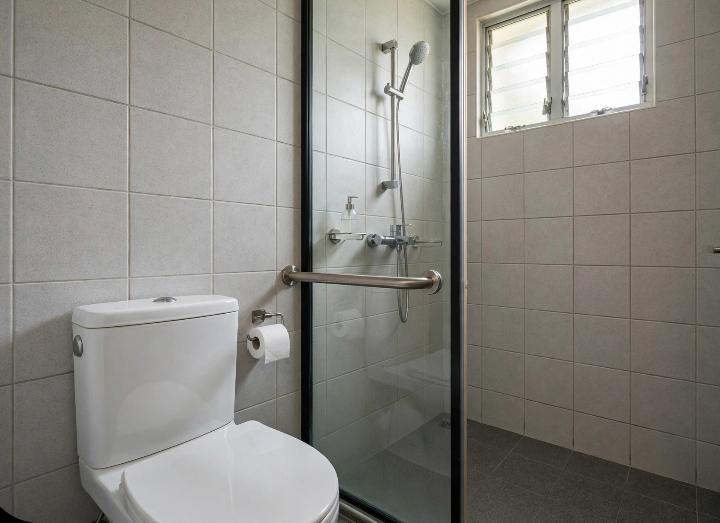 photo of a grab bar mounted beside a toilet and inside a shower stall, showing correct height and angle]
Flooring: Not All “Non Slip” Tiles Are Equal
A lot of HDB bathrooms use glossy tiles that look nice and turn dangerous the second water hits them. Slip resistant treatment is one of the three main items EASE subsidises, alongside grab bars and ramps.
If you’re pricing this out yourself, before or outside of any grant, I’d run the numbers through a non slip flooring cost calculator first, because pricing varies a lot depending on the size of the bathroom and the material used.
Shower Seats And Walk In Access
A foldable shower seat sounds minor until you watch someone stand shaking under running water, exhausted, afraid to move. It’s one of the smallest changes with the biggest daily impact on comfort.
If your parent’s flat has a bathtub instead of a shower, it’s worth reading our guide comparing non slip mats and flooring for senior homes, since a mat is sometimes a cheaper first step before a full renovation.
Toilet Height And Seat Risers
Nobody talks about this one, but a toilet that sits too low forces the knees and hips to do way more work standing up. A raised toilet seat is cheap, sometimes under S$50, and it changes how tiring the bathroom feels, every single day.
I didn’t think about this for my aunt until a physiotherapist mentioned it in passing. It’s not glamorous, but ageing in place in Singapore is built out of exactly these unglamorous little details.
Bathroom Lighting, The Detail Right Above Everything Else
A dim bathroom light makes wet tiles harder to judge, harder to see where a grab bar actually is, and harder to notice a small spill before stepping in it. Brighter, evenly spread lighting is a cheap fix most families never think to include in a renovation conversation at all.
I swapped a single dim bulb for a brighter fixture in my aunt’s bathroom at the same time as the grab bar installation, and it cost almost nothing compared to everything else in the project.
Kitchen Safety Nobody Warns You About
The kitchen doesn’t get the attention the bathroom does, but it should. Reaching, bending, and standing near heat all happen here, repeatedly, every day.
Cabinet Handles: Pull Bars Versus Twist Knobs
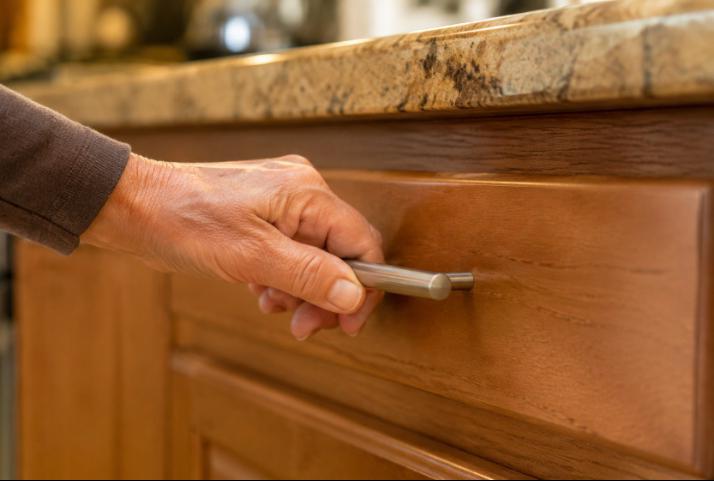
Twist knobs sound minor until arthritis or general grip weakness makes twisting genuinely painful. Swapping to simple pull bar handles is one of the cheapest changes in this entire guide, often under S$5 per handle, and it removes a daily friction point that has nothing to do with falls at all, just comfort.
I didn’t think this one mattered until my aunt mentioned, almost in passing, that opening her spice cabinet “always hurt a bit.” That one sentence led to swapping six handles in an afternoon.
Storage Height And Reaching
If the pots she uses daily sit on the top shelf, she’s climbing or stretching for them constantly. Moving everyday items to waist or chest height sounds obvious, but it’s the kind of fix families skip because it feels too simple to matter.
It matters. A stretch to a high shelf, done on a stool, is one of the more common ways seniors fall at home, and it has nothing to do with EASE or any grant at all.
Stove And Oven Risks
An auto shutoff feature on a stove, or a simple timer habit, matters more as memory naturally slows with age. This isn’t about capability, it’s about reducing the cost of an honest mistake.
Kitchen Flooring
Kitchens get wet too, from spills, from mopping, from condensation near the sink. The same slip resistant thinking that applies to bathrooms under ageing in place in Singapore planning should extend here, even though EASE itself doesn’t typically cover kitchen flooring.
Bedroom And Night Time Risks
Most falls at night happen for one boring reason. Someone wakes up needing the toilet, the room is dark, and they’re moving on a body that hasn’t fully woken up yet.
Bed Height
A bed that’s too low makes standing up a real effort every single time. A bed that’s too high creates its own risk getting down. There’s a sweet spot, usually where knees sit close to a right angle while seated on the edge.
Night Lighting Between Bed And Bathroom
This is one of the cheapest fixes in this entire guide. A motion sensor night light along the path from bed to bathroom costs very little and removes one of the biggest risk factors for night time falls.
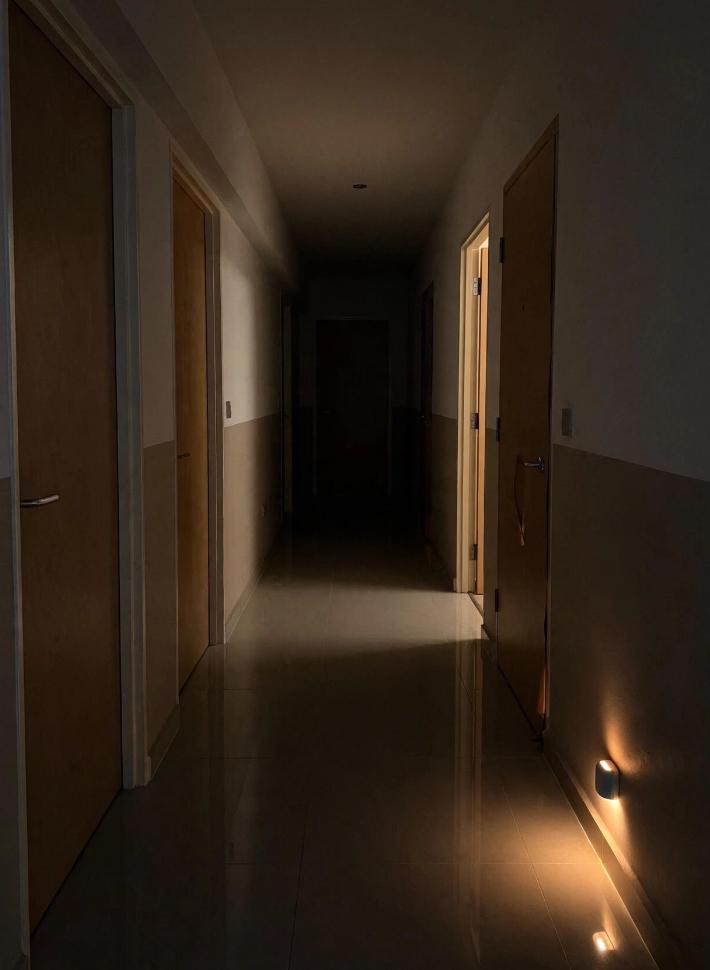 photo of a well lit hallway at night with a motion sensor night light near the floor
What EASE Actually Pays For, And Where It Falls Short
EASE stands for Enhancement for Active Seniors. It’s HDB’s main scheme for ageing in place in Singapore, and it’s genuinely generous compared to a lot of what I’ve seen in US home modification grants.
Here’s how eligibility actually works, based on HDB’s own published criteria. A senior aged 65 or older generally qualifies. A senior between 60 and 64 qualifies too, but only if they need help with at least one Activity of Daily Living, like washing, dressing, or moving around the home, confirmed through a Functional Assessment Report done by a doctor or approved assessor.
That’s an important detail a lot of articles online skip. It’s not “everyone over 60 qualifies automatically.” There’s a real assessment involved for the younger age band, and I’d rather tell you that upfront than have you assume otherwise.
Where to check this yourself: HDB’s official EASE page lays out the full eligibility criteria, and the Agency for Integrated Care (AIC) has a simpler breakdown of the six Activities of Daily Living used in the assessment. I’d always check the primary source before applying, since eligibility rules can shift.
Two Ways To Apply: HIP Versus Direct Application
There are two paths into EASE, and this confused me at first too. If your block is scheduled for HDB’s Home Improvement Programme, EASE items get bundled in automatically when that project happens.
If your block hasn’t been scheduled yet, or you don’t want to wait years for that, you apply directly through EASE Direct Application instead. My aunt’s block wasn’t due for HIP any time soon, so we went the direct route.
The Functional Assessment Report, Explained Simply
For the 60 to 64 age band, this report is the gatekeeper. It’s completed by a doctor registered with the Singapore Medical Council, or another approved assessor, and it documents whether the senior needs help with things like washing, dressing, feeding, toileting, or moving around.
It’s not a test anyone fails in a personal sense. It’s simply documentation, and skipping it early just delays everything else in the process.
What A Typical EASE Site Visit Actually Looks Like
Nobody explained this part to us clearly beforehand, so here’s what actually happened. A representative came to assess the flat first, checking where grab bars made physical sense, and confirming the bathroom layout before any installation date got set.
That visit took under an hour. It wasn’t invasive, and my aunt didn’t need to do anything except answer a few questions about how she moves around her own bathroom day to day, which sink she uses, which side she steps out of the shower from.
The actual installation crew came on a separate day, weeks later, and finished everything in roughly six hours. We were told to expect a full day, so finishing early was a pleasant surprise, though I wouldn’t assume every case moves that fast.
What EASE Doesn’t Cover
EASE covers grab bars, ramps, and slip resistant flooring treatment as its core items, plus a wider list of fittings for HDB flats. It doesn’t stretch to cover a full bathroom remodel, a walk in shower conversion, or kitchen safety upgrades.
Anything outside that defined list becomes a private cost, and that’s exactly where a lot of families get caught off guard mid renovation, expecting the subsidy to stretch further than it actually does.
HDB Flats vs Private Property Under EASE
Until recently, ageing in place in Singapore support was mostly built around HDB flats. That changed from 1 April 2026, when EASE (Private) rolled out for condos, landed homes, and other private housing.
The numbers aren’t identical though. HDB households can get subsidies from 87.5% up to 95%, depending on flat type. Private property households get a flat S$1,200 in vouchers, covering roughly 75% of installation cost, across seven fitting types instead of the eleven available to HDB residents.
So if a private household’s total bill for grab bars and flooring came to S$800, the voucher would cover S$600, leaving about S$200 out of pocket. It’s meaningful support, just not as generous as the HDB side.
Case study: I asked a contractor in Singapore what eight grab bars cost under EASE for an HDB flat. The subsidised price came out to about S$130.80 total, for all eight bars installed. Private market price without any subsidy runs several times higher.
Beyond EASE: Other Support Worth Knowing About
EASE gets most of the attention, fairly, since it’s the main scheme tied directly to home modifications. But it isn’t the only piece of the ageing in place in Singapore picture.
Seniors’ Mobility And Enabling Fund
This fund helps with mobility aids and equipment, not fixed home fittings like EASE. Think wheelchairs, walking frames, and similar assistive devices, which sit alongside home modifications rather than replacing them.
Silver Support Scheme
This one is a quarterly cash supplement for lower income seniors, not a renovation grant. It doesn’t pay for grab bars, but it can free up household budget that then goes toward the private costs EASE doesn’t cover.
Community Care Apartments
For families where home modification alone isn’t enough, Community Care Apartments are worth knowing about. Eligibility age was lowered from 65 to 55 as part of recent policy changes, alongside reduced fees through new subsidies.
This isn’t ageing in place in the traditional sense of staying in the exact same flat, but it’s a related option for families weighing how much support a loved one genuinely needs day to day.
My Aunt’s Bedok Flat: What I Actually Watched Happen
I want to be honest about how this went, not the polished version. We applied for EASE direct application, since her block hadn’t come up for the wider Home Improvement Programme yet.
The wait wasn’t instant. Paperwork took a few weeks. The actual installation, once approved, took about a day, which surprised me, I expected it to drag on longer.
What I observed afterward mattered more than the paperwork. She stopped gripping the sink edge to stand up. She stopped avoiding the bathroom at night. Small changes, huge difference in how she moved through her own home.
I also noticed something I didn’t expect. She got more confident in the kitchen too, once we sorted the storage height issue, even though that had nothing to do with EASE at all. One fixed room seemed to give her permission to trust the rest of the flat again.
How Much Ageing In Place In Singapore Actually Costs, In Real Numbers
Costs depend heavily on whether you’re going through EASE, or paying private market rates outside any scheme. Here’s a table I put together after comparing contractor quotes and published subsidy rates.
| Modification | HDB Under EASE (approx) | Private Property Under EASE (Private) | Full Private Market Rate |
|---|---|---|---|
| Grab bars (set of 8) | Around S$130.80 (87.5% to 95% subsidised) | 75% covered by S$1,200 voucher pool | S$400 to S$900 |
| Slip resistant flooring treatment | Heavily subsidised, small co-pay | 75% covered up to voucher limit | S$800 to S$2,500 |
| Ramp installation | Included under EASE, small co-pay | Included if within 7 eligible items | S$500 to S$1,500 |
| Raised toilet seat | Not typically an EASE line item | Not typically an EASE line item | S$30 to S$80 |
| Full bathroom renovation, senior focused | Not fully covered, EASE items only | Not fully covered, EASE items only | S$4,000 to S$12,000 |
I’d run your own numbers through this home modification cost calculator before committing to anything, especially if you’re mixing subsidised items with private renovation work in the same project.
A Rough Timeline For A Typical EASE Project
From application to finished installation, families I’ve spoken with usually see somewhere between three to eight weeks total, depending on how busy HDB’s appointed contractors are that quarter. Ours landed around five weeks.
Two Real Scenarios, Side By Side
Numbers make more sense with a real comparison, so here are two situations I looked at closely while researching this, one a rental flat, one an owned flat.
Scenario One: A 3 Room Rental Flat, Registered Tenant, Age 68
This senior qualified automatically by age, no Functional Assessment Report needed. As a registered tenant, she still qualified under EASE. Subsidy landed near the top of the scale given the smaller flat type, and her out of pocket cost for grab bars and flooring came to under S$100 combined.
Scenario Two: A 5 Room Owned Flat, Age 62, Needing ADL Support
This case needed the Functional Assessment Report first, since the senior fell in the 60 to 64 age band. Once approved, subsidy sat a little lower than Scenario One, given the larger flat type, but the family still paid only a small fraction of total cost.
Same national scheme, two genuinely different starting points, and two different amounts of paperwork required before anything got installed. That’s the kind of detail that a generic overview of ageing in place in Singapore support tends to flatten out completely.
What A Physiotherapist Told Me That Changed My Approach
Partway through this process, I asked my aunt’s physiotherapist a fairly basic question. What’s the single biggest thing families miss when modifying a flat for an older parent.
Her answer wasn’t about equipment at all. She said families fix the room where the last accident happened, then stop looking, when the actual pattern of decline usually shows up gradually across several rooms at once, not one dramatic failure point.
That’s exactly why this guide covers kitchens and bedrooms alongside bathrooms, instead of treating the bathroom as the whole story. Ageing in place in Singapore only really works as a whole flat approach, not a single room fix.
Different HDB Flat Types, And What Actually Changes For Each
Not every HDB flat is built the same, and that affects both cost and subsidy level under ageing in place in Singapore planning.
1 To 3 Room Flats
These generally sit at the higher end of the subsidy scale, around 95%, since they’re typically home to lower income households, and HDB has structured EASE subsidies with that in mind.
4 And 5 Room Flats
Subsidy levels here sit a little lower than the smallest flat types, though still generous, often in the high 80s to low 90s percentage range. My aunt’s four room flat fell into this band.
Executive Flats
Executive flats sit at the lower end of the HDB subsidy scale, around 87.5%, still a large majority of the cost covered, just proportionally less than the smallest flat types receive.
The takeaway across all flat types is simple. Nobody’s left paying full price under EASE, the differences are in degree, not in whether support exists at all.
Ageing In Place In Singapore vs What I’ve Seen Writing About The US
I’ve covered home modification grants in Texas, Florida, California, and New York before, and the contrast with Singapore’s approach is honestly kind of striking.
In the US, support is scattered across state programmes, Medicaid waivers, and nonprofit grants, and eligibility varies wildly by state. I’ve written separately about Texas home modification grants, Florida’s programme, California’s options, and New York’s grants, and no two states work the same way.
Ageing in place in Singapore, by comparison, runs through one national scheme, EASE, with clear published subsidy percentages. That’s simpler, even if the list of covered items is narrower than what some US grants allow.
| Factor | Singapore (EASE) | Typical US State Grants |
|---|---|---|
| Structure | One national scheme, HDB run | Varies by state, often multiple overlapping programmes |
| Subsidy level | 87.5% to 95% for HDB, 75% for private | Varies widely, sometimes capped grant amounts instead of percentage |
| Items covered | Defined list, grab bars, ramps, flooring, and more for HDB | Depends on programme, sometimes broader, sometimes narrower |
| Eligibility check | Age plus Functional Assessment Report for younger band | Often income based, sometimes disability documentation too |
If your family has one foot in Singapore and one in the US, it’s worth understanding both systems, since the paperwork and eligibility logic aren’t interchangeable at all.
If You’re Reading This From The US While Family Is Living In Singapore
A good chunk of readers on this site are based in the US, and I know some of you are helping fund renovations for a parent living in Singapore while managing your own retirement finances at the same time.
That’s a real balancing act. If you’re timing your own retirement income around this kind of family spending, our Social Security break even calculator is worth running, since it can shift when it makes sense to start drawing benefits versus continuing to work a bit longer to help cover costs like these.
It’s also worth knowing this clearly, since it trips people up. Medicare and Medicaid are US programmes, and they don’t extend to a parent living in Singapore. Ageing in place in Singapore support runs entirely through Singapore’s own schemes, EASE and the others covered above, not through anything American.
If you’re separately researching walk in tub coverage for a parent who lives in the US instead, our piece on whether Medicare or Medicaid covers walk in tubs answers that specific question, just keep in mind it applies to US based family, not a Singapore flat.
Walk In Tub Or Walk In Shower, If You Go That Route Privately
EASE doesn’t fund a full walk in tub or walk in shower conversion, so this decision sits entirely in private renovation territory, whether that’s in Singapore or anywhere else.
A walk in tub gives a seated soak, which some seniors genuinely prefer, but it takes longer to fill and drain, which matters for someone who needs the bathroom urgently. A walk in shower is generally faster and safer for someone with mobility concerns, since there’s no step or wall to climb over at all.
I went through this exact decision for my aunt, and leaned toward a walk in shower option in the end, mainly because speed and step free access mattered more for her than the soaking comfort of a tub. Our full comparison of walk in tub versus walk in shower for seniors walks through this in more depth than I can cover here.
If a walk in tub still makes more sense for your situation, our walk in tub installation guide covers what the process actually looks like, and roughly how long it takes from measurement to finished installation.
Getting Around The Flat: Wheelchairs, Frames, And Doorways
Ramps Where Steps Used To Be
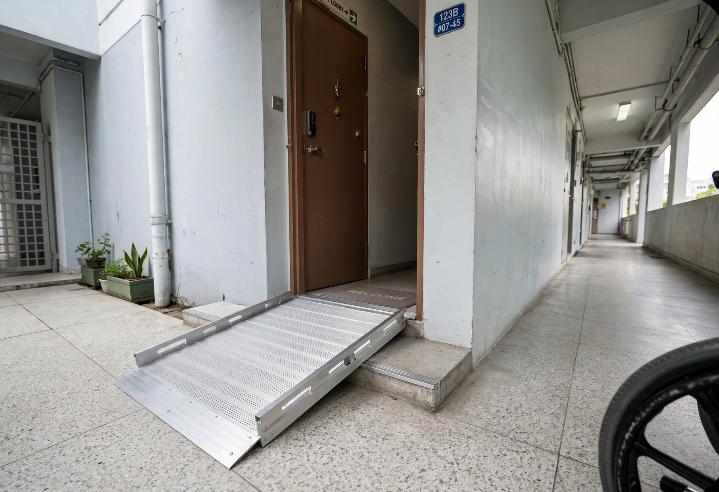
A lot of older HDB flats have small steps at the entrance or between rooms, and for someone using a wheelchair or a frame, that step might as well be a wall. Ramps are one of the covered items under EASE.
If you’re pricing a ramp outside the scheme, or for a section of the home EASE doesn’t cover, this wheelchair ramp cost calculator gives a fast estimate based on length and material.
Doorway Width, The Detail Everyone Forgets
Standard HDB toilet doorways aren’t built with wheelchairs in mind. Widening a doorway is a real, physical construction job, not a quick fix, and it’s worth pricing separately from the rest of the bathroom work.
A door widening cost calculator can help set expectations before a contractor even walks in, since this line item alone can shift a renovation budget significantly. Try this door widening cost calculator if you’re at that stage of planning.
Common Corridor And Lift Access
This is one families forget entirely, since it’s outside the actual flat. If the block’s lift doesn’t stop on every floor, or the corridor has uneven paving, getting to the front door safely matters just as much as anything inside it.
Renting In Singapore: Does Any Of This Still Apply
Registered tenants of HDB rental flats are actually included under EASE eligibility, alongside owners, which surprised me when I first read it. So ageing in place in Singapore support isn’t locked behind home ownership the way some renovation grants are.
If your parent is renting privately instead, outside HDB entirely, that changes things. EASE and EASE (Private) are both tied to specific property categories, and a private rental sits in a different situation, where landlord permission for any physical changes becomes the real hurdle, not the subsidy itself.
For that specific situation, our guide on making a rental apartment safer without renovations covers non permanent changes that don’t need a landlord’s sign off at all.
Falling Isn’t Only A Bathroom Problem
Everyone focuses on bathrooms when they think about ageing in place in Singapore, and fair enough, that’s where a lot of falls happen. But hallways, kitchens, and bedrooms matter too.
Loose rugs. Cables running across a walkway. A single dim bulb in a hallway a senior walks through at night to reach the bathroom. None of this needs a government grant to fix, it just needs someone to actually notice it.
What Happens When Nobody Fixes These Small Things
I’ve heard from families who skipped the small stuff, focused only on the bathroom, and still had a fall happen in the hallway a month later. Ageing in place in Singapore only works if every room gets looked at, not just the obvious one.
Footwear At Home
Socks on tile floors are more dangerous than most people realise. A cheap pair of grippy indoor slippers does more for fall prevention than people expect from something so ordinary.
Pets, Clutter, And Everyday Obstacles
A small dog underfoot, a laundry basket left in a doorway, a stack of newspapers by the sofa. None of these seem dangerous individually, but they add up exactly the way a wet bathroom floor does, just slower and easier to ignore.
I started walking through my aunt’s flat once a month specifically looking for this kind of clutter, not waiting for her to mention it, since she genuinely didn’t notice half of it herself anymore.
What I’d Ask A Contractor Before Signing Anything
Not every contractor working on EASE jobs handles private renovation work the same way, and not every private contractor understands senior specific needs the way an EASE appointed one does.
- Have you installed grab bars rated for full body weight, not decorative ones.
- Can you show me the slip rating of the flooring you’re proposing.
- What’s the actual timeline, in writing, from deposit to completion.
- Will the work disrupt water or electricity access during the project.
- Do you offer any warranty on installation, separate from the product warranty.
I asked all five of these before work started on my aunt’s flat, and two answers changed which contractor we went with in the end.
Seven Mistakes I Kept Watching Families Make
- Waiting for a fall before applying for EASE. Applying early means the work gets done before it’s urgent, not after.
- Assuming private property gets nothing. EASE (Private) exists now, and it’s worth checking even if you assumed you didn’t qualify before.
- Only fixing the bathroom. Kitchens, bedrooms, and hallways cause falls too, and they’re often the cheapest rooms to fix.
- Skipping the Functional Assessment Report early. For the 60 to 64 age band, this document is required, and delaying it just delays everything else.
- Choosing looks over grip. A stylish grab bar that’s slippery when wet defeats the entire purpose of installing one.
- Forgetting the common corridor and lift. A perfectly safe flat still isn’t fully safe if the path to the front door isn’t.
- Not budgeting for what EASE doesn’t cover. A full bathroom remodel will still cost real private money, even with the subsidy in place.
- Assuming one visit fixes everything. Ageing in place in Singapore usually means revisiting the flat every few months, since needs change as mobility changes.
- Ignoring the emotional side of the conversation. Presenting this as decline instead of convenience makes seniors resist changes that would genuinely help them.
A Note On Warranty And Aftercare
HDB appointed contractors under EASE typically provide a warranty period against installation defects, usually around a year. It’s worth asking exactly what that covers before work begins, since not every fault after installation counts as a defect under warranty terms.
For private market work outside EASE, warranty terms vary a lot by contractor, and I’d get it in writing every single time, not just as a verbal assurance during the quote.
Small Comforts That Aren’t About Safety At All
Not everything about caring for an ageing parent needs to be about grab bars and subsidy percentages. Some of it is just about making daily life feel a little less clinical.
If you’re looking for something outside the renovation checklist entirely, our list of gift ideas for elderly parents and grandparents and our roundup of subscription boxes seniors actually enjoy both come from the same instinct that led to this whole guide, noticing what actually makes daily life better, not just safer.
A Simple Checklist You Can Actually Start This Weekend
Before calling any contractor, walk through the flat with fresh eyes, ideally at night, since that’s when most accidents happen anyway.
- Check every bathroom for a working grab bar near the toilet and inside the shower.
- Test the bathroom floor when wet, barefoot, carefully, to feel if it’s actually slip resistant.
- Walk every hallway at night and note where the lighting is weak.
- Look for loose rugs, mats, or cables anywhere along a regular walking path.
- Check if the main toilet entrance is wide enough for a walking frame or wheelchair.
- Move daily use kitchen items to waist or chest height shelves.
- Check the bed height against how easily she can sit and stand from its edge.
For a more thorough version of this walkthrough, our home safety checklist tool covers twenty specific points, and pairs well with the full home safety checklist article if you want the reasoning behind each item.
Tech That Actually Helps, Not Just Hype
Fall Detection Wearables
Grab bars reduce falls. They don’t eliminate them. A wearable with fall detection matters most for a senior living alone, or for the hours nobody else is home.
I’ve compared devices in detail in this review of the best medical alert systems, and separately looked at which systems actually detect falls reliably, since not all of them do this well.
You can compare specific models side by side using this medical alert comparison tool, which made the decision a lot faster for my own family.
Watch Or Pendant
This question comes up constantly with families I’ve talked to. A watch feels less like a medical device, which matters for a senior who doesn’t want to feel “old.” A pendant is often more reliable for fall detection though.
I broke this down properly in a full comparison of medical alert watches versus pendants, worth reading before buying either.
Devices For Someone Living Completely Alone
If your parent lives alone, without a helper or family member checking in daily, the stakes on this decision go up considerably. Our guide on medical alert systems for seniors who live alone looks specifically at that situation.
Managing This When Family Isn’t Living In Singapore
Not every family member helping with this is actually living in Singapore day to day. I coordinate a lot of this from overseas myself, and it’s genuinely doable, just slower without eyes on the flat directly.
Video calls during the site visit helped a lot. I asked the contractor to walk me through the bathroom on a video call before anything got booked, so I wasn’t approving work sight unseen based on someone else’s description of the space.
A local family member or trusted neighbour still matters though, someone who can be physically present on installation day, since HDB and most contractors need someone on site, not just reachable by phone.
Home Monitoring For Peace Of Mind From A Distance
Beyond wearables, some families add simple home monitoring, motion sensors that flag unusual inactivity, or a camera in common areas only, never the bathroom. It’s not about surveillance, it’s about closing the gap when you genuinely can’t check in person.
Our roundup of tech gadgets that make life easier for seniors covers a few of these options if you’re weighing this alongside the physical home modifications.
Signs It’s Time To Actually Start This Conversation
Waiting for a fall isn’t a plan, it’s just delay dressed up as patience. Here are the signs I wish I’d noticed earlier with my aunt, instead of after the fact.
- Holding onto furniture or walls while walking through rooms that used to be walked through freely.
- Avoiding the bathroom at certain times of day, or drinking less water to avoid needing it at night.
- New bruises with no clear explanation given, or explanations that don’t quite add up.
- Reluctance to bend down or reach up, where they used to do both without thinking.
- Complaints about a specific room feeling “annoying” or “too much effort,” which is often code for something physically harder than it should be.
None of these alone means an emergency. Together, though, they’re exactly the pattern that led me to start looking into ageing in place in Singapore support in the first place.
How This Fits Into A Wider Care Plan
Home modifications are one piece, not the whole picture. Nutrition, movement, and social contact all affect how safely someone actually manages day to day, even in a perfectly modified flat.
If mobility and general fitness are part of what you’re thinking about too, our guide on low impact exercises seniors can do at home pairs naturally with everything covered here, since stronger legs and better balance reduce fall risk just as much as a grab bar does.
Diet matters too, in a less obvious way. Fatigue and dizziness from poor nutrition contribute to falls just as much as a wet floor does. Our piece on easy nutritious meal ideas for seniors living alone is worth a look if that’s a gap in the current routine.
None of these pieces, exercise, nutrition, social contact, replace the physical home modifications covered throughout this guide. They sit alongside them, part of the same broader goal, keeping someone safe and steady enough to genuinely stay in the home they already know.
Smart Sensors Beyond Wearables
Some families add simple door sensors or motion sensors in hallways, separate from a wearable device entirely. These flag unusual patterns, a bathroom door that hasn’t opened by mid morning, a hallway with no movement detected for hours longer than usual.
It’s not meant to replace a wearable, it’s meant to catch the specific gap where a senior might not be able to press a button at all, whether from a fall, a medical episode, or simply being unwell and unable to reach for help.
Before And After: What Actually Changed In My Aunt’s Flat
Before, she avoided her own bathroom after dark. She’d hold onto the sink edge like it owed her something. She stopped drinking water in the evening just so she wouldn’t need the toilet at night.
After the grab bars, the flooring treatment, and a proper night light in the hallway, she stopped doing all of that. She still lives in the same flat, alone, and that was the entire goal of ageing in place in Singapore for our family, not moving her, just making her home safe enough to stay in.
What I’d Do If She Fell Again Tonight
I think about this more than I expected to. If my aunt fell again tonight, the plan isn’t complicated, it’s just something we’ve actually talked through out loud, instead of hoping it never comes up.
She wears a fall detection pendant now, which alerts a family member if she doesn’t respond within a set time. We know which hospital is nearest her flat. We know her building’s block and unit number is saved somewhere that isn’t just her memory in a panic.
None of this replaces the home modifications. It just covers the gap between “the home is safer” and “nothing bad will ever happen again,” because that second thing was never realistic to promise anyone.
When Your Parent Says They Don’t Need Any Of This
My aunt’s first reaction wasn’t gratitude, honestly. It was mild offense. Grab bars felt like an announcement that she was old and fragile, not a practical safety tool.
This reaction is common, and I’d guess most families reading this have hit it already. Nobody wants their independence questioned, even gently, even by family who clearly love them.
What actually worked wasn’t arguing about age or capability at all. It was framing it as convenience, not decline. A grab bar isn’t “for old people,” it’s for anyone tired after a long day who wants something steady to hold onto.
Ageing in place in Singapore, done well, respects that resistance instead of steamrolling it. The goal is safety without stripping away someone’s sense of control over their own home.
Quick Glossary Of Terms You’ll See Everywhere
A few acronyms show up constantly once you start reading about this topic, so here’s a plain English version of each one.
- EASE: Enhancement for Active Seniors, HDB’s main home modification scheme.
- EASE (Private): The 2026 extension of EASE to condos, landed homes, and other private property.
- HIP: Home Improvement Programme, HDB’s wider estate upgrading project that EASE items can be bundled into.
- ADL: Activities of Daily Living, the basic self care tasks used to assess eligibility for seniors aged 60 to 64.
- FAR: Functional Assessment Report, the document a doctor completes confirming ADL related need.
- AIC: Agency for Integrated Care, a Singapore body that publishes plain language guidance on schemes like EASE.
Questions I Get Asked Constantly About Ageing In Place In Singapore
Does everyone over 60 automatically qualify for EASE?
No. Seniors 65 and older generally qualify. Those aged 60 to 64 need a Functional Assessment Report showing they need help with at least one daily living activity.
Can private property owners get help too?
Yes, since 1 April 2026, through EASE (Private), though the subsidy is lower, around 75%, capped at S$1,200 in vouchers, covering seven fitting types instead of eleven.
How long does EASE installation actually take?
Once approved, actual installation work often takes about a day. The approval process before that can take a few weeks, so applying early matters.
Is ageing in place in Singapore cheaper than a nursing home?
In most cases, yes, especially with EASE subsidies covering the bulk of core modifications. A one time renovation cost is usually far lower than ongoing nursing home fees.
What if my parent lives alone with no helper?
This is exactly where fall detection wearables and a proper home safety checklist matter most, alongside the physical modifications covered here.
Does EASE cover kitchen or bedroom changes?
Not directly. EASE focuses mainly on bathroom and mobility related items like grab bars, ramps, and slip resistant flooring. Kitchen and bedroom safety upgrades are usually a private cost.
What happens if my parent’s block is already scheduled for HIP?
EASE items typically get bundled into that project automatically, so a separate Direct Application usually isn’t needed in that case.
Do renters qualify for EASE, or only flat owners?
Registered tenants of HDB rental flats are included alongside owners. Private renters fall outside EASE and EASE (Private), since those schemes are tied to specific property categories.
How is the subsidy percentage decided for HDB flats?
It’s tied to flat type. Smaller flats, 1 to 3 room, generally receive the highest subsidy rate, while executive flats sit at the lower end, around 87.5%.
Is there support for mobility equipment, not just fixed home fittings?
Yes, the Seniors’ Mobility and Enabling Fund covers items like wheelchairs and walking frames, separate from the fixed installations EASE covers.
Do I need to redo everything if my parent’s needs change later?
Not everything, usually just an adjustment. A second grab bar, a repositioned one, or an added ramp section is common as mobility changes, rather than a full second renovation from scratch.
How I Actually Compared Three Contractor Quotes
For the private portion of my aunt’s renovation, the parts EASE didn’t cover, I got three separate quotes before choosing anyone. The spread surprised me more than I expected.
The first quote came in noticeably cheaper, but used generic flooring with no clear slip rating listed anywhere in the paperwork. The second quote was mid range, and included a written slip rating certificate as standard. The third was the most expensive, largely because it bundled in extra cosmetic work we didn’t actually need.
We went with the second option. Not the cheapest, not the most expensive, the one that actually documented the safety specifications we cared about instead of just describing the work in vague, reassuring language.
The First Thirty Days After Installation
Nobody tells you that the work being finished isn’t actually the finish line. The first month after installation is when you find out if anything was measured or placed wrong.
I checked in with my aunt daily for the first week, then every few days after that, specifically asking about the new grab bars and flooring, not just general wellbeing questions she’d answer politely without really thinking about.
One grab bar did need a minor adjustment, it sat slightly too far from where she naturally reached, and the contractor came back and fixed it under the installation warranty, no extra charge. That’s exactly the kind of thing that only shows up once someone’s actually using the space daily, not during a quick inspection walk through.
If Memory Issues Are Part Of The Picture
Ageing in place in Singapore looks a little different when dementia or memory decline is involved, not just physical mobility. HDB actually publishes separate guidance for this, since the risks shift, wandering, confusion about layout, difficulty recognising a bathroom door at night.
Colour contrast matters more here than in a standard renovation. A toilet seat in a colour that clearly stands out against the floor and walls helps someone with memory decline locate it faster, reducing accidents caused by confusion rather than physical weakness.
If this applies to your family, it’s worth asking HDB specifically about dementia friendly design guidance during your EASE application, since the standard grab bar and flooring package doesn’t automatically include these considerations unless you raise them directly.
Neighbours And Community, The Support That Isn’t A Grant
Not every layer of ageing in place in Singapore comes from a government scheme. A neighbour who checks in casually, a void deck community group, a nearby active ageing centre, these all matter in ways that don’t show up in any subsidy table.
My aunt’s block has an informal group of a few older residents who check on each other without anyone officially organising it. That’s not something EASE funds, but it’s arguably done as much for her daily safety as the grab bars have.
If you’re coordinating care from a distance, it’s worth actively encouraging this kind of local connection, not assuming it happens automatically just because neighbours live close by.
A Word On Filial Expectations In Singapore Households
Family caregiving carries a lot of cultural weight in Singapore, and that shapes how these conversations actually go, more than any subsidy percentage does.
Suggesting home modifications can feel, to some seniors, like a signal that their children think they can’t manage anymore, which touches on pride and independence in a way that’s specific to how many Singaporean families relate to their elders.
I found framing this as something I was doing for my own peace of mind, not because she couldn’t cope, made the conversation land differently. Ageing in place in Singapore works best when it feels like support offered with respect, not a judgement dressed up as help.
Revisiting The Flat Every Few Months, Not Just Once
One thing I got wrong at first was treating this as a single project with a clean finish line. Ageing in place in Singapore works better as an ongoing habit, not a one time renovation you tick off and forget.
Grip on a grab bar can wear down over years of use. Slip resistant flooring treatment can degrade slightly over time, especially with regular cleaning chemicals. Lighting fixtures dim as bulbs age, gradually enough that nobody notices until it’s genuinely too dark.
I now walk through my aunt’s flat every few months with the same checklist I used the very first time. It takes fifteen minutes, and it’s caught small issues twice already, a slightly loosened grab bar, and a hallway bulb that had dimmed enough to matter.
Mobility Changes Faster Than Renovations Do
What worked perfectly a year ago might need a small adjustment now, simply because mobility, grip strength, or balance shifted gradually in between. A senior who managed fine with one grab bar might need a second one now, closer to where they’ve started needing more support.
This is exactly why I don’t treat any of this as finished. Ageing in place in Singapore, done properly, is a relationship with the flat that keeps adjusting alongside the person living in it, not a single renovation frozen in time.
What I’d Tell Myself A Year Ago, Before Any Of This Started
I’d tell myself to stop treating this like an emergency project and start treating it like ordinary home maintenance, the same way you’d fix a leaking tap without waiting for the ceiling to cave in first.
I’d also tell myself that asking for help figuring out ageing in place in Singapore support isn’t a sign of not caring enough already. It took me longer than it should have to actually pick up the phone and ask HDB direct questions, instead of guessing based on secondhand advice from other families.
And I’d tell myself the paperwork, while slower than I wanted, was never the hard part. The hard part was the conversation with my aunt about why any of this mattered to her, not just to me.
Where I’d Start If I Were You
Start with the bathroom, check eligibility for EASE, and don’t wait for an accident to force the decision. Ageing in place in Singapore isn’t one big project, it’s a handful of small, fixable things done properly, room by room.
Look at the whole flat, not just the room where something already went wrong. Kitchens, bedrooms, hallways, even the common corridor outside the front door, all of it plays a part in whether ageing in place in Singapore actually works long term for your family, not just on paper.
My aunt is doing fine now. That phone call I mentioned at the start hasn’t happened again, and I’d rather you make these changes before your own version of that call, not after.
If you’ve gone through EASE yourself, or you’re stuck somewhere in the process right now, drop a comment below. I read every single one, and I’d genuinely like to know what part of this is confusing you the most.
Recommended Reading
- Stair Lift Cost Calculator
- Walk In Shower Cost Calculator
- Walk In Tub vs Walk In Shower: Which Is Right For Your Parent
- Ageing In Place Readiness Quiz
- How To Make A Rental Apartment Safer Without Renovations
Sources & References